
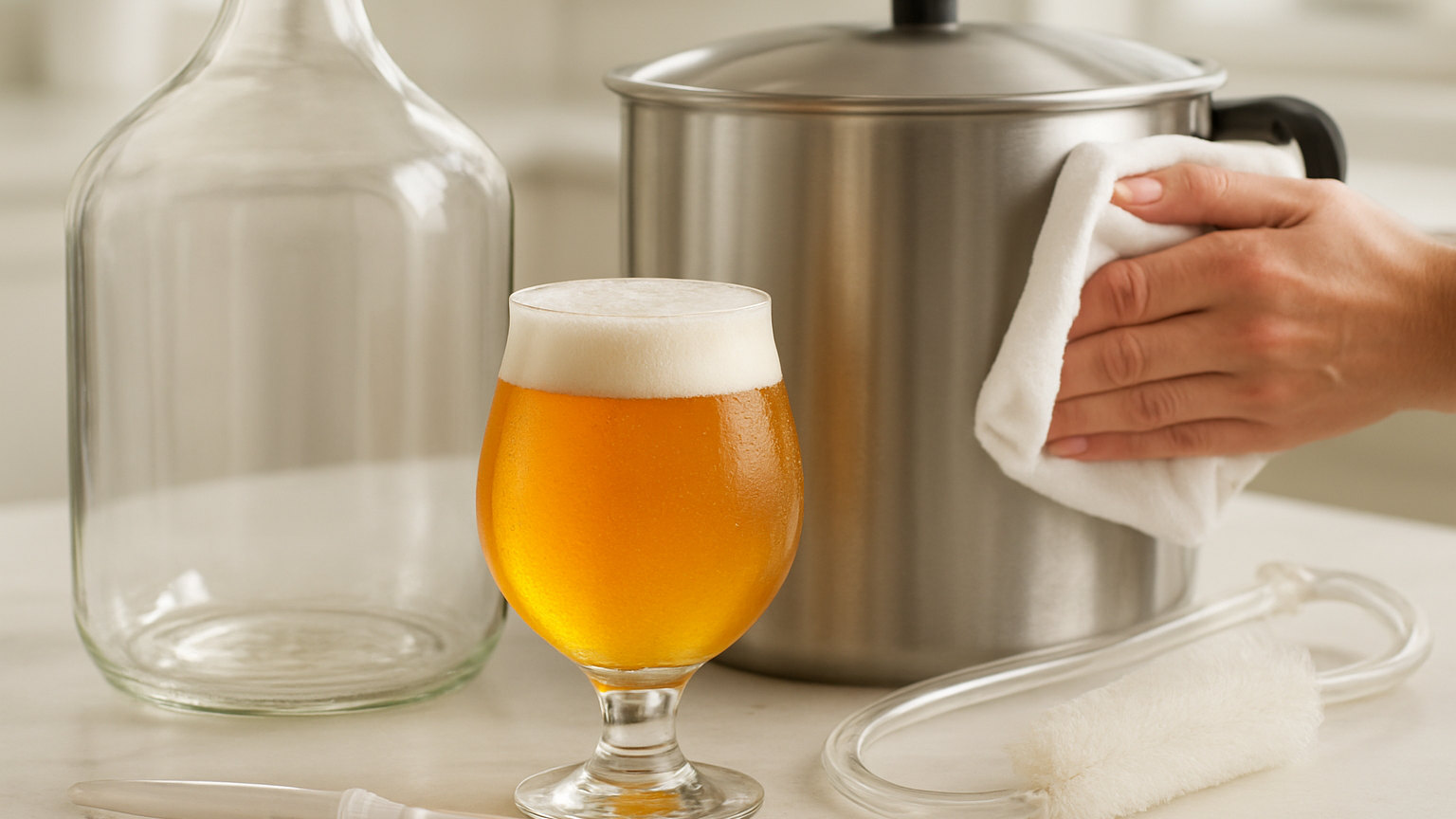
Brewing equipment is easy to clean for about an hour after use and difficult afterwards. Yeast sediment and hop residue dry into a film that resists everything short of scrubbing, and scrubbing is exactly what plastic fermenters must not receive.
What is the basic routine?
- Rinse everything with hot water immediately after use.
- Soak anything with residue in a percarbonate cleaner solution.
- Wipe gently with a soft cloth, never an abrasive scourer.
- Rinse thoroughly.
- Dry completely and store with lids off.
Sanitising is a separate operation done immediately before the next use, not at the end of this one. Sanitiser applied to stored equipment achieves nothing weeks later.
Why must you not scrub plastic?
Because scratches harbour bacteria and yeast that sanitiser cannot reach, and a scratched fermenter becomes a permanent source of infection.
Use a soft cloth or a sponge with no abrasive side. If residue will not come off with a soak, soak it longer rather than scrubbing harder. Percarbonate cleaner will lift almost anything given a few hours.
How long should a fermenter last?
Several years if treated carefully, and a plastic bucket is cheap enough that replacing one showing scratches is sensible. Glass carboys do not scratch and are heavy and break, which is its own hazard.
What needs dismantling?
Any tap on a fermenter or bottling bucket. Taps have internal surfaces that never get properly rinsed, and dried beer inside one is a reliable source of infection.
Take it apart after every batch, soak the parts, and reassemble when dry. It takes two minutes and it prevents a fault that is otherwise very hard to trace.
How do you clean bottles?
Rinse each one with hot water immediately after drinking. That single habit removes almost all the work, since fresh residue rinses away and dried yeast does not.
For bottles that have been left, soak in percarbonate solution overnight and use a bottle brush. A soaking tub of forty bottles is a tedious afternoon that immediate rinsing avoids entirely.
Check for chips around the rim while cleaning and discard any damaged bottles rather than putting them back into service.
What about the airlock and tubing?
Airlocks dismantle into two or three parts and should be washed after each use. Dried krausen inside one is unpleasant and hard to shift.
Siphon tubing is the item most often neglected. It cannot be inspected inside, so residue accumulates unseen. Flush it with cleaner after every use, and replace it once a year, since it costs very little and a contaminated tube will infect every batch it touches.
How should equipment be stored?
Completely dry, with lids off or ajar so air circulates. A sealed damp bucket grows mould, which is then a cleaning job before the next brew day.
Store it somewhere dark, since sunlight degrades plastic over years. Keep the small items inside the fermenter so nothing goes missing between batches.
What should you check before the next brew?
Look for scratches in the plastic, cracks around the tap fitting, and a lid seal that still seats properly. Then clean everything again briefly and sanitise, since stored equipment gathers dust regardless of how well it was put away.
What is worth replacing periodically?
Siphon tubing yearly, since the inside cannot be inspected. Bottle caps every time, since they are single use. Airlock grommets when they lose their seal, and plastic fermenters once they show scratching.
All of it is inexpensive against a spoiled batch, which is the comparison worth making.
Can you use a dishwasher?
For bottles, yes, on a hot cycle with no detergent, and it does a reasonable job of cleaning and heat-treating them. Detergent leaves a residue that destroys head retention, so run them empty of it.
Plastic fermenters should not go in, since the heat can warp them and the racks scratch the surface.
How long does a kit last overall?
A plastic fermenter a few years, glass and steel indefinitely, tubing a year. The consumables are caps, sanitiser and the occasional replacement bucket, which is a small running cost against forty bottles a batch.


