
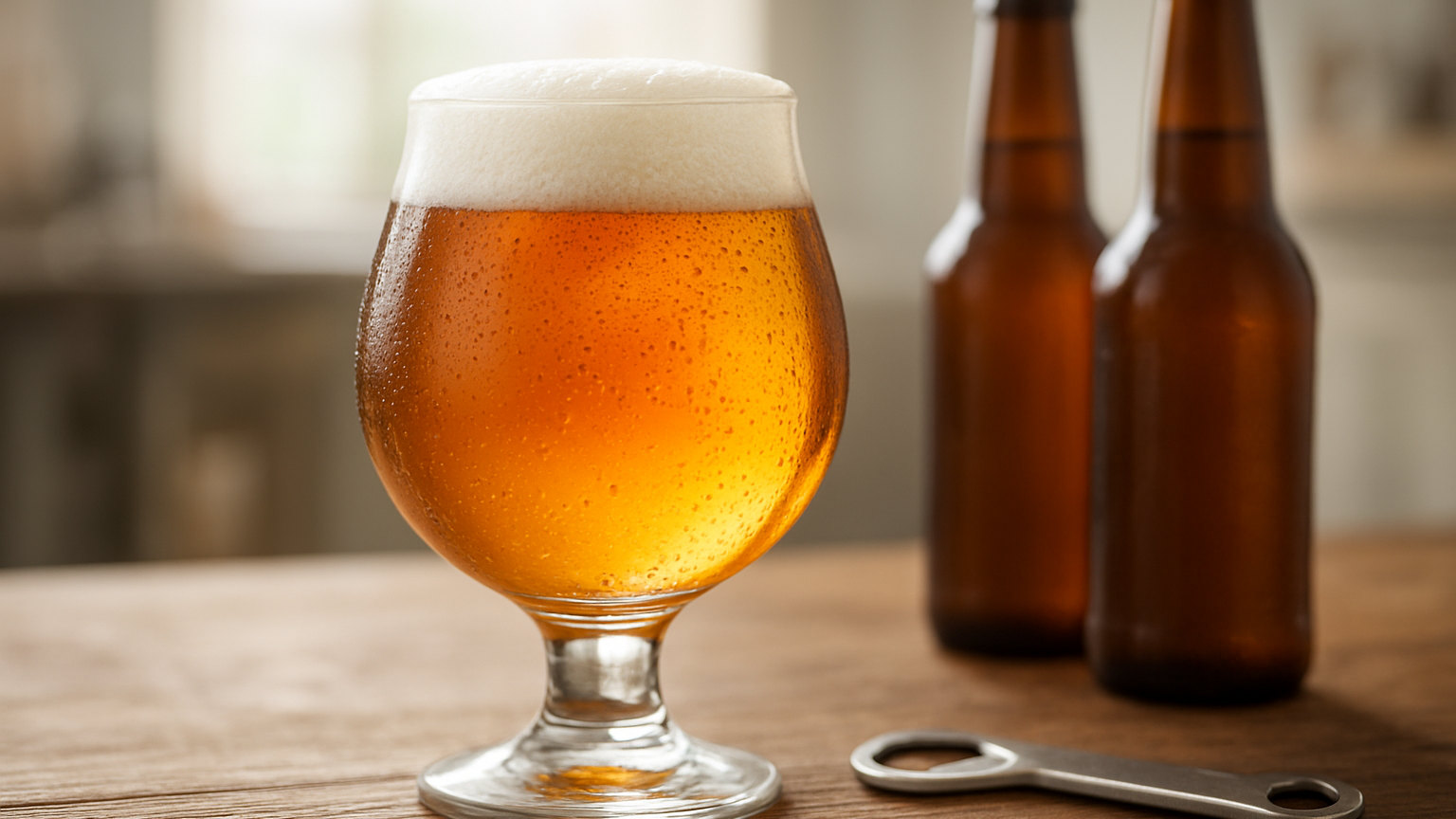
Conditioning covers two separate processes that happen at the same time and finish at different points. Carbonation is fast and maturation is slow, and opening a bottle when the first is done but the second is not is why so many people conclude their beer is merely acceptable.
What happens during conditioning?
- Carbonation. Yeast eats the priming sugar and produces carbon dioxide, which dissolves into the beer under pressure.
- Maturation. Harsh compounds from fermentation break down or bind, and flavours integrate.
- Clarification. Yeast and protein settle out, leaving clearer beer.
Carbonation is usually complete in two weeks. Maturation takes longer and varies by style.
How long does carbonation take?
Two weeks at 20 degrees for a standard ale. Cooler is slower: at 15 degrees it can take three or four weeks, and below about 12 the yeast becomes too sluggish to finish the job at all.
This is why bottles should carbonate at room temperature rather than in a fridge, and only be chilled once they are ready.
How do you check without wasting a bottle?
Bottle one PET plastic bottle alongside the glass ones. Squeeze it: when it becomes firm and stops giving, the batch has carbonated. It costs nothing and it answers the question without opening anything.
How long does maturation take?
By style, roughly:
- Pale ale, golden ale, session beer: 3 to 4 weeks total. Drink young.
- IPA: 3 weeks, and drink within two months before the hop aroma fades.
- Bitter and brown ale: 4 to 5 weeks.
- Stout and porter: 5 to 8 weeks, and better at three months.
- Strong ales above 7 per cent: 3 to 6 months, and improving for a year.
The pattern is that the more malt and alcohol a beer has, the more it gains from time. Hop-forward beers are the exception and get worse rather than better.
Why does young beer taste harsh?
Because fermentation produces compounds that are unpleasant in isolation and mellow as they interact or break down: acetaldehyde tasting of green apple, residual yeast character, and the raw edge of freshly extracted hop bitterness.
Most of that resolves over the first month. A beer written off at two weeks is frequently good at six, which is a reason to be slow about pouring a batch away.
Where should you store it?
Two weeks at around 20 degrees to carbonate, then somewhere cool and dark, ideally 10 to 14 degrees. A garage, cellar or the coolest cupboard in the house.
Light is the other consideration. Ultraviolet reacts with hop compounds to produce a skunky aroma within minutes of direct sunlight, which is why beer bottles are brown. Keep them in a box or a dark corner.
Does it keep improving indefinitely?
No. Every beer has a peak and then declines as oxidation accumulates. For a pale ale that peak is around six weeks; for a strong dark beer it might be a year or more.
Past the peak, beer develops sherry and cardboard notes from oxidation. It remains safe to drink and stops being enjoyable.
Should you refrigerate before drinking?
Yes, and only for the last day or two rather than the whole conditioning period. Chilling also helps the yeast sediment compact at the bottom so it stays there when you pour.
Pour in one steady movement, leaving the last centimetre in the bottle. That last part is yeast, and while it is harmless it is cloudy and tastes bready.
Does a secondary fermenter help?
Less than it used to be believed. Transferring to a second vessel adds an oxygen exposure and an infection risk for a clarity benefit that time in the bottle would deliver anyway.
It is worth doing for a beer being aged for months, or one having fruit or oak added. For a standard ale, leaving it in the primary and bottling from there is simpler and usually better.
Does the bottle size change the timing?
Marginally. Larger bottles carbonate slightly more slowly because there is more beer per unit of yeast and sugar in contact, and the difference is a few days rather than weeks.


