
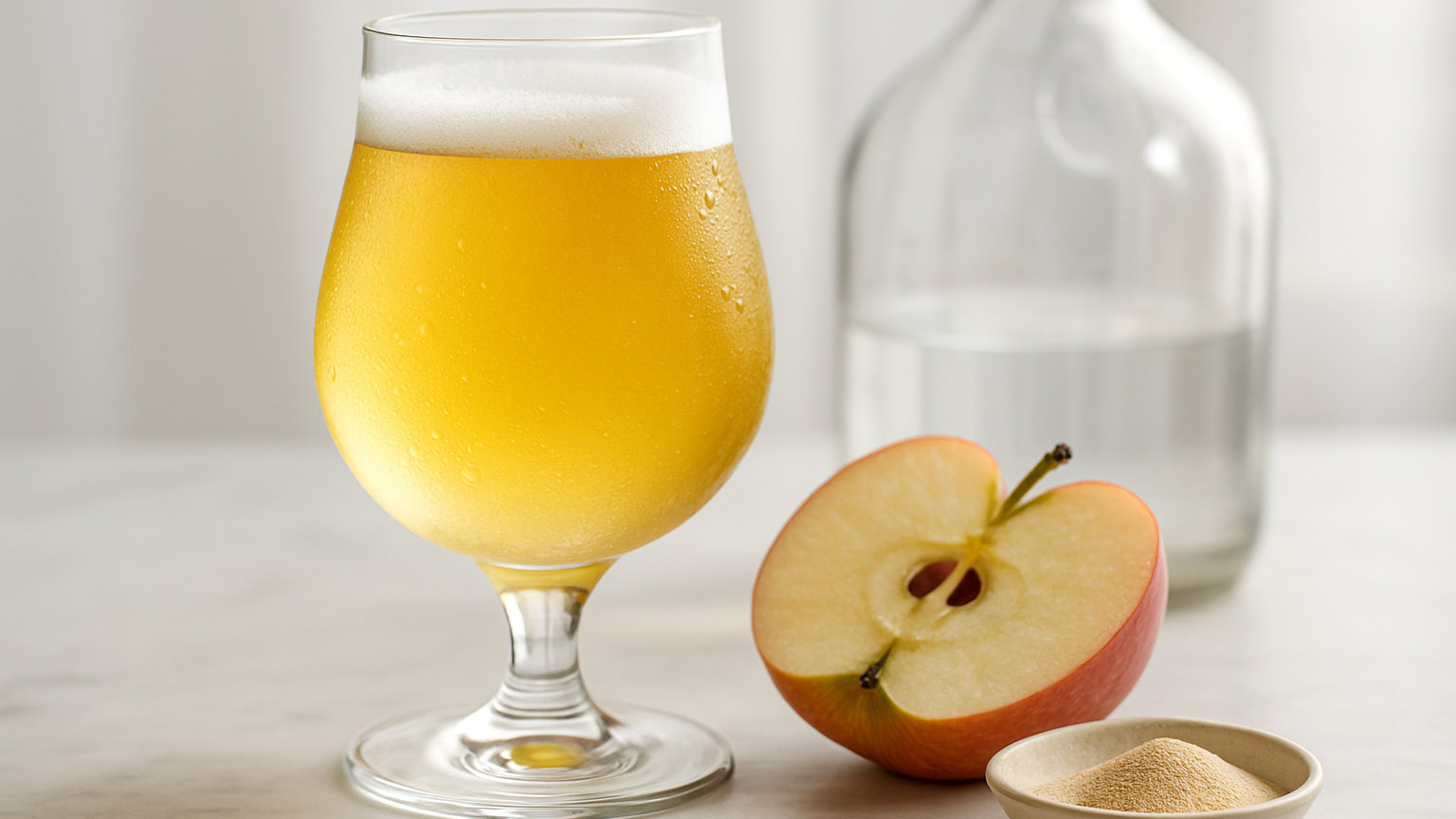
Apple juice will ferment on its own, and it will not necessarily ferment into anything you want to drink. Choosing a yeast is the difference between a predictable cider and a lottery, and the choice affects dryness and flavour more than most people expect.
What about wild fermentation?
Traditional cider making relies on yeast present on the apple skins and in the press house. It produces complex, characterful cider and it is genuinely unpredictable.
Wild populations include organisms other than the ones you want. Acetobacter turns alcohol into vinegar; some wild yeasts produce off-flavours; some stall partway. Traditional makers manage this with experience, scale and a press house whose resident population has been selected over decades.
For a first gallon, pitch a cultured yeast. Wild fermentation is worth trying once you know what a good outcome tastes like.
Does shop juice have wild yeast?
No, since it is pasteurised. That is an advantage rather than a limitation, because whatever you pitch has the field to itself.
Which cultured yeasts work?
- Dedicated cider yeast. Bred to preserve apple character and finish dry. The obvious first choice.
- Champagne or wine yeast. Very high tolerance, ferments bone dry, settles well. Clean and can strip flavour.
- English ale yeast. Lower attenuation, leaves residual sweetness and some fruity esters. Makes a rounder cider.
- Belgian or saison yeast. Peppery and spicy. Unconventional and interesting.
How does the choice change the result?
Chiefly through attenuation, meaning how completely the yeast ferments the available sugar.
Champagne yeast ferments apple juice essentially to nothing, giving a bone dry cider at around 6.5 per cent with a crisp finish and less apple aroma than you started with. Ale yeast typically stops a little higher, leaving a touch of body and a softer character.
Neither is wrong. Anyone finding home-made cider too austere should try an ale yeast next time.
Does cider need nutrient?
Yes, more than beer does. Apple juice is low in the nitrogen compounds yeast needs to build a healthy colony, and a starved fermentation produces hydrogen sulphide, which smells of rotten eggs.
A teaspoon of yeast nutrient per gallon at pitching prevents it. For a high-gravity must, split it into two doses, half at pitching and half at day three.
How should you pitch?
Rehydrate dry yeast in 100ml of water at 30 degrees for fifteen minutes, stir gently, wait another ten, then add. Sprinkling dry yeast onto cold juice loses a proportion of the colony to osmotic shock.
Pitch at 18 to 20 degrees and hold it there. Cider fermented warm produces harsh, solvent-like notes just as beer does.
What if you have added a Campden tablet?
Wait a full 24 hours before pitching. The sulphur dioxide that kills wild yeast will kill your cultured yeast just as readily, and pitching too early is a common cause of a fermentation that never starts.
Can you use bread yeast?
It works in the narrow sense of producing alcohol, and it produces a bready, yeasty flavour that is unmistakable, stops at around 8 to 10 per cent, and settles poorly so the cider struggles to clear.
Cider yeast costs very little and keeps for a long time in a cool dry place. Bread yeast is the classic false economy and it is the usual explanation when someone says their cider tastes odd without being able to say why.
How much do you need?
One sachet covers a gallon comfortably, and the same sachet covers five gallons. Yeast multiplies to fill the available nutrients, so overpitching a small batch achieves nothing and underpitching a large one leaves the colony stressed.
For a single demijohn, use half a sachet and keep the rest sealed in the fridge for the next batch.
Does the yeast affect clearing?
Yes. Highly flocculent strains clump and drop out readily, leaving a clear cider and a compact sediment. Low flocculation strains stay in suspension for weeks.
Champagne yeast settles particularly well, which is one practical argument for it beyond the dry finish.


