
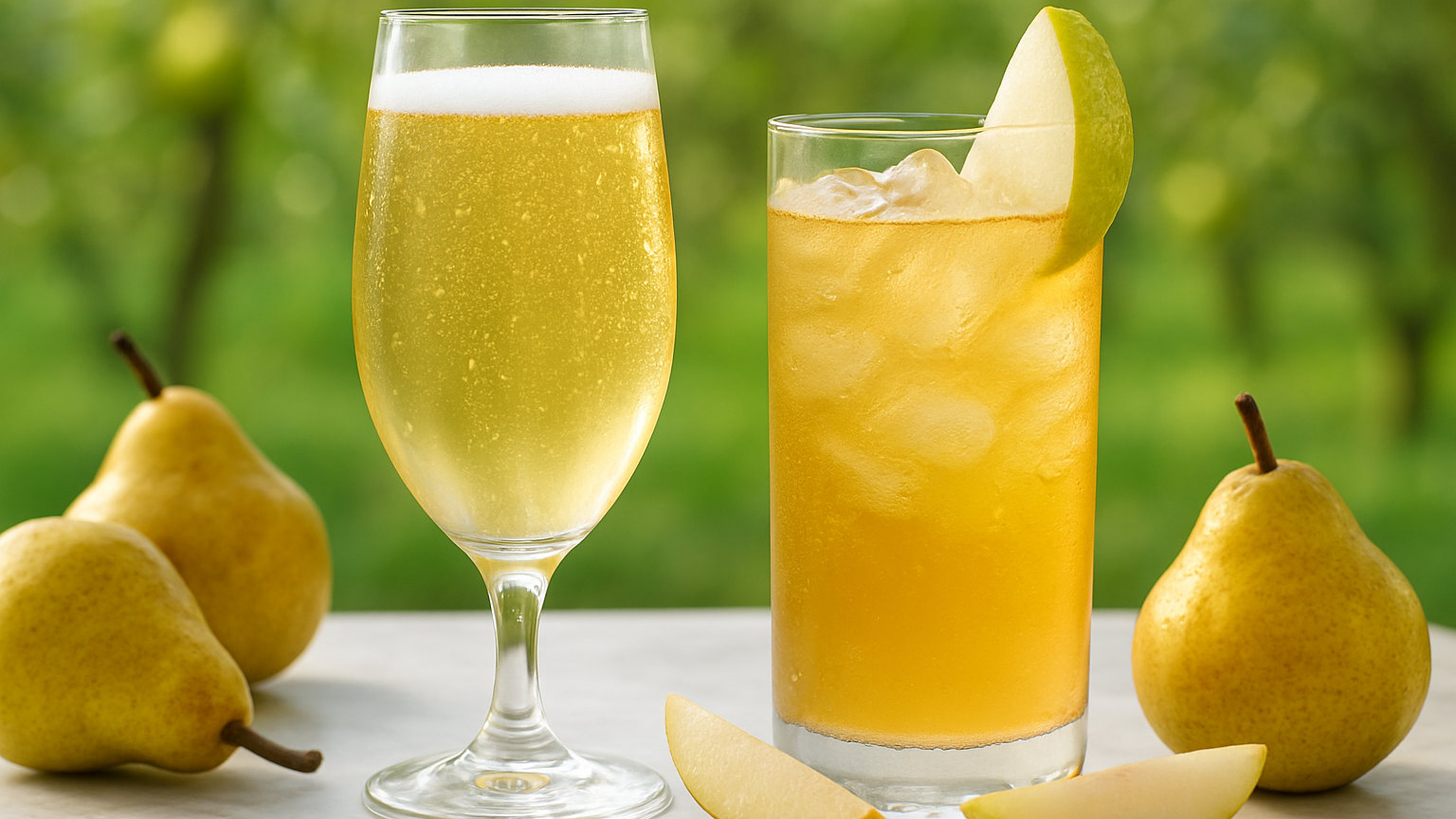
Perry is fermented pear juice, and it is one of the most overlooked drinks in British production. It is often confused with pear cider, which is usually a different product entirely, and the pears it is made from are a separate crop from anything you would eat.
What is the difference from pear cider?
Traditional perry is made from perry pears, a distinct group of varieties grown for the purpose. Pear cider, as sold commercially, is frequently apple cider with pear flavouring or pear juice concentrate added.
The two taste noticeably different. Perry is dry, subtle and slightly floral with a tannic grip; commercial pear cider is usually sweet and straightforwardly fruity.
The naming is not regulated in the way some drinks are, so the label is worth reading rather than trusting.
What are perry pears?
Small, hard, high-tannin pears grown mainly in the Three Counties of Gloucestershire, Herefordshire and Worcestershire. They are astringent and nearly inedible raw, in the same way cider apples are.
Varieties carry names as distinctive as the trees: Blakeney Red, Butt, Thorn, Merrylegs. Many of the orchards are old and the crop is in decline, which is part of why perry is scarce.
Can you use eating pears?
Yes, and the result is different. Conference or Williams pears make a light, gently fruity drink with very little tannin, which some people prefer and which is not traditional perry.
Adding a cup of strong cold tea per gallon, or a little grape tannin, gives it structure it otherwise lacks.
What is sorbitol and why does it matter?
A sugar alcohol present in pears in quantities that apples do not have. Yeast cannot ferment it, so it remains in the finished drink as residual sweetness.
That is why perry frequently tastes off-dry even when fermented completely, and it is a genuine chemical difference from cider rather than a stylistic one. It also means the hydrometer will not read down to 1.000 the way a cider does.
How do you make it?
Essentially as cider, with two adjustments:
- Let the fruit mature after picking. Perry pears are picked hard and need days or weeks to soften, and the window between ready and rotten is famously narrow.
- Expect a slower, less vigorous fermentation. Pear juice is lower in nutrients, so yeast nutrient matters more.
Press, add a Campden tablet, wait 24 hours, pitch a cider or wine yeast with nutrient, and ferment at 18 to 20 degrees.
How do you know when it has finished?
Three identical hydrometer readings on consecutive days, as with anything else. Do not expect it to reach 1.000, since the sorbitol keeps the reading higher, often around 1.005 to 1.010.
That is a genuine finish rather than a stall, and it is worth confirming with readings rather than assuming, since the two look the same from outside.
Why is it so hard to find?
The orchards take decades to come into full production, the fruit is difficult to handle, the picking window is short, and demand has been low for generations. A number of small producers are working to keep it going.
If you find a bottle of traditional perry, it is worth trying. It tastes almost nothing like the commercial pear drinks the name has been attached to.
How should it be served?
Cool rather than cold, around 8 to 10 degrees, in a wine glass rather than a pint glass. The aromatics are delicate and very cold serving flattens them entirely.
It suits food better than most people expect, particularly soft cheese, pork and anything with apple or fennel in it.
Does it age like cider?
Less well. Perry is generally at its best within a year of making and it does not develop the way a tannic cider does. The delicacy that makes it appealing is also what fades.
Store it cool and dark and drink it within twelve months.
What can go wrong?
The same faults as cider, with two additions. Pear juice is more prone to a sluggish fermentation because of the lower nutrient content, so nutrient at pitching matters more.
And the sorbitol means a hydrometer reading will not reach 1.000, which can be mistaken for a stall and lead to unnecessary intervention. Confirm with three stable readings rather than chasing a number.


