
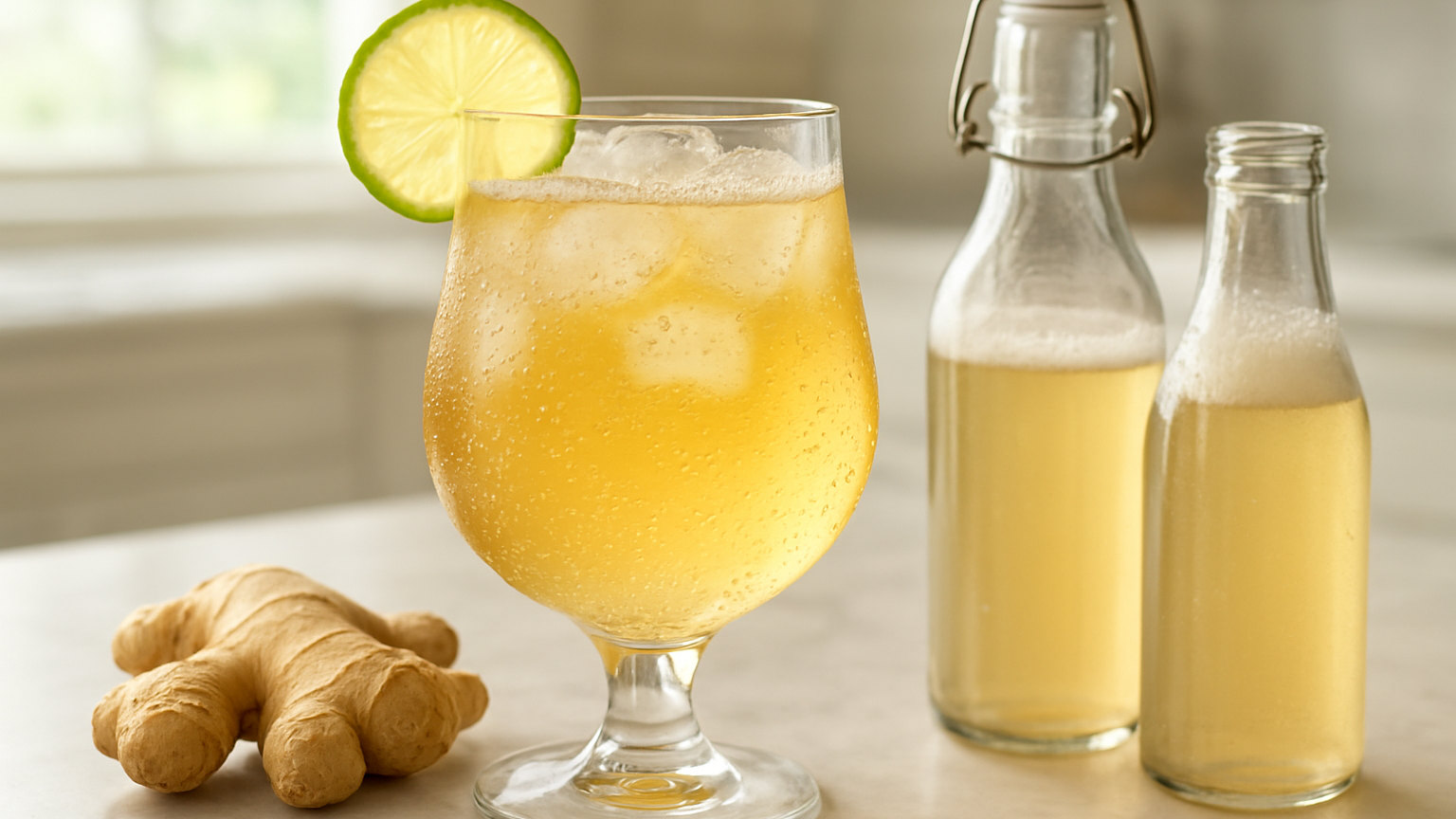
Of everything made at home, ginger beer is the one most likely to break a bottle. It is not a rare occurrence and it is entirely preventable. Understanding why it happens makes the precautions obvious rather than fussy.
Why does it happen?
Three factors together:
- Uncontrolled culture. A ginger bug is wild, so its behaviour varies between batches.
- Abundant sugar. The recipe leaves a great deal for the culture to work through.
- No natural stopping point. Unlike beer, where priming sugar is measured and runs out, ginger beer keeps fermenting while it is warm.
Pressure builds continuously. Left at room temperature for a week, a bottle can reach many times atmospheric pressure, and glass fails by fragmenting rather than by leaking.
What is the single best precaution?
Use PET plastic bottles from carbonated soft drinks. They are rated for pressure, they deform rather than shatter, and squeezing one tells you exactly what is happening inside.
A plastic bottle that is rock hard has reached carbonation. A soft one has not. That single check removes almost all the guesswork.
What if you want glass?
Use crown-capped beer bottles or swing-tops in good condition, and bottle one plastic bottle alongside them as a pressure gauge. When the plastic one is firm, refrigerate the whole batch.
Never use wine bottles, spirit bottles, screw-top bottles from still drinks or preserving jars. None is designed for internal pressure.
What does burping mean?
Loosening each cap slightly once a day to release accumulated gas, then retightening. It vents pressure without losing the drink.
Do it over a sink and slowly. Burping is a useful habit during the fermentation days and it is not a substitute for refrigerating once the bottles are ready.
Does the fridge stop it?
It slows it dramatically rather than stopping it. Cold reduces yeast activity to a crawl, which is enough for practical purposes.
Ginger beer should be refrigerated as soon as it is carbonated, typically two to four days after bottling, and kept there. Drink within two or three weeks.
Where should bottles be stored?
In a sealed crate or a sturdy box, at floor level, in a room nobody sits in. A garage, utility room or the bottom of a cupboard.
Not on a worktop, not in a kitchen where people stand, and not anywhere at head height. This costs nothing and it converts a possible injury into a mess.
How do you know a batch is over-pressured?
- A plastic bottle that is rock hard and bulging at the base.
- A glass bottle whose cap is visibly domed.
- Any bottle that hisses continuously rather than briefly.
- Gushing when opened.
What should you do about a suspect batch?
Move all of it to the fridge immediately, which slows the culture and dissolves more gas back into the liquid.
Leave it cold for several hours, then open the bottles one at a time over a sink, wearing eye protection, standing to the side rather than over them. Open slowly and stop if it starts to foam, letting it settle before continuing.
If a bottle looks badly distorted, put it in a bucket and take it outside before opening. It is worth the small inconvenience.
Does the recipe affect the risk?
Considerably. More sugar means more fuel and more potential pressure, and a very sweet ginger beer left warm is the highest-risk combination there is.
Reducing the sugar to 120g per 2 litres gives a less sweet drink with a much wider safety margin, and most people find it perfectly pleasant.
What about second fermentation with fruit?
Adding fruit juice to bottles for flavour also adds sugar, which the culture will ferment. Any addition at bottling raises the pressure the batch will reach.
Account for it by reducing the base sugar, refrigerating sooner, and using plastic bottles without exception.
Is there a way to make it genuinely low risk?
Yes. Ferment it in an open or loosely covered vessel rather than in bottles, so no pressure can build at all, then chill and serve it flat or add soda water for fizz.
It gives up some of the character of a bottle-conditioned drink and it removes the hazard entirely, which is a reasonable trade for anyone making it with children around.


