
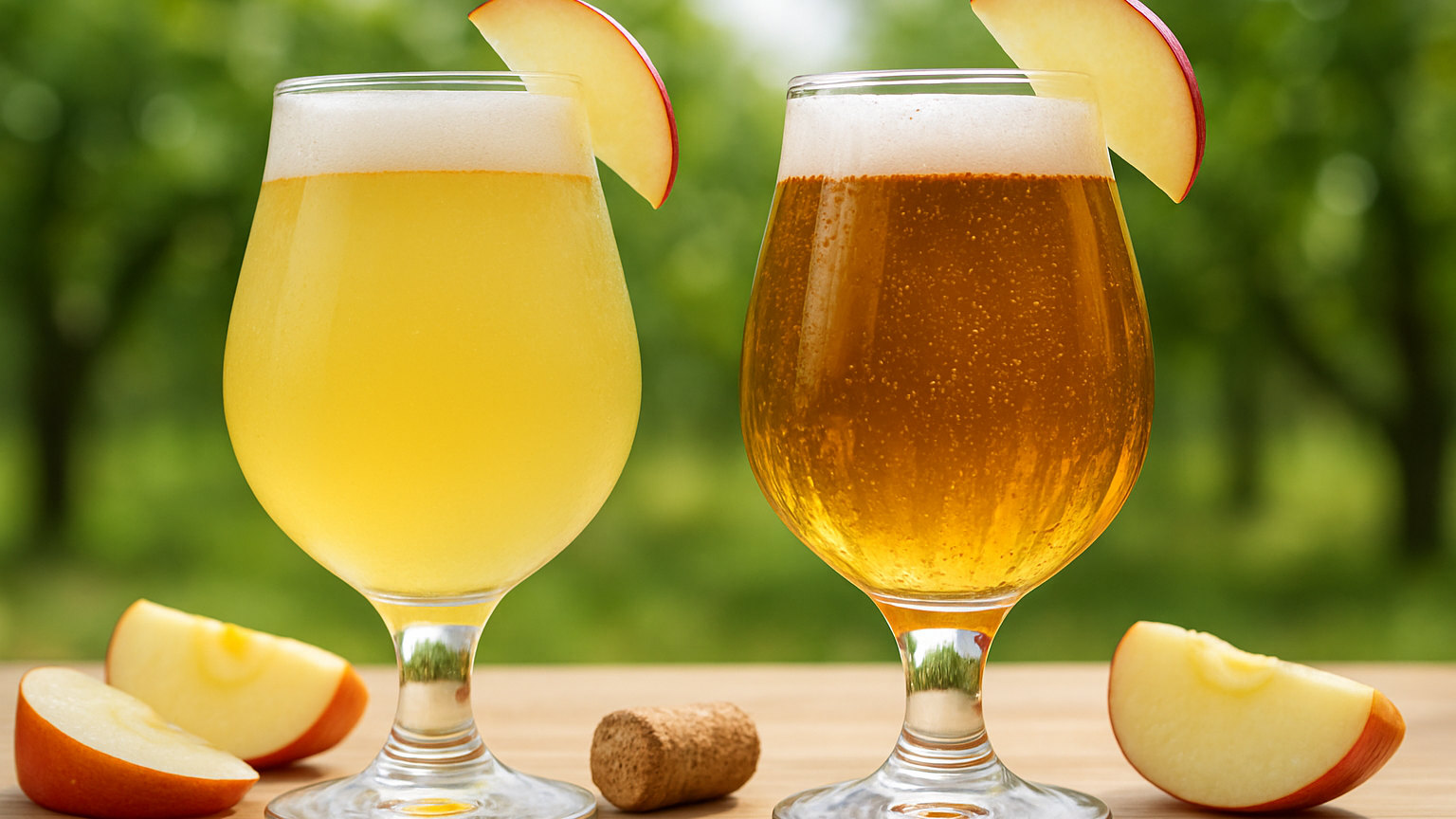
Almost every disappointing batch of home made cider is a young batch. It ferments quickly, looks finished within a month, and tastes thin, sharp and slightly harsh. Left alone for another few months it becomes something else entirely.
What is the timeline?
- 2 to 4 weeks. Fermentation completes.
- 4 to 8 weeks. Racking and clearing. Drinkable and unrewarding.
- 3 months. Noticeably rounder.
- 6 months. Where most home cider is at its best.
- 12 months and beyond. Stronger and more tannic ciders keep improving.
Six months from pressing is a reasonable target for anything made from real fruit. Cider from bought juice is ready sooner, at three to four months, because it has less tannin to soften.
Why does young cider taste harsh?
Several compounds from fermentation are unpleasant in isolation and mellow as they interact or break down. Acetaldehyde tastes of green apple and raw solvent, and it fades. Yeast still in suspension contributes a bready, savoury note that settles out.
Tannin from the fruit is also at its most aggressive early, and it binds with proteins and drops out over months, which softens the grip considerably.
Does racking help?
Considerably. Cider left on its yeast sediment for months develops savoury, sulphurous flavours as the dead yeast breaks down. Two or three rackings over the first few months removes that.
What is malolactic fermentation?
A secondary bacterial process that converts malic acid, which is sharp and green, into lactic acid, which is softer and rounder. It happens naturally in many ciders, usually in spring as temperatures rise.
It is generally desirable and it makes a cider noticeably less aggressive. It also produces a small amount of carbon dioxide, which is worth being aware of if the cider is already bottled, since it can add unexpected fizz.
Signs are a faint spritz and small bubbles clinging to the side of the demijohn months after fermentation appeared to finish. Waiting for it to complete before bottling avoids surprises.
Where should it be stored?
Somewhere cool, dark and steady. Around 10 to 14 degrees is ideal, which in most UK houses means a garage, shed or unheated room rather than a kitchen.
Light degrades cider quickly, so keep bottles in a box or a dark corner. Temperature swings are worse than a slightly wrong constant temperature.
How long does it keep?
A dry still cider at 6 per cent keeps for one to two years easily, and often improves for the first year. Sweetened or lower alcohol ciders are less stable and want drinking within a year.
Past its peak, cider oxidises towards sherry and eventually vinegar. It remains safe to drink long after it stops being enjoyable.
Is there a way to speed it up?
Not meaningfully. Cold crashing clears it faster, and fining agents drop the haze, and neither addresses the harshness, which is a matter of time.
The practical answer is to make more than you need and start the next batch before the current one is ready, so there is always something at six months.
When can you first taste it?
Whenever you like, provided you understand you are tasting an unfinished product. Drawing a small sample at each racking is genuinely useful, since it teaches you what the progression tastes like.
Keep notes. The difference between a cider at two months and the same cider at six is large, and remembering it is what stops you bottling the next batch too early.
Does bottling early do harm?
Not to the cider, provided fermentation has genuinely finished. It ages perfectly well in bottle rather than in demijohn, and the process is the same.
The risk is bottling before fermentation is complete, which is a pressure question rather than a flavour one. Three identical hydrometer readings settle it.
Is a cold winter useful?
Very. Cold conditioning drops out suspended yeast, protein and tartrate, leaving a clearer and cleaner cider without any finings. A demijohn in an unheated garage over a British winter does the job for nothing.


