
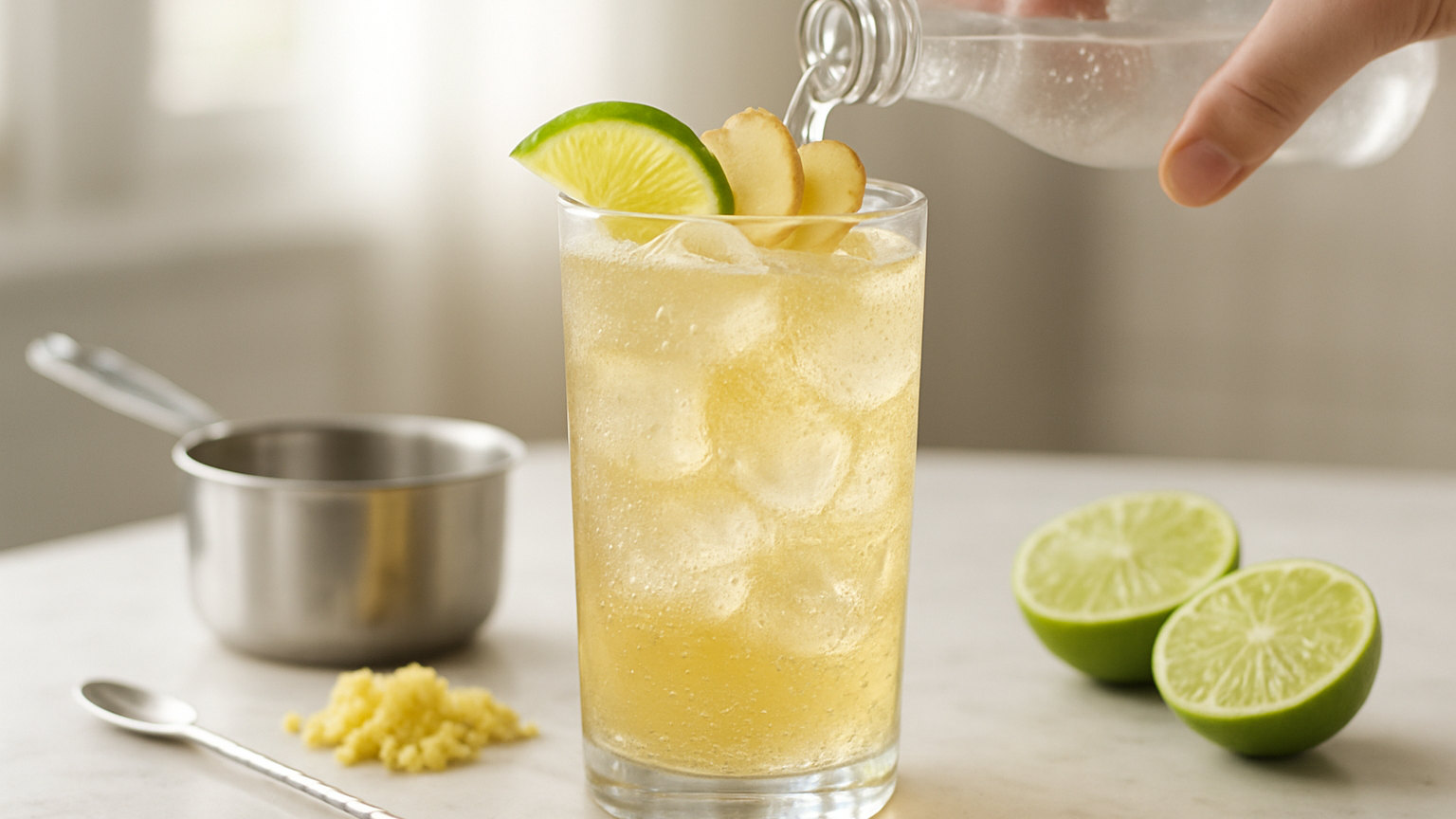
Traditional ginger beer is fermented, and fermentation produces alcohol. The quantity is usually small, and it is not zero and it varies between batches. If the drink needs to be genuinely alcohol free, a different method is required rather than a shorter fermentation.
How much alcohol is in fermented ginger beer?
Typically between 0.5 and 2 per cent, depending on how much sugar it had, how long it fermented and how vigorous the culture was.
Because a ginger bug is a wild culture rather than a measured pitch, the figure is not predictable. Two batches made identically can differ, which matters if the drink is for children, for anyone avoiding alcohol entirely, or for someone driving.
A hydrometer reading before and after is the only way to know for a given batch.
Can you ferment it less?
You can ferment it briefly and get less carbonation along with less alcohol. Since carbonation is the point, that is a poor trade, and it still leaves an unmeasured amount.
What is the syrup and soda method?
Make a concentrated ginger syrup, then dilute it with carbonated water at the moment of serving. No fermentation, no alcohol, no pressure risk, and it takes about fifteen minutes.
- Grate 100g of fresh unpeeled ginger.
- Simmer with 300ml water for fifteen minutes, covered.
- Take off the heat, stir in 250g sugar until dissolved.
- Add the juice of one lemon.
- Cool, strain and bottle.
To serve: 30 to 40ml of syrup topped with 150ml of chilled soda water over ice.
How do you get it spicy enough?
More ginger and a longer infusion. The heat compounds are extracted readily, so 150g of ginger and a thirty minute steep off the heat gives a genuinely fiery syrup.
Adding a pinch of cayenne is a common trick for extra bite. A small amount of black pepper does something similar without tasting of pepper.
Does it taste the same as fermented?
Not identical. Fermented ginger beer develops a faint sourness and a complexity that a syrup does not have, and the carbonation is finer.
Adding a squeeze more lemon and a small pinch of salt closes much of the gap. Salt in particular rounds the drink out and nobody tastes it as salt.
How long does the syrup keep?
Around three weeks refrigerated in a sterilised sealed bottle. The high sugar content preserves it reasonably well, and the fresh ginger means it is more perishable than a plain syrup.
It freezes well in an ice cube tray, and each cube is roughly a single serving.
What about shop-bought alcohol free ginger beer?
Most commercial ginger beer sold in supermarkets is a carbonated soft drink rather than a fermented product, and it contains no alcohol. Check the label if it matters, since a few traditional brands are genuinely fermented and state a small alcohol content.
Is the syrup method safer?
Considerably. There is no live culture, no sealed fermentation and no pressure building in a bottle, which removes the one genuine hazard in making ginger beer at home. For a drink intended for children it is the sensible choice.
Can you carbonate the syrup version?
Only with a carbonating machine or by mixing with soda water at the glass. There is no way to carbonate it in a bottle without fermentation, and attempting to add yeast to force it defeats the purpose.
A home carbonating machine works well here. Make the syrup, chill it, carbonate plain water and combine.
How do you get the cloudy look?
Do not strain the syrup too finely. Passing it through a coarse sieve rather than muslin leaves fine ginger particles in suspension, which gives the traditional cloudy appearance.
A small amount of the grated pulp stirred back in achieves the same thing and adds texture.
What about ginger ale?
A different drink, generally milder, sweeter and clearer, and usually made as a flavoured soft drink rather than fermented. The same syrup method makes a decent version using less ginger and a shorter infusion.
Ginger beer is the spicier and cloudier of the two, and the distinction is one of style rather than of method in commercial production.


