
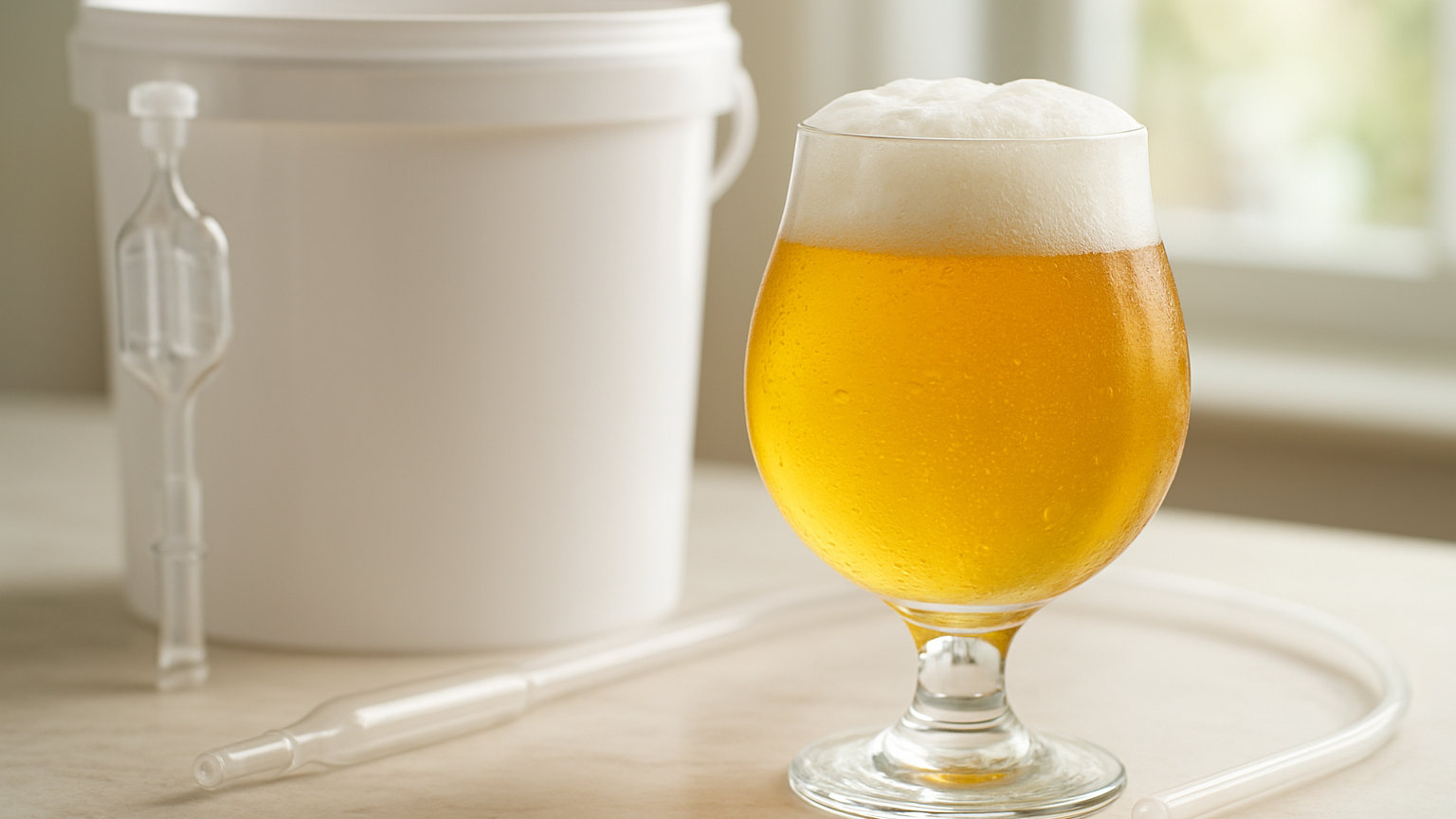
The fermenter is where beer actually gets made, and it is the item most often upgraded for reasons that have more to do with appearance than performance. The cheapest option is genuinely the most practical for most home brewers.
What are the options?
- Food-grade plastic bucket. Cheap, light, wide opening, easy to clean.
- Glass carboy or demijohn. Does not scratch, lets you see the beer, heavy and breakable.
- PET plastic carboy. Lighter than glass, narrow opening, scratches.
- Stainless steel. Durable, expensive, easy to clean.
- Pressure fermenter. Ferments under pressure, allows closed transfer.
Why is the bucket usually right?
Because the wide opening makes cleaning straightforward, it weighs almost nothing when empty, it will not shatter, and it costs a fraction of the alternatives. A 25 or 30 litre bucket with a tap and a lid covers a standard 23 litre batch comfortably.
The trade-off is that it scratches, and it is slightly permeable to oxygen over long periods. Neither matters for a beer fermented for two weeks and bottled.
Why do scratches matter?
Because they harbour yeast and bacteria in grooves that sanitiser cannot reach, which makes a scratched fermenter a permanent infection risk.
Never use an abrasive scourer on plastic. Soak with a percarbonate cleaner and wipe with a soft cloth instead. Buckets are cheap enough that replacing one showing scratching is sensible rather than extravagant.
What about glass?
Glass does not scratch and does not absorb odours, which is genuinely useful for long ageing. It also lets you watch the fermentation, which is more interesting than it is informative.
The problems are practical. A full 23 litre glass carboy weighs around 25kg, has a narrow neck that makes cleaning awkward, and can break. A glass vessel failing while full is a serious injury risk, which is why brewing shops increasingly recommend against them.
If you do use glass, carry it in a milk crate or a purpose-made handle rather than by the neck.
What size should you buy?
At least 25 litres for a 23 litre batch, and 30 litres is better. The extra space is for krausen, the thick foam that forms during vigorous fermentation and can easily add five litres of volume.
Too little headspace means foam pushing up through the airlock, which is messy and lets air in as it subsides. A blow-off tube into a jar of sanitiser solves it if you are already committed to a smaller vessel.
Is a tap worth having?
Yes. It makes bottling far easier and removes the need to start a siphon by mouth, which is an obvious contamination route.
It also needs dismantling and cleaning after every batch. Dried beer inside a tap is a reliable source of infection and it is invisible from outside.
What about pressure fermenters?
They allow fermentation under pressure, which suppresses ester production, and they permit transfer to a keg without oxygen exposure. Both are real advantages.
They are also considerably more expensive and add complexity a beginner does not need. This is a fourth or fifth purchase rather than a first one.
How many should you own?
Two, eventually. A second fermenter lets you start a new batch while one is still conditioning, which roughly doubles output for a small cost. It is a more useful second purchase than almost any upgrade to the first.
How long does one last?
A plastic bucket a few years with careful cleaning, glass and stainless indefinitely. Replace plastic once it shows scratching or once the lid seal stops seating properly, both of which are cheap fixes against a spoiled batch.
What about the lid?
Check it seals fully every time. A lid that is not clipped down lets gas escape around the edge rather than through the airlock, which makes the airlock look still while fermentation proceeds normally. That is harmless and misleading.
A bucket with a moulded lid clip is worth choosing over a friction-fit one for that reason alone.


