
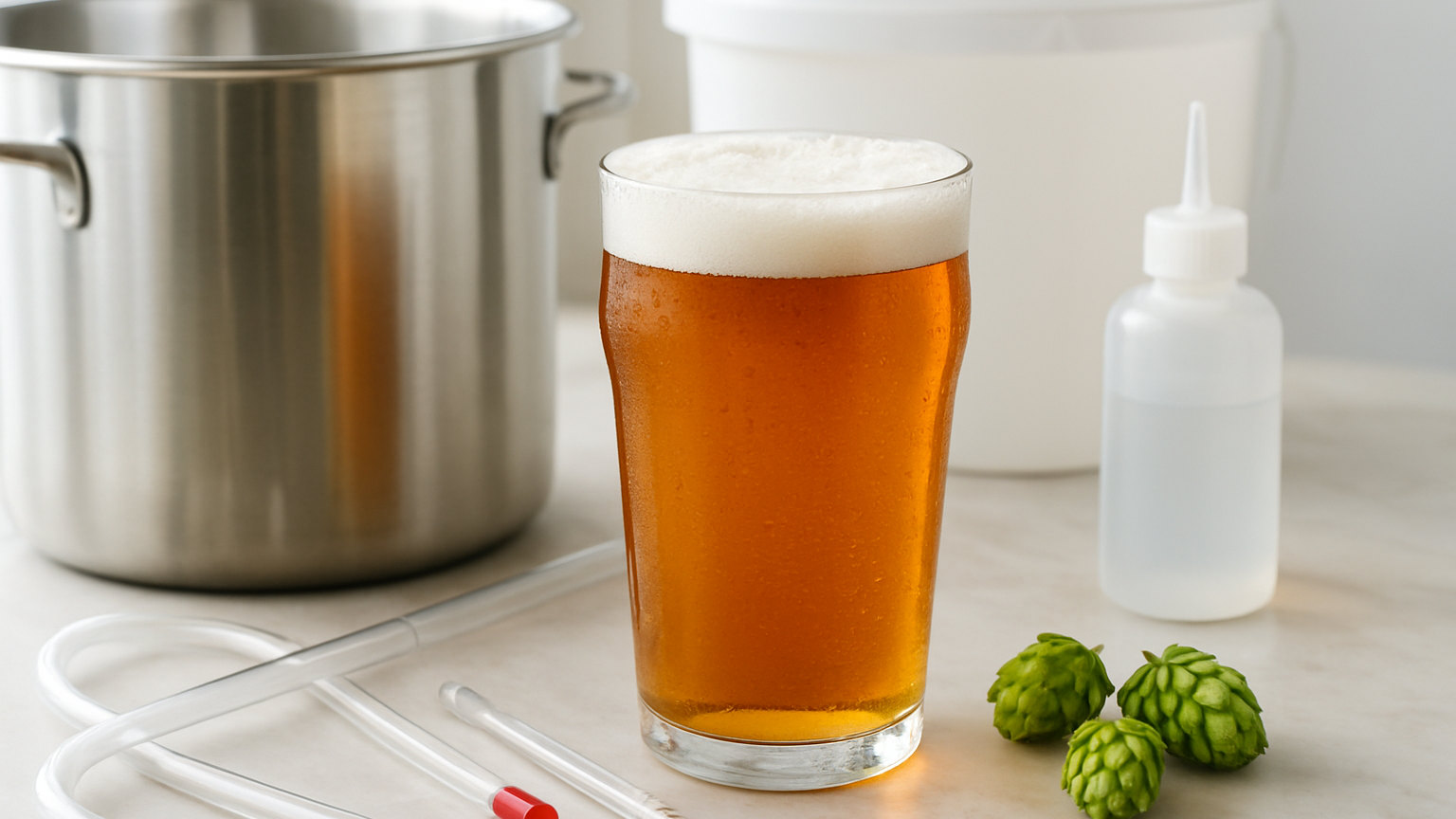
Home brewing equipment lists tend to be written by people with a garage full of it, which makes the hobby look far more capital-intensive than it is. A drinkable first batch needs six items, and the expensive-looking ones are not among them.
What do you actually need?
- Fermenting bucket with lid and airlock, 25 litres or larger.
- Hydrometer and trial jar. The only genuinely non-optional item.
- Thermometer. A stick-on strip for the bucket plus a probe for wort.
- Siphon tube. For transferring without splashing.
- Sanitiser. A no-rinse brewing sanitiser.
- Bottles and caps, plus a capper.
That is a complete kit brewing setup. No kettle, no mash tun, no chiller, and the whole lot costs less than a night out.
Why is the hydrometer the non-negotiable one?
Because it answers a safety question that nothing else can. Beer bottled while still fermenting builds pressure in a sealed glass container, and the only reliable way to know fermentation has finished is three identical readings on consecutive days.
An airlock that has gone quiet proves nothing, and neither does the foam layer collapsing. Everything else on the list can be improvised; this cannot.
Can you brew without one?
People do, and they are relying on the timings in a kit instruction leaflet to match their kitchen temperature. Sometimes it does. When it does not, the result is either flat beer or bottles under unmeasured pressure.
What does the kitchen already cover?
- Large spoon: a long-handled plastic or steel one.
- Measuring jug: for topping up and for priming solution.
- Scales: for weighing priming sugar accurately.
- Pan: for dissolving extract or boiling priming water.
- Funnel: useful and not essential.
None of these needs to be brewing-specific. They need to be clean and, for anything touching cooled wort, sanitised.
What can wait?
Almost everything else, in rough order of when it becomes useful:
- Bottling bucket with a tap. Makes bottling far less messy.
- Bottling stick. Stops flow when lifted. Cheap and transformative.
- Bottle brush and drying tree. Once you are brewing regularly.
- Large kettle. Only if moving to extract or all grain.
- Temperature controlled fridge. The largest quality upgrade, and expensive.
The bottling stick is the best value item on that list. It costs very little and turns bottling from an awkward two-person job into a straightforward one.
What should you not buy at the start?
Anything for all grain brewing, before you know whether you enjoy the process. A mash tun, a 30 litre kettle, a chiller and a grain mill together cost several times the starter kit, and they are useless if the first batch puts you off.
Brew three kit batches first. If you are still enjoying it, the equipment will still be there.
Where should the money go instead?
Into the things that affect quality rather than convenience. A stick-on thermometer and a cool corner of the house improve beer more than a shiny kettle does, because fermentation temperature and sanitation are what actually decide how a batch turns out.
What is worth buying second-hand?
Kettles, fridges, kegs and stainless anything, all of which last decades and are frequently sold by people leaving the hobby. A complete starter kit often appears at a fraction of new price for exactly that reason.
Buy plastic fermenters new, since scratches are invisible until they cause a problem and you cannot judge how a previous owner cleaned them.
How do you know when to upgrade?
When a specific limitation is stopping you doing something you want to do, rather than when a catalogue makes something look appealing. If your hob cannot hold a boil, buy a kettle with an element. If your beers taste harsh in summer, buy temperature control.
What is the single best first purchase?
A complete kit brewing starter set from a home brew supplier. It bundles the six items sensibly, it costs less than buying them separately, and it removes every decision at once while you find out whether you enjoy the process.


