
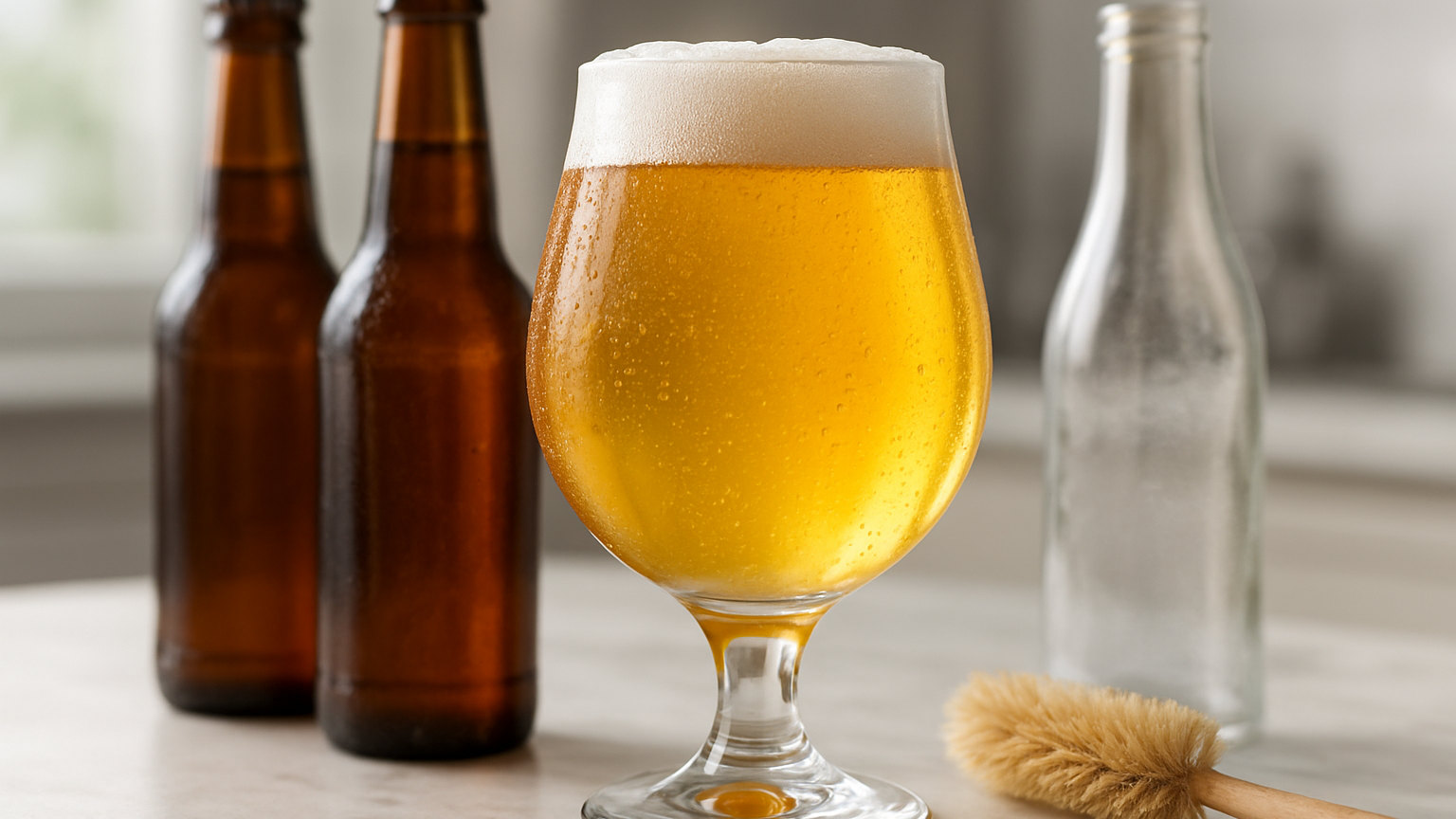
Bottle-conditioned beer contains carbon dioxide under genuine pressure, typically two to three times atmospheric. Beer bottles are designed for that. A great many bottles that look similar are not, and the difference matters more than any other equipment decision in home brewing.
Which bottles are safe?
- Crown-capped beer bottles. The standard. Brown glass, thick walls, designed for carbonation.
- Swing-top bottles in good condition, with an intact rubber seal.
- Champagne bottles. Very thick, rated for high pressure, and need a special corker or a large crown cap.
- PET plastic bottles from carbonated soft drinks.
All four are made to hold internal pressure, which is the only relevant test.
Which should you never use?
- Wine bottles. Made for still liquid. Thin walls and a shallow punt.
- Spirit bottles. Decorative shapes, no pressure rating.
- Screw-top bottles from still drinks. Neither the glass nor the closure will hold.
- Kilner or preserving jars. Designed to hold a vacuum, not pressure.
- Anything decorative or unusually shaped.
The wine bottle case comes up most often, because they are plentiful and look substantial. They fail, and they fail by shattering rather than by leaking.
What about screw-top beer bottles?
The glass is fine, since it is beer glass, but the thread does not accept a crown cap and reusing the original screw cap rarely seals reliably. Some brewers do it successfully and it is not worth the risk on a whole batch.
How do you check a bottle for damage?
Look at two places. Run a finger around the rim for chips, since a chipped rim will not seal and is a cut hazard. Then hold the base up to a light and look for star-shaped cracks radiating from the centre, which indicate impact damage.
Discard anything damaged. A crate of forty bottles will always contain a couple worth throwing away, and the cost of doing so is nothing.
Are plastic bottles a compromise?
The safest option for a first batch, and a good idea regardless. PET bottles do not shatter, and squeezing one tells you when carbonation is complete, which saves opening a glass bottle to find out.
They are slightly permeable to oxygen, so beer in them stales faster over months. For beer drunk within eight weeks that is irrelevant.
Bottling one plastic bottle alongside the glass ones as a gauge is worth doing on every batch.
How do you reuse commercial bottles?
Rinse each one with hot water immediately after drinking. That single habit removes almost all the work, since fresh residue rinses away and dried yeast does not.
Soak the labels off in warm water with a little washing soda, then clean, sanitise and drain upside down. A bottle tree makes forty bottles far less tedious.
How should you store filled bottles?
Upright, in a sealed crate or sturdy box, at around 20 degrees for two weeks, then somewhere cooler. Keep them out of living areas and away from anywhere someone would sit.
If a bottle is going to fail it will do so during carbonation, and a crate contains the result. This is a small precaution against an unlikely but genuinely dangerous outcome.
How many do you need?
Around forty 500ml bottles for a 23 litre batch, or fifty-five 330ml ones. Sanitise a few more than you need, since it is easier than being short with beer already in the bottling bucket.
What about caps?
Crown caps are single use. Reusing one that has been prised off will not seal reliably, and they cost so little that there is no reason to try.
How should you open a suspect bottle?
Chill it thoroughly first, which dissolves more gas back into the beer and lowers the pressure. Open it slowly over a sink, ideally with eye protection, and stand slightly to the side rather than over it.
Where should you store them?
In a sealed crate or sturdy box, upright, out of living areas. If a bottle fails it will almost always do so during the two-week carbonation period, and a crate contains the result entirely.


