
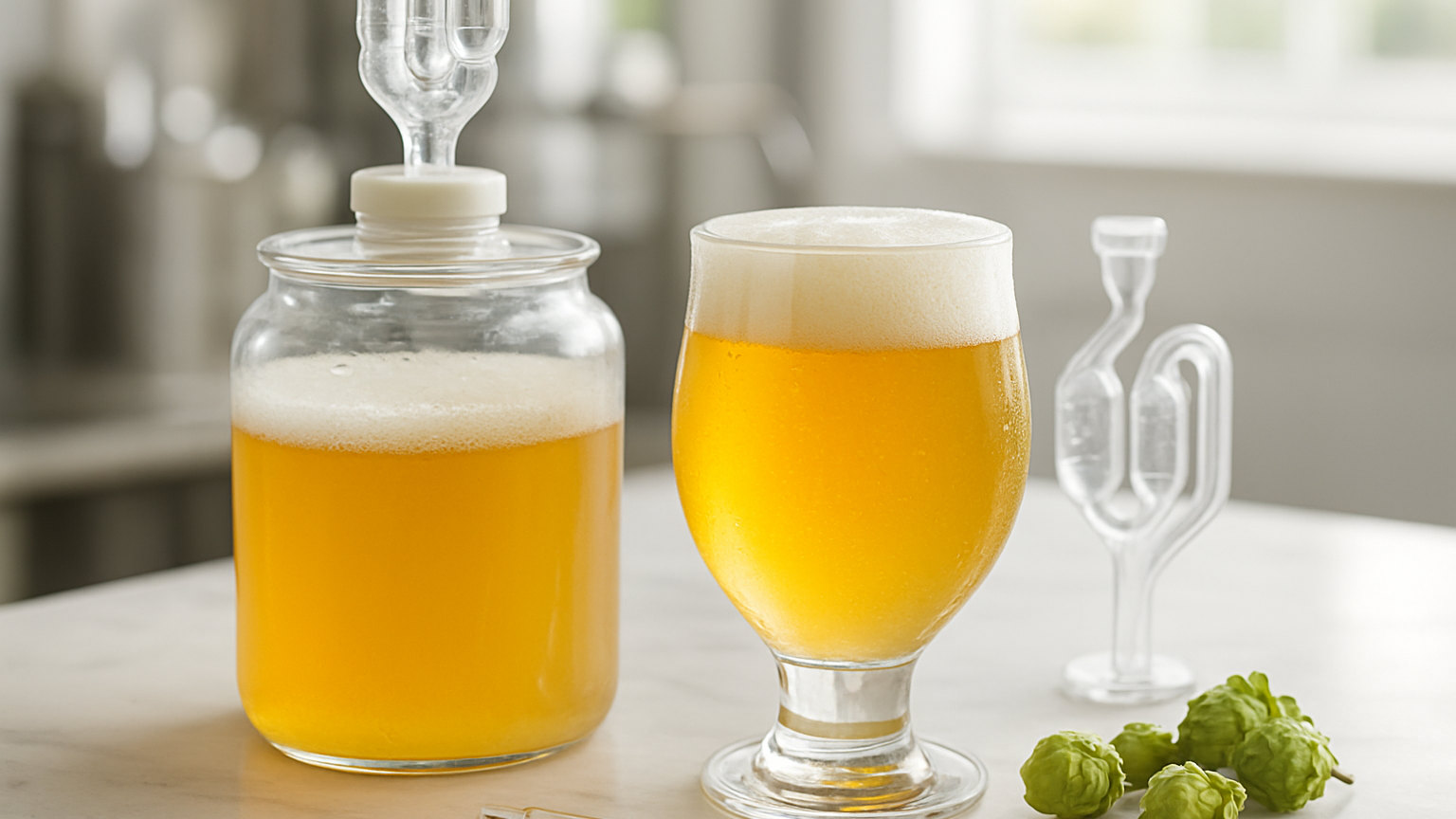
An airlock is a small water trap that lets fermentation gas escape while stopping air, insects and airborne organisms getting in. It costs almost nothing, and the mistake people make is treating it as an instrument rather than a valve.
What are the two main types?
- Three-piece. A cylinder with an internal chamber and a floating cap. Dismantles fully for cleaning.
- S-shaped or bubbler. A twisted tube holding liquid in two bends. Sealed, cheaper, harder to clean.
Both work identically. The three-piece is easier to clean and easier to reassemble incorrectly; the S-shape is simpler and traps residue that cannot be scrubbed out.
Which should you choose?
Three-piece, for the cleaning alone. Dried krausen inside an S-bend is genuinely difficult to remove and it is not visible from outside, which makes it a quiet contamination risk.
What should you fill it with?
Sanitiser solution rather than plain water. If the fermenter cools and draws liquid back through the airlock, which happens, you want that liquid to be sanitised.
Vodka works and is unnecessarily expensive. Boiled and cooled water is acceptable. Plain tap water is the weakest choice, since it contains chlorine and whatever else.
Fill to the marked line only. Overfilled airlocks get blown out by vigorous fermentation.
Why does an airlock prove nothing?
This is the important point. Bubbling means gas is escaping, which usually means fermentation. Absence of bubbling means almost nothing at all:
- Fermentation can be too slow to produce visible bubbles.
- A poorly seated bung or lid lets gas escape silently around it.
- Dissolved carbon dioxide keeps bubbling for days after fermentation ends.
- Temperature changes make an airlock move with no fermentation at all.
The only reliable test of whether fermentation has finished is three identical hydrometer readings on consecutive days. Bottling on the basis of a quiet airlock is how bottles end up under unmeasured pressure.
What is a blow-off tube?
A length of tubing running from the fermenter opening into a jar of sanitiser solution, replacing the airlock. It does the same job with a much larger opening.
Use one when fermentation is likely to be vigorous: a high-gravity beer, a small headspace, a warm fermentation, or a strain known for a thick krausen. A blocked airlock on a fermenting beer can build pressure and pop the lid, which is messy and lets air in as it subsides.
Why does the bung matter?
Because an airlock is only as good as its seal. A grommet that has perished, a bung slightly too small, or a lid not fully clipped down all let gas out around the airlock rather than through it.
That is harmless for the beer and misleading for you, since the airlock sits still while fermentation proceeds normally. Check the grommet occasionally and replace it when it hardens.
How do you clean one?
Dismantle it and wash immediately after use, before krausen dries. Soak in percarbonate cleaner if it has been left, and sanitise before the next batch.
They cost so little that replacing one that has gone cloudy or cracked is more sensible than fighting with it.
Does it matter if the liquid gets sucked in?
It happens when a fermenter cools and the gas inside contracts, and it is why the liquid should be sanitiser rather than tap water. A small amount drawn into the beer is harmless if it was sanitised, and unwelcome if it was not.
How many should you own?
Two or three. They cost almost nothing, they crack, and having a spare means never delaying a transfer because one is dirty or broken.
Is a lid with a grommet enough?
Yes, provided the grommet is intact and the airlock is a snug fit. Perished grommets are the most common cause of an airlock that never bubbles, and replacements cost pennies.
What should you do if it stops moving?
Nothing, initially. Check the lid seal and the grommet, take a hydrometer reading, and take two more over the following days. Opening the fermenter to look is the one response that actively makes things worse, since it introduces air at exactly the wrong stage.


