
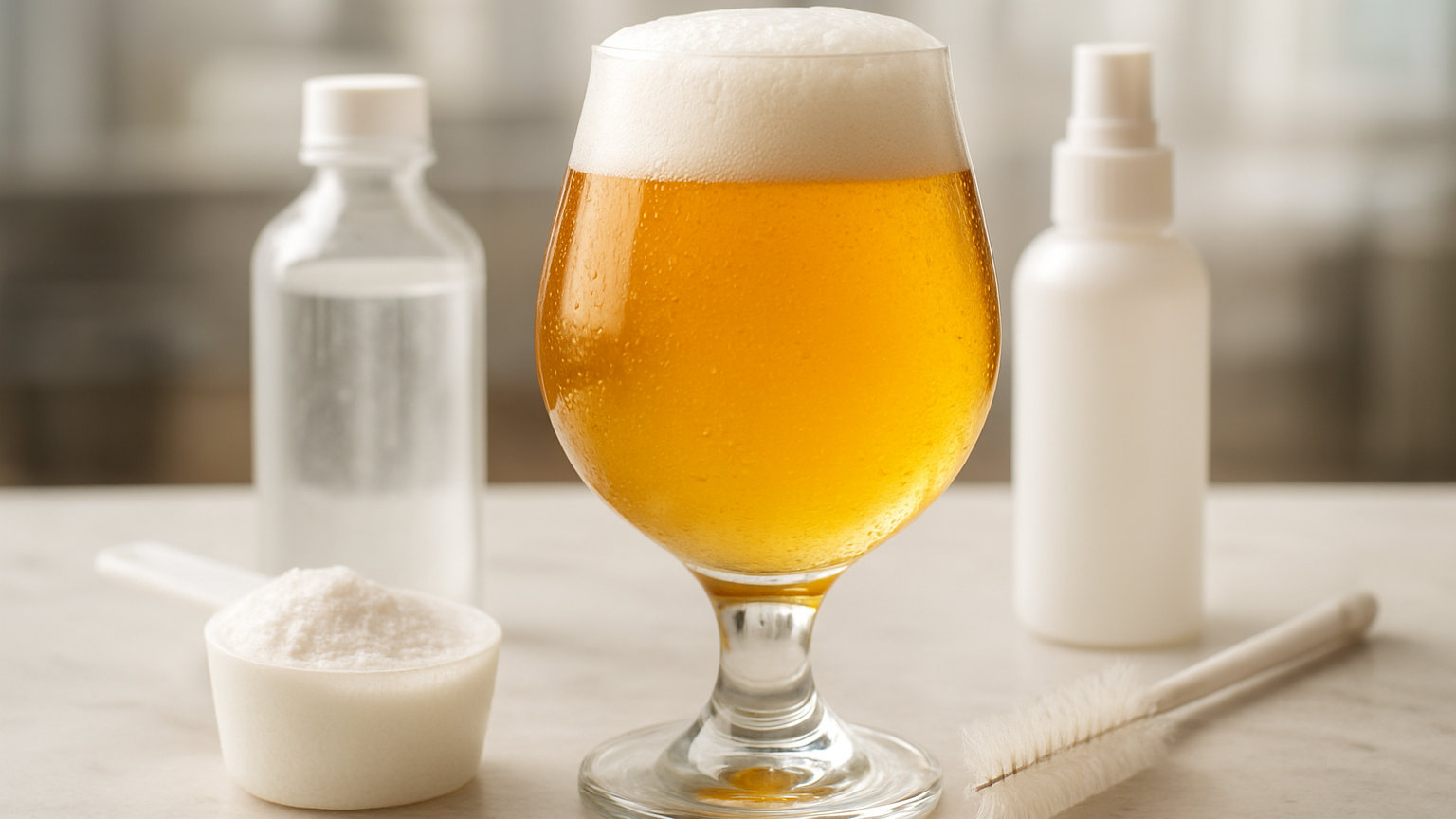
Cleaning and sanitising are different operations needing different chemistry, and confusing the two is behind a large proportion of failed batches. Two products cover everything, and one common household product should never come near brewing equipment.
What is the difference?
Cleaning removes visible soil: sugar residue, yeast sediment, hop matter. Sanitising reduces microorganisms on an already clean surface to a level the brewing yeast will outcompete.
Sanitiser on a dirty surface does very little, because organic material shields whatever is underneath. Clean first, always, then sanitise.
Which two products do you need?
- A percarbonate-based cleaner. Oxygen-based, strongly alkaline, lifts organic residue by soaking rather than scrubbing.
- A no-rinse acid sanitiser. Contact for around 30 seconds, drain, use immediately.
Between them they handle a fermenter, a kettle, bottles, tubing, an airlock and everything else. A tub of each lasts many batches.
Why percarbonate rather than scrubbing?
Because scrubbing scratches plastic, and scratches harbour organisms that sanitiser cannot reach. A scratched fermenter is a permanent risk.
Percarbonate lifts residue chemically. If something will not come off after an hour, soak it longer rather than attacking it with a scourer.
What is the no-rinse part about?
Acid sanitisers work at low concentrations and are food-safe at those levels, so they do not need rinsing. That matters because rinsing with tap water reintroduces exactly the organisms you were removing.
The foam left behind is harmless and disperses in the beer. It looks alarming the first time and it is genuinely fine.
What are the alternatives?
- Sodium metabisulphite. Cheap, effective, sharp smell, and it degrades in solution so must be made fresh.
- Chlorine-based steriliser. Effective and must be rinsed thoroughly, since residue produces medicinal chlorophenol flavours.
- Iodophor. Iodine-based, no-rinse, stains plastic.
Chlorine steriliser is where many people start because it is sold in supermarkets for baby bottles. It works and the rinsing requirement makes it the most likely to cause a fault, since incomplete rinsing tastes exactly like untreated tap water in beer.
What should never be used?
Washing up liquid, on anything that touches beer. It leaves a residue that destroys head retention and taints flavour, and it is difficult to rinse from plastic completely.
Also avoid anything perfumed, anything with added moisturiser, and abrasive cream cleaners.
How much do you use per batch?
Around five litres of made-up sanitiser solution covers a fermenter, lid, airlock and small items. Percarbonate is used as needed for soaking.
A spray bottle of sanitiser is worth keeping for taps, hands and anything touched mid-process, since it uses a fraction of what dunking does.
What about the bottles?
Cleaning is the harder half. Rinse each bottle with hot water immediately after drinking, which removes almost all the work. Dried yeast at the bottom of a bottle needs a brush and an overnight soak.
Then sanitise, drain upside down and fill while still damp. A bottle tree turns forty bottles from an afternoon into twenty minutes.
How should you store them?
Percarbonate powder keeps well in a sealed tub away from moisture, since it absorbs water from the air and loses strength. Acid sanitiser concentrate keeps for years; made-up solution keeps for a few weeks depending on the product and the water used.
Label anything decanted, and keep both away from children and pets. Percarbonate in particular is strongly alkaline and should not be handled without care.
What is the routine per batch?
Clean everything immediately after use, sanitise immediately before the next. Two separate occasions, two separate products, and neither substitutes for the other.
Do you need different products for glass and plastic?
No, and the handling differs. Both products suit both materials, and plastic must never be scrubbed with anything abrasive, so soaking does the work that a scourer would do on glass or steel.
What about the kettle?
It only holds pre-boil wort, so it needs cleaning rather than sanitising. Percarbonate lifts the protein film that builds on the walls, which is otherwise stubborn.


