
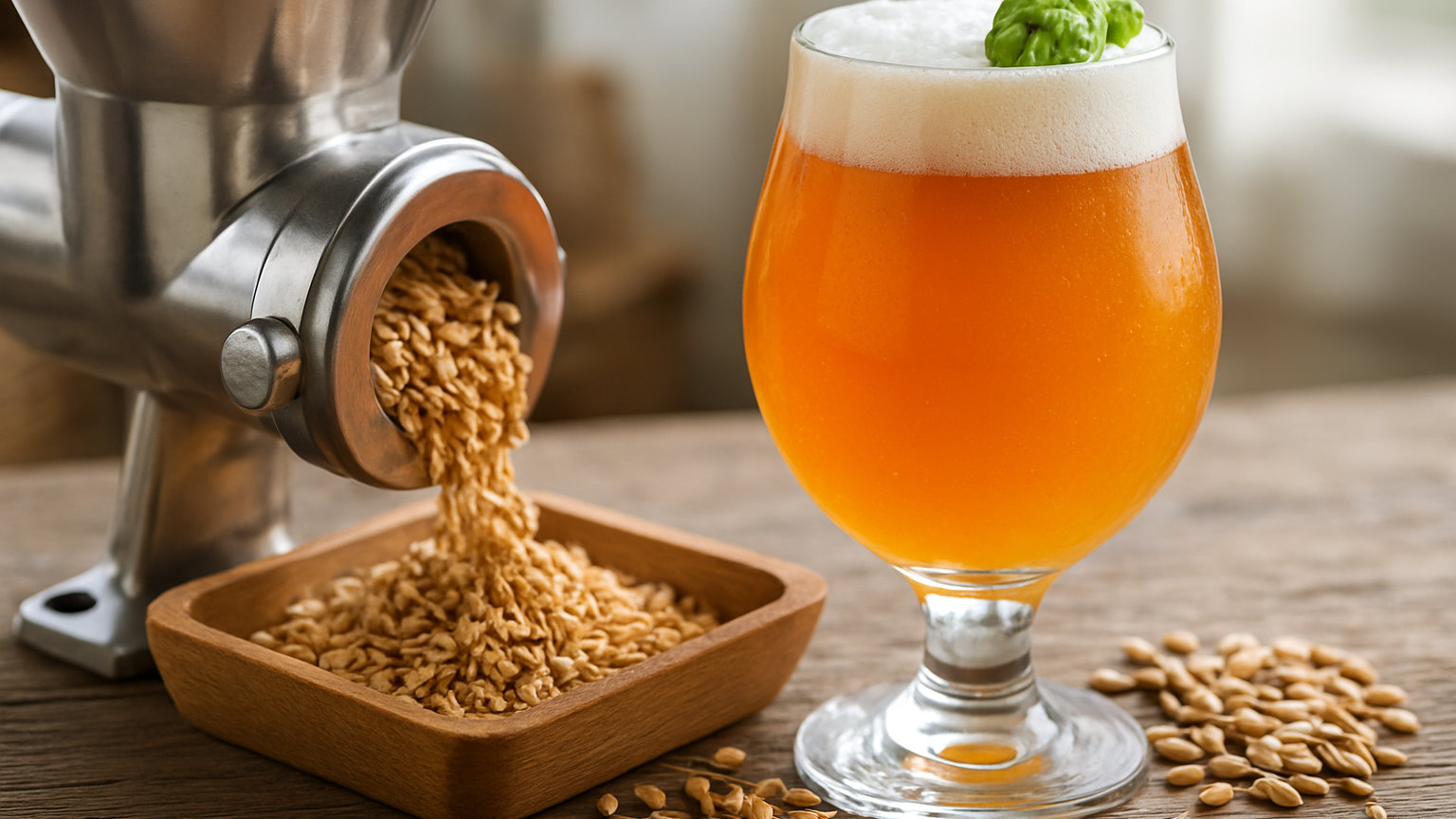
A grain mill crushes malted barley so water can reach the starch inside. Every all grain brewer needs the grain crushed, and very few need to own the machine that does it, because most suppliers will crush it for you at no extra cost.
What is a good crush?
The starchy interior broken into coarse grits, with the husk split but largely intact. That combination is what the whole thing depends on.
- Too coarse: water cannot reach the starch, so efficiency drops.
- Too fine: the husks shred, the grain bed compacts and the mash sticks.
- Correct: visible grits, husks in recognisable pieces, some flour.
Why do the husks matter?
Because they form the filter bed that the liquid drains through during sparging. Shredded husks pack down into a solid mass and the run-off stops entirely, which is a genuinely miserable thing to discover mid-brew.
It is also why wheat, which has no husk, causes stuck mashes and why rice hulls are added to wheat-heavy recipes.
Is pre-crushed grain fine?
For most brewers, yes. Home brew suppliers crush to a sensible setting and it will produce good beer.
The trade-off is shelf life. Crushed grain stales faster than whole grain because the interior is exposed to air and moisture, losing freshness within a few weeks. Whole grain keeps for a year or more in a sealed container.
If you buy grain per batch and brew within a fortnight, this hardly matters. If you buy a 25kg sack, it matters a great deal.
When does a mill pay for itself?
- Buying in bulk. A 25kg sack is substantially cheaper per kilo than pre-weighed bags.
- Brewing frequently. Every fortnight or more.
- Chasing consistency. Your own mill at a fixed gap gives repeatable efficiency.
- Wanting to adjust the crush for a particular method, such as a finer crush for brew in a bag.
For someone brewing once a month from pre-weighed kits, it is an unnecessary purchase.
What gap should you set?
Around 1mm for a traditional mash tun setup, which is where most mills ship. Brew in a bag tolerates a finer crush, often 0.7 to 0.8mm, because the bag does the filtering rather than the grain bed, and a finer crush raises efficiency.
Change one variable at a time and record the gap alongside your efficiency figures. Otherwise you will not know which change produced which result.
What type should you buy?
A two-roller mill with an adjustable gap is the standard home brewing choice. Three-roller mills give a marginally better crush and cost more.
Avoid using a food processor or a blender, which shreds the husks completely and guarantees a stuck mash. A rolling pin works for very small quantities and is not practical for 5kg.
Can you motorise it?
Most mills accept a drill on the drive shaft, which turns twenty minutes of hand cranking into three. Use a low speed setting, since running fast generates heat and can shatter husks.
Clamp the mill securely and keep hands away from the rollers. It is a machine with two counter-rotating rollers and it deserves the same respect as any other.
How should you store whole grain?
In a sealed food-grade container somewhere cool and dry, away from light. Whole malt keeps for a year or more that way, which is the main argument for owning a mill and buying by the sack.
Watch for grain weevils, which get into sacks stored in sheds. A sealed container prevents them, and a sack left open will eventually attract them.
What should you ask a supplier?
Whether they will crush to a specific gap, and when the grain was crushed. Many will accommodate a request, and grain crushed the day it ships is noticeably fresher than grain crushed in bulk weeks earlier.
Is hand cranking realistic?
For 5kg, it takes fifteen to twenty minutes and is genuine work. Most people fit a drill within a batch or two, which reduces it to three minutes at a low speed setting.


