
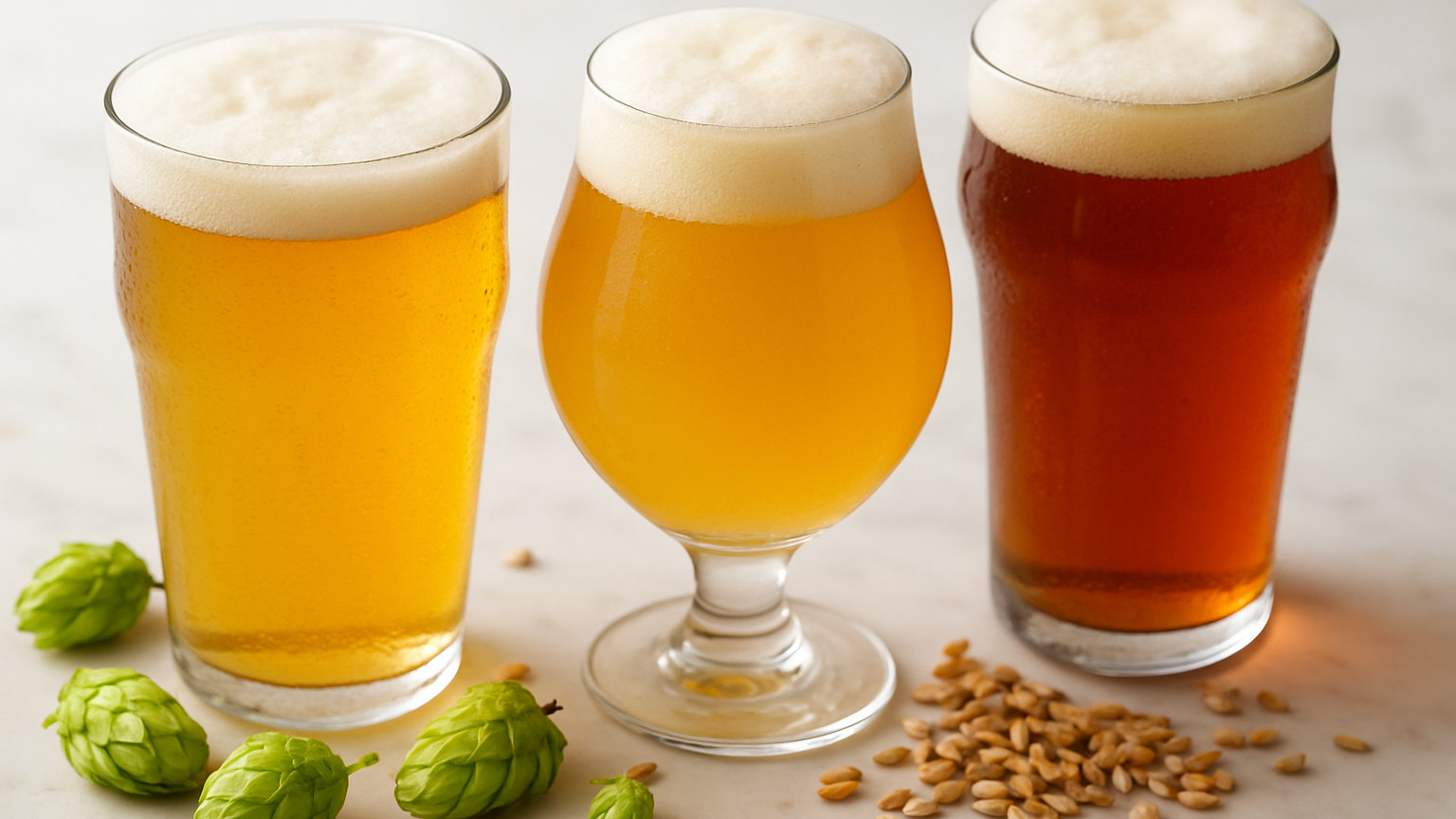
India Pale Ale has become the most confusing term on any beer list, because it now describes several beers that taste almost nothing alike. A pint labelled IPA could be dry and bitter, sweet and juicy, or earthy and restrained. Knowing which one you are being handed makes the category navigable.
What do all IPAs have in common?
A hop-forward character and a bitterness above that of a pale ale, typically 40 IBU or more, with alcohol usually between 5.5 and 7.5 per cent. Beyond that, the branches diverge sharply.
What is an English IPA?
The original, and now the least common. Earthy, floral English hops such as Goldings and Fuggles, a firm malt backbone with biscuit and caramel notes, and a bitterness that is present without dominating.
Around 5 to 6 per cent, amber rather than pale, and noticeably rounder than its American descendants. If you find modern IPAs aggressive, this is the branch worth seeking out.
Was it really brewed for India?
Partly. Well-hopped pale ales did travel to India in the nineteenth century, and hops act as a preservative, so the connection is real. The romantic story that the style was invented specifically for the voyage is an oversimplification, since strong hoppy ales were already being brewed and sold domestically.
What is a West Coast IPA?
The American reinvention and the style most people picture. Clear, pale gold, aggressively bitter at 60 to 70 IBU, with citrus, pine and grapefruit from American hop varieties.
Crucially, it is dry. The malt is deliberately minimal so the hops have nowhere to hide, and the finish is crisp and bitter rather than sweet. A well-made one is bracing.
What is a hazy or New England IPA?
The most recent branch and now the most common. Deliberately cloudy, soft in texture, low in perceived bitterness despite heavy hopping, and intensely aromatic with tropical fruit, mango and citrus.
The haze comes from proteins, yeast in suspension and hop material, and it is intentional. The hopping is loaded almost entirely into the whirlpool and dry hop rather than the boil, which extracts aroma without the harsh bitterness a long boil produces.
They are also the least stable. A hazy IPA is at its best within a month of packaging and noticeably duller at three.
How quickly do they fade?
Faster than any other style. Hop aroma compounds are volatile and degrade with warmth, light and oxygen.
- Hazy IPA: best within 4 to 6 weeks.
- West Coast IPA: good for 2 to 3 months.
- English IPA: more robust, several months.
Check the packaging date rather than the best before. An IPA canned four months ago is a shadow of what it was, and no amount of storage improves it.
How should you serve one?
Cool rather than cold, around 7 to 9 degrees. Fridge cold suppresses the aroma that the style exists for, and a few minutes out of the fridge transforms it.
Use a glass rather than drinking from the can. Aroma is most of what an IPA offers and a narrow can opening delivers very little of it.
Which should you try first?
A hazy if you dislike bitterness, a West Coast if you like it, and an English IPA if both feel like too much. All three are legitimately the style, which is precisely the difficulty with the name.
What about double and session IPA?
Double or imperial IPA runs 7.5 to 10 per cent with proportionally more hops, and it needs a bigger malt base to stay balanced. Session IPA runs 3.5 to 4.5 per cent and pushes almost all its hopping late, since there is little body to carry bitterness.
Both are the same idea at different scales, and both are worth checking the ABV on. A double IPA in a 440ml can is around 3.7 units.
Why did it become so dominant?
Because it gave brewers the widest room to differentiate. Hop varieties multiplied through the 2000s and each new one made a recognisably different beer, which suited a market looking for novelty. The style became a vehicle for showing off ingredients rather than a fixed recipe.


