
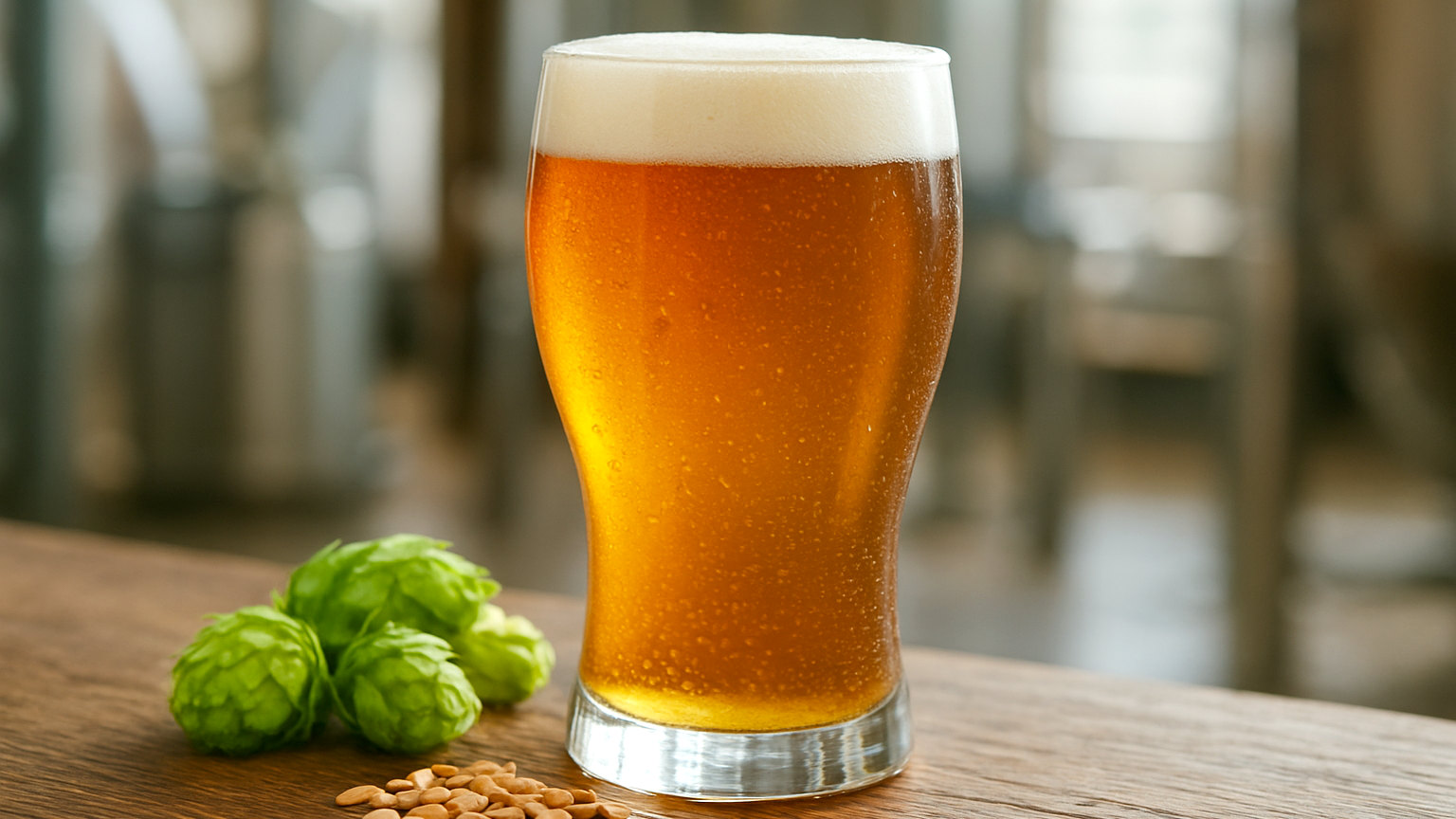
Pale ale is defined by what it does not do. It is not as bitter as an IPA, not as malty as a bitter, not as dark as a brown ale and not as light as a lager. That makes it hard to describe and unusually useful, since it is the style that goes with most food and suits most occasions.
What are the parameters?
- Strength: 4.5 to 6 per cent.
- Colour: gold to light amber.
- Bitterness: 30 to 45 IBU.
- Hops: present and noticeable without dominating.
- Malt: a clear biscuit and light caramel backbone.
The defining quality is that you can taste both the malt and the hops distinctly. In an IPA the hops win; in a bitter the malt usually does. In a pale ale they are in conversation.
How do English and American versions differ?
Almost entirely in the hops:
- English pale ale. Earthy, floral, herbal hops. Fuller malt. Often amber. Around 4.5 to 5.5 per cent.
- American pale ale. Citrus, pine and grapefruit hops. Drier and paler. Around 5 to 6 per cent.
The American version, established in the 1980s, is what most people now mean by pale ale. The English version overlaps heavily with bitter, to the point where the distinction is often marketing.
Where is the line with IPA?
Blurred and getting blurrier. Historically it was strength and bitterness, with IPA stronger and more bitter. Today many beers labelled pale ale would have been IPAs twenty years ago.
As a working guide: under 6 per cent and under 45 IBU is pale ale territory; above both is IPA. Plenty of beers sit in the gap and are labelled according to what the brewer thinks will sell.
What should it smell like?
Noticeably hoppy before you taste it. An American pale ale should give citrus and pine on the nose; an English one should give something floral and slightly earthy.
If there is no aroma at all, the beer is either old or was under-hopped late in the boil. Hop aroma fades within weeks, so a pale ale that smells of nothing has usually been sitting too long.
Why is it the most useful style?
Because it works with more food than anything else. The bitterness cuts through fat, the malt handles roasted flavours, the carbonation clears the palate, and the strength is low enough to drink across a meal.
It is also the safest thing to order when you know nothing about a bar’s list, since it is hard to make one that is actively unpleasant and most places have one.
How should it be served?
At 7 to 9 degrees, cooler than a bitter and warmer than a lager. Too cold and the hop aroma disappears; too warm and the malt turns cloying.
Twenty minutes out of the fridge is about right for most British homes, which run their fridges colder than beer wants.
Is it a good style to brew?
The best first choice, for a specific reason. It is open enough that any fault shows clearly, so a first batch teaches you what you did wrong. Brew a stout first and a fermentation problem hides behind the roast, which teaches you nothing.
What food does it suit?
More than almost anything else. The bitterness cuts through fat, the malt handles roasted and grilled flavours, and the carbonation clears the palate. Burgers, roast chicken, hard cheese and anything fried all work.
It is the safe choice when ordering for a table with mixed food, which is a large part of why it appears on so many lists.
How long does it keep?
Two to three months from packaging, and best within six weeks. Like all hop-forward beers it fades rather than spoils, losing aroma first and then brightness. Check the packaging date rather than the best before.
Buy it from a shop with high turnover rather than one where the same cans sit for months, since that alone accounts for much of the difference between a dull pale ale and a bright one.


