
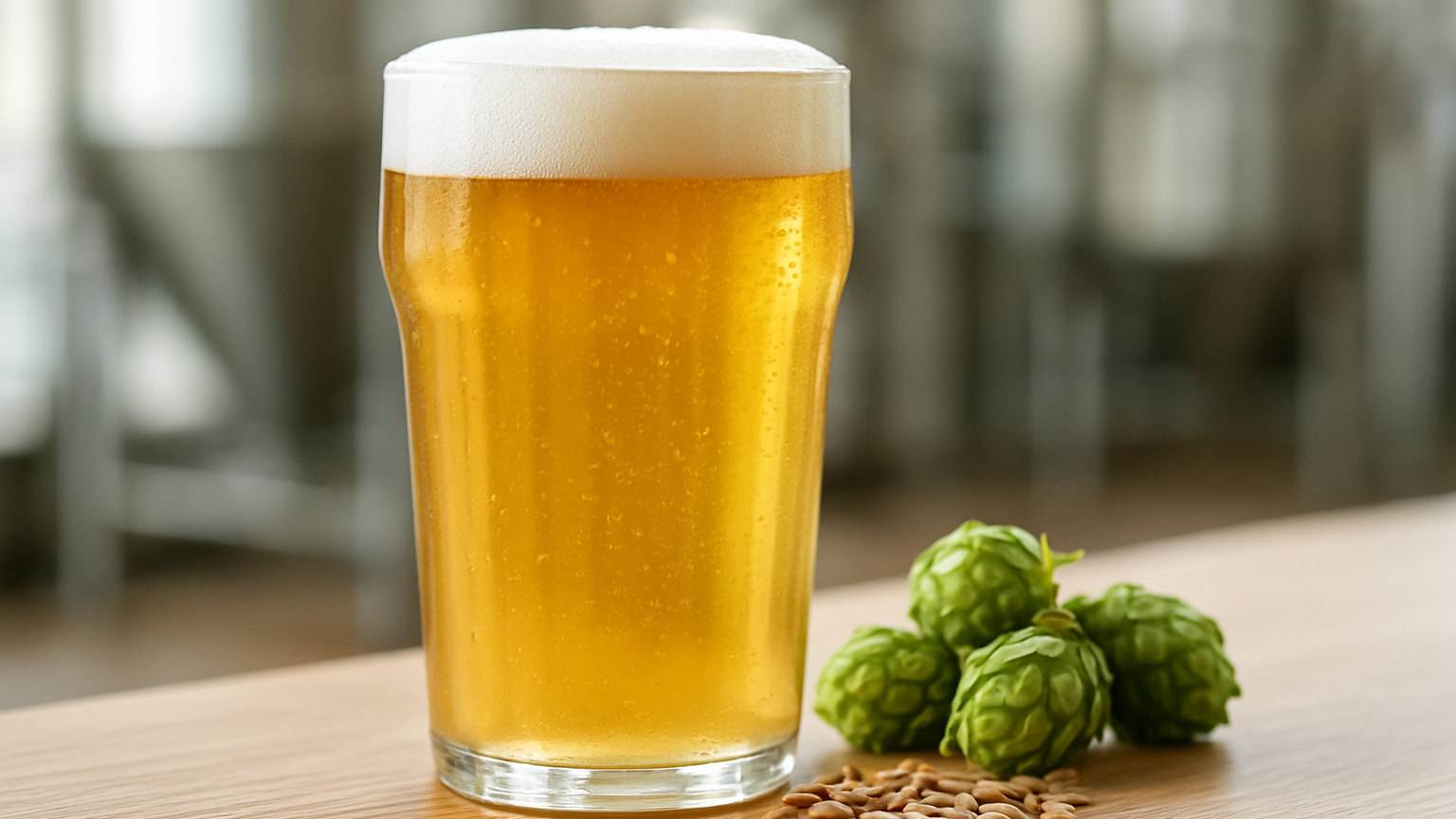
Session beer describes strength and intent rather than flavour. The idea is a beer light enough that you can drink two or three over an evening and still hold a conversation, which was for most of British history simply what beer was.
Where is the threshold?
In the UK, conventionally under 4.2 per cent. In the United States the figure is usually quoted at 5 per cent or below, which reflects a different baseline rather than a disagreement about principle.
The number matters less than the intent. A session beer is designed for volume and conversation rather than for making an impression.
Where does the term come from?
Reportedly from wartime licensing in Britain, where pubs were open for restricted sessions and workers drank within those windows. Whether or not that origin is exact, the meaning has been stable: beer suited to a few hours of drinking.
Why is low strength harder to brew?
Because alcohol contributes body, sweetness and the ability to carry aroma. Take it away and the beer tastes thin unless something replaces those.
Brewers compensate by mashing warmer, which leaves more unfermentable sugar and therefore more body, and by using proportionally more speciality malt. A session beer often has a higher percentage of crystal and wheat in its grain bill than a strong one.
Why is a 3.5 per cent bitter a good test of a brewer?
Because there is nowhere to hide. No alcohol warmth, no strong hop or roast character to mask a fermentation fault. Every mistake is audible. Brewing a genuinely good ordinary bitter is harder than brewing a good imperial stout.
Which styles do it best?
- Ordinary bitter. 3.2 to 3.8 per cent. The archetype.
- Mild. 3 to 3.6 per cent, dark, malty and gently sweet. Nearly extinct and worth seeking out.
- Helles and pilsner. 4.5 to 5 per cent, clean and crisp.
- Session IPA. 3.5 to 4.5 per cent, hop-forward with the strength stripped out.
- Table beer. Around 3 per cent, Belgian in origin, dry and refreshing.
Why does it matter practically?
Because the arithmetic is substantial across an evening. A pint of 3.8 per cent bitter is 2.2 units; a pint of 6.5 per cent IPA is 3.7. Three of the first is 6.6 units and three of the second is 11.1.
Against a weekly guideline of no more than 14 units spread over three or more days, the choice of style genuinely changes what an evening amounts to.
Does session IPA work?
Reasonably, with adjustments. The challenge is that hop aroma needs alcohol to carry it, so a session IPA needs proportionally heavier late hopping to deliver the same impact.
The good ones push almost all the hops into the whirlpool and dry hop rather than the boil, giving aroma without bitterness that a light body cannot support.
Is the term still useful?
More than ever, given how much beer has crept upwards in strength. A bar list where the weakest beer is 5.2 per cent offers no option for an evening of several pints, which is a genuine gap rather than a preference.
Is low alcohol the same thing?
No. Session beer is full beer at modest strength, typically 3.2 to 4.2 per cent. Low alcohol and alcohol free are separate categories under 1.2 per cent and 0.5 per cent respectively, made by different methods and tasting quite different.
How do you spot one?
The ABV, and nothing else. There is no legal or agreed definition, so any beer under about 4.2 per cent qualifies regardless of style. A 3.9 per cent stout is as sessionable as a 3.9 per cent bitter.
Why do so few bars stock them?
Margin, largely. A stronger beer sells at a higher price for similar production cost, so the commercial incentive runs against low-strength brewing. It is a reason to support the places that do stock them.
Supermarket ranges are also thin on them, so a specialist shop or a pub with a cask line is usually the place to look.


