
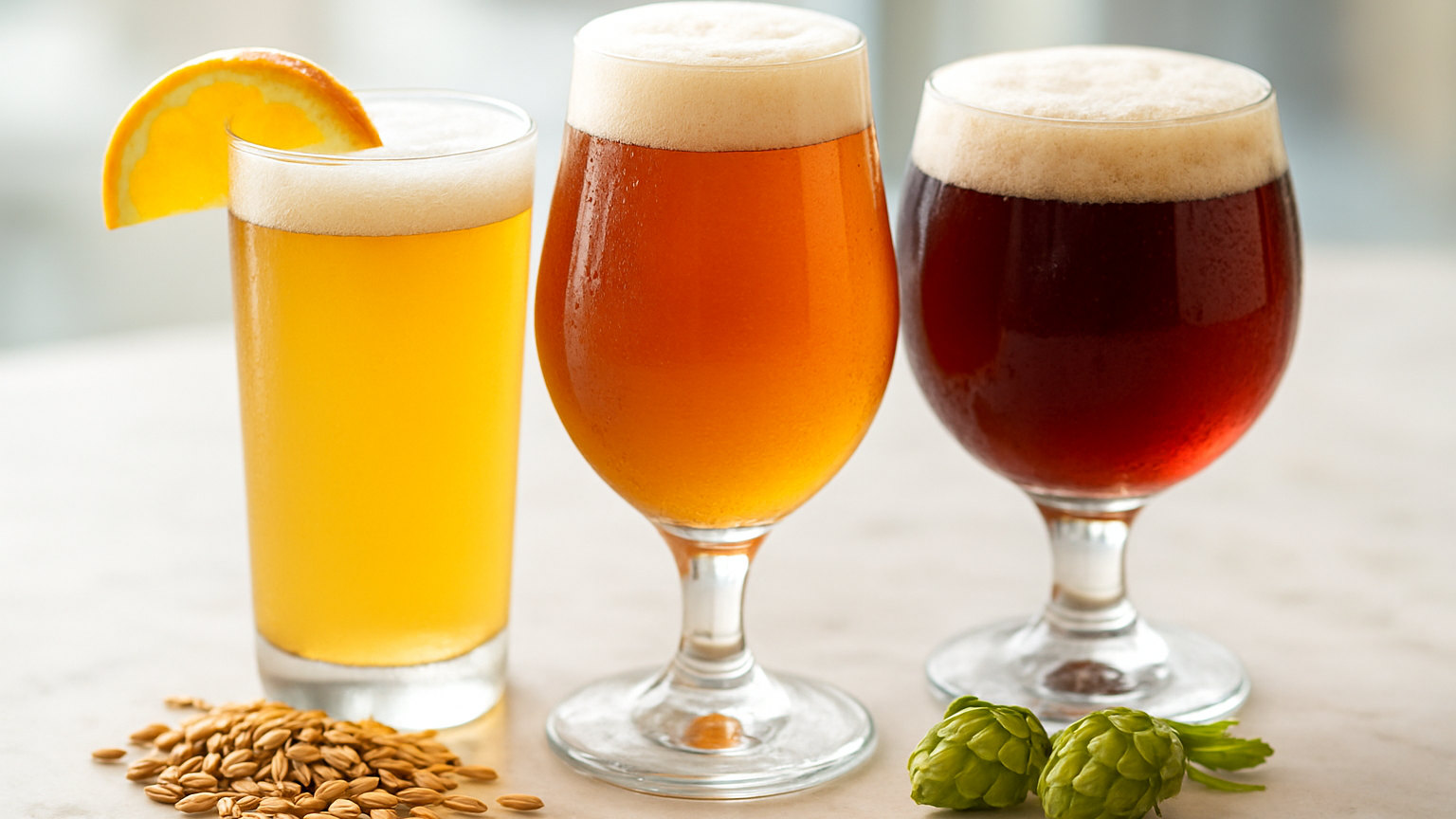
Belgian brewing developed largely outside the purity laws and style conventions that shaped German and British beer, and the results show it. The yeast is usually the dominant flavour, strengths run high, and several styles have no equivalent anywhere else.
Why does the yeast matter so much?
Because Belgian strains produce esters and phenols in quantities that would be considered faults elsewhere. Pepper, clove, banana, pear and a faintly medicinal spice are all deliberate here.
Fermentation temperatures are also high, frequently 24 to 30 degrees, which encourages exactly those compounds. A Belgian ale fermented at British ale temperatures tastes bland and slightly wrong.
What are the main styles?
- Saison. 5 to 7 per cent, dry, peppery, highly carbonated. Originally a farmhouse summer beer.
- Witbier. Around 5 per cent, wheat-based, spiced with coriander and orange peel, hazy.
- Dubbel. 6 to 8 per cent, dark, raisin and fig, gently sweet.
- Tripel. 8 to 10 per cent, pale, deceptively drinkable, spicy and dry.
- Quadrupel. 10 to 12 per cent, dark, intensely rich, ages for years.
- Belgian blonde. 6 to 7 per cent, fruity and approachable.
- Lambic and gueuze. Spontaneously fermented, sour, funky.
- Flanders red and oud bruin. Aged sour ales, tart and vinous.
What is a Trappist beer?
A protected designation rather than a style. It means the beer is brewed within a Trappist monastery, under the supervision of the monks, with profits going to the community or to charity. Only a small number of breweries worldwide qualify.
Trappist breweries make dubbels, tripels and quadrupels among other things, so the term describes provenance rather than what is in the glass. Abbey beers are made in the same styles by commercial breweries.
What is candi sugar for?
Belgian strong ales frequently use sugar as a substantial part of the fermentables. It is fully fermentable, so it raises the alcohol while thinning the body.
That is why a tripel at 9 per cent can taste dry and drinkable rather than heavy. Without the sugar it would be sweet and cloying at that strength. Dark candi sugar also contributes raisin and caramel character to dubbels and quads.
What makes lambic different?
It is fermented spontaneously, using wild yeast and bacteria from the air rather than a pitched culture. The wort is left in an open vessel overnight to catch whatever settles.
The result is sour, funky and unlike anything else, and it takes one to three years in barrel. Gueuze is a blend of young and old lambics, refermented in the bottle. Kriek and framboise are lambics with cherries or raspberries.
How should Belgian beers be served?
Warmer than most, around 8 to 12 degrees, in a glass with a wide bowl. The aromatics are the point, and cold suppresses them.
Be aware of the strength. A tripel at 9 per cent in a 330ml bottle is 3 units, which is more than a large glass of wine, and the style is famous for not tasting it.
Which should you try first?
A saison if you like dry and peppery, a dubbel if you like malty and rich, a witbier if you want something light. All three are widely available and none is difficult to appreciate.
Why are Belgian beers so strong?
Partly historical and partly because sugar lets a brewer raise the alcohol without adding heaviness. A tripel at 9 per cent that drinks like a 6 per cent beer is a deliberate effect, and it is also why the style has a reputation for catching people out.
Serve them in small measures. A 330ml bottle at 9 per cent is 3 units.
What glassware do they use?
Belgian breweries are famous for branded glassware and there is a functional reason behind it. Wide-bowled glasses concentrate the aromatics these styles depend on, and the heavy carbonation needs headroom for the substantial head.
Many are also bottle conditioned, meaning live yeast remains in the bottle, so pour steadily and leave the last centimetre behind unless you want the sediment.


