
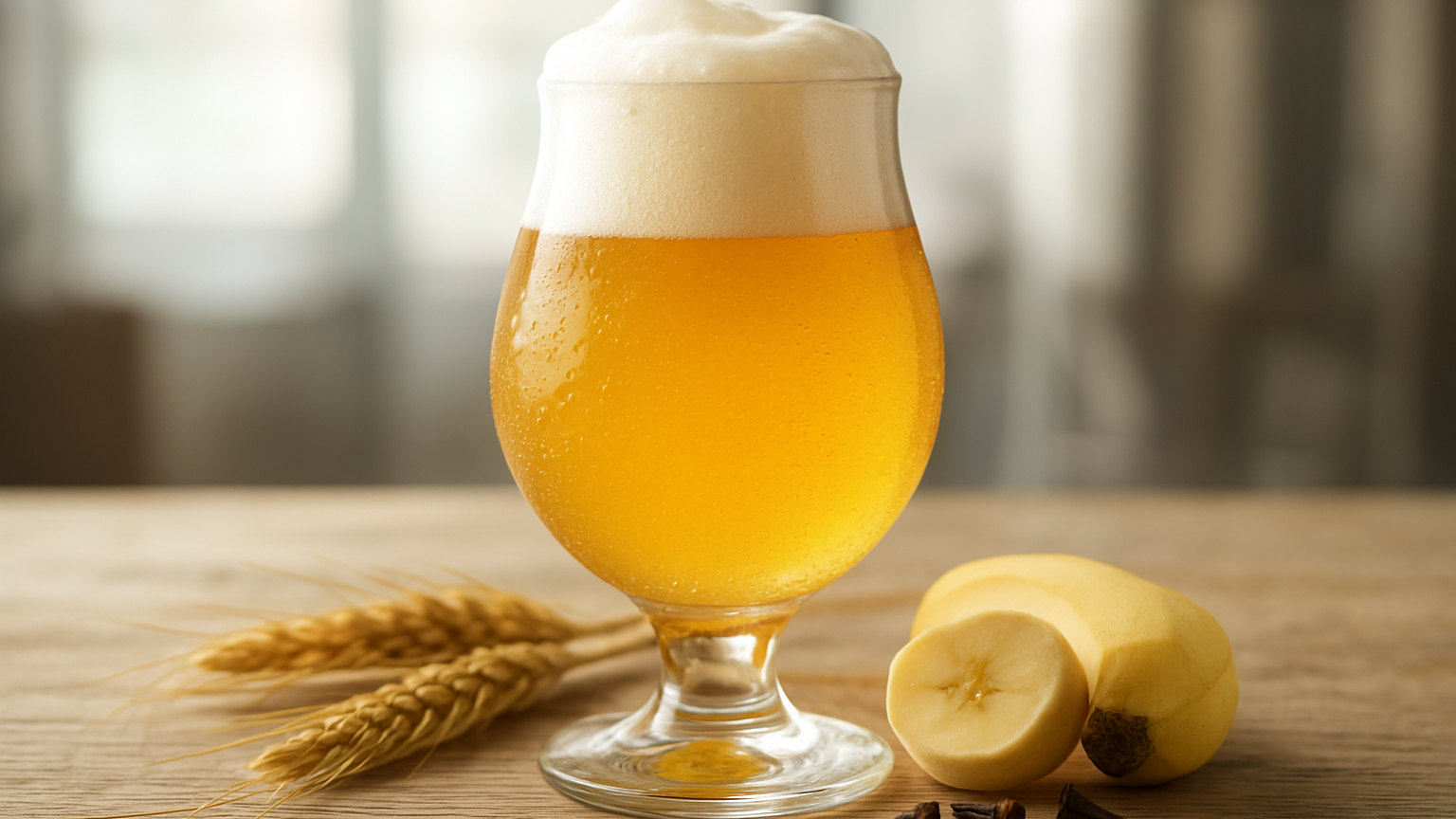
Wheat beer is the style most likely to surprise someone who thinks they dislike beer, because it tastes almost nothing like the category’s stereotype. The flavours people notice first are banana and clove, and understanding where those come from explains most of what the style is.
What does the wheat actually do?
Texture rather than flavour. Wheat has more protein than barley and no husk, which gives a fuller, softer mouthfeel, a thick lasting head and the characteristic haze.
It contributes a faint bready quality and almost none of what people identify as the wheat beer character. That comes from somewhere else entirely.
Where do the banana and clove come from?
The yeast, and specifically German wheat beer strains, which produce two groups of compounds that most brewing yeasts cannot:
- Esters, chiefly isoamyl acetate, which tastes of banana.
- Phenols, chiefly 4-vinyl guaiacol, which tastes of clove.
Fermentation temperature decides the balance. Cooler, around 17 to 18 degrees, pushes towards clove. Warmer, at 23 to 24, pushes towards banana. It is one of the few styles where fermenting warm is a deliberate choice rather than a mistake.
Is that why some taste so different?
Yes. Two wheat beers from the same grain bill can taste substantially different depending on where the brewer held the temperature, which is unusual and is why the style is so variable between producers.
What are the main branches?
- Hefeweizen. German, around 5 per cent, banana and clove, cloudy, unfiltered. Hefe means yeast.
- Kristallweizen. The same beer filtered clear. Cleaner and thinner.
- Dunkelweizen. Darker, with more malt depth alongside the yeast character.
- Weizenbock. Stronger, 7 to 9 per cent, rich and fruity.
- Witbier. Belgian, spiced with coriander and orange peel, lighter and more citrus-led.
- American wheat. Clean yeast, so no banana or clove. Tastes quite different.
How does witbier differ from hefeweizen?
Witbier is Belgian, uses a different yeast, and adds spices, traditionally coriander seed and bitter orange peel. The result is lighter, more citrus and herbal, and much less banana.
It also often uses unmalted wheat, which gives an even softer, hazier body. If a wheat beer tastes of orange rather than banana, it is almost certainly a wit.
Why is it cloudy?
Wheat proteins and suspended yeast, and it is deliberate. The haze contributes to the soft mouthfeel that defines the style, and filtering it out produces a noticeably thinner beer.
The traditional pour reflects this. Pour most of the bottle gently, then swirl the last inch to rouse the settled yeast and add it in. That yeast carries a good part of the flavour.
How should it be served?
Cold, at 4 to 7 degrees, in a tall vase-shaped glass. The glass shape is functional rather than decorative, since it accommodates the large head the style produces and concentrates the aroma above it.
A lemon wedge is common in some markets and disliked in Germany, on the grounds that a good hefeweizen needs no help and citrus flattens the head. Try it both ways.
Is it easy to brew at home?
Among the easiest, with one complication. Fermentation is fast, often complete in five to seven days, and no temperature precision is needed since a range of temperatures all give valid results.
The complication is the mash. Wheat has no husk, so a mash that is half wheat drains slowly and can stick entirely. Adding rice hulls solves it.
Is it gluten free?
No, and this is worth stating plainly. Wheat beer contains both wheat and barley, so it is higher in gluten than most beers rather than lower. Anyone avoiding gluten needs a beer specifically brewed or treated for it.
Which should you try first?
A German hefeweizen, since it shows the banana and clove character most clearly and is the reference point everything else is measured against. Try a witbier next to see how differently the same base grain can behave.
Does it suit food?
Well, and particularly with lighter dishes. Salads, fish, chicken and anything with citrus in it all work, and the softness that makes it approachable also makes it a poor match for heavily spiced food, which flattens it.


