
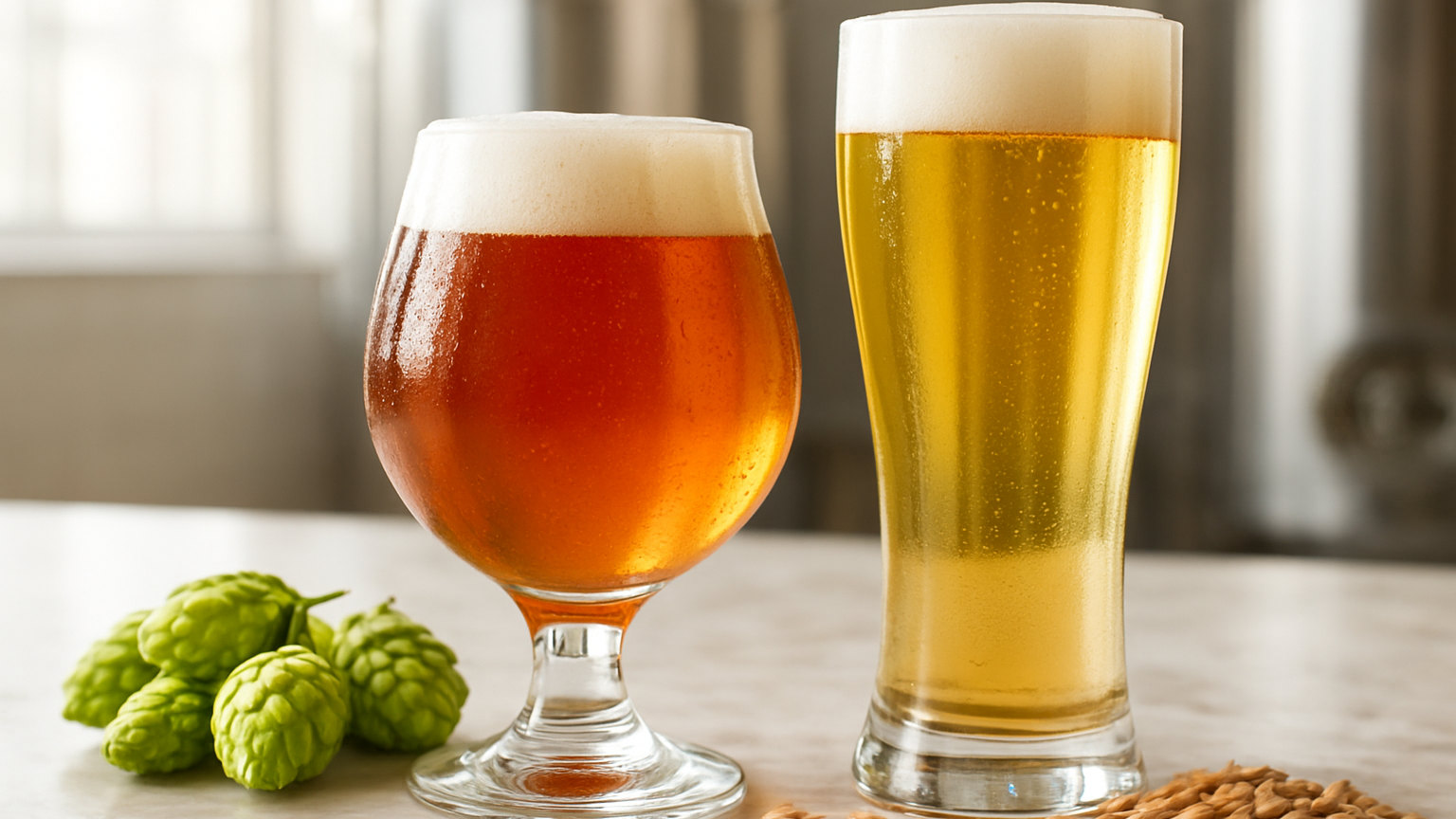
Nearly every beer in the world belongs to one of two families, and the division has nothing to do with colour, strength or where it was made. It comes down to which yeast was used and at what temperature it fermented. Everything else, including why lager takes so much longer to make, follows from that single choice.
What actually separates them?
- Ale yeast. Ferments warm, at 18 to 22 degrees, and works near the top of the vessel.
- Lager yeast. Ferments cold, at 9 to 13 degrees, and works near the bottom.
The old terms are top fermenting and bottom fermenting, which describe where the yeast gathers rather than anything more meaningful. Temperature is the practical difference.
Why does temperature change the flavour?
Because warm yeast produces esters and phenols, and cold yeast largely does not. Esters are fruity compounds tasting of pear, apple and banana; phenols bring clove and spice.
So an ale carries fruit and spice notes from the fermentation itself, layered on top of the malt and hops. A lager carries almost none, which is why lagers taste cleaner and more focused on the grain and the hop character.
Neither is better. They are different tools, and a great many beers are unmistakably one or the other because of it.
Is a lager always pale?
No, and this is the most common misconception. Dunkel, bock, schwarzbier and Vienna lager are all dark or amber lagers, and they are unmistakably lagers by yeast and method. Colour comes from the grain, not the family.
Why does lager take longer?
Two reasons. Cold fermentation is slower, taking two to three weeks against seven to ten days for an ale.
Then comes lagering itself, which is where the name comes from. The German word means to store, and the beer is held near zero degrees for anywhere from three weeks to several months. That cold storage drops out proteins and yeast, mellows harsh compounds and produces the clean, crisp finish the style is known for.
Total time from brew day to glass is around six weeks at minimum, against three or four for an ale.
Which styles fall into each?
- Ales: pale ale, IPA, bitter, stout, porter, wheat beer, Belgian styles, most sours.
- Lagers: pilsner, helles, dunkel, bock, märzen, schwarzbier, most mass-market beer.
Steam beer, or California common, sits between them, using lager yeast at ale temperatures. Kölsch does roughly the reverse, using ale yeast then cold conditioning.
Which is harder to brew at home?
Lager, by a wide margin, and not because of the recipe. Holding a fermenter at 10 degrees for three weeks and then near zero for a month requires a dedicated fridge with a temperature controller.
Ale ferments at ordinary UK room temperature for most of the year, which is why almost every beginner brews ale and why British brewing tradition is ale-dominated. It is a climate story as much as a taste one.
How do you tell them apart in the glass?
Look for fruit. If there is a pear, banana or apple character alongside the malt, it is almost certainly an ale. If the beer tastes clean and direct with nothing between you and the grain and hops, it is probably a lager.
Serving temperature is the other clue. Lagers are served colder, typically 4 to 7 degrees, where ales show best at 10 to 13. A cold ale tastes muted, which is why a properly kept bitter is a revelation to anyone who has only had it fridge cold.
Which came first?
Ale, by a very long way. Warm fermentation happens naturally wherever grain and water are left together, so ale predates recorded history. Lager required cold storage and was developed in central European caves and cellars, becoming widespread only once artificial refrigeration arrived in the nineteenth century.
Does one keep better?
Lager, generally. The cold conditioning drops out proteins and yeast that would otherwise cause haze and staling, and lagers are usually less hop-forward, so there is less volatile aroma to lose. A hoppy ale is the least stable beer there is.


