
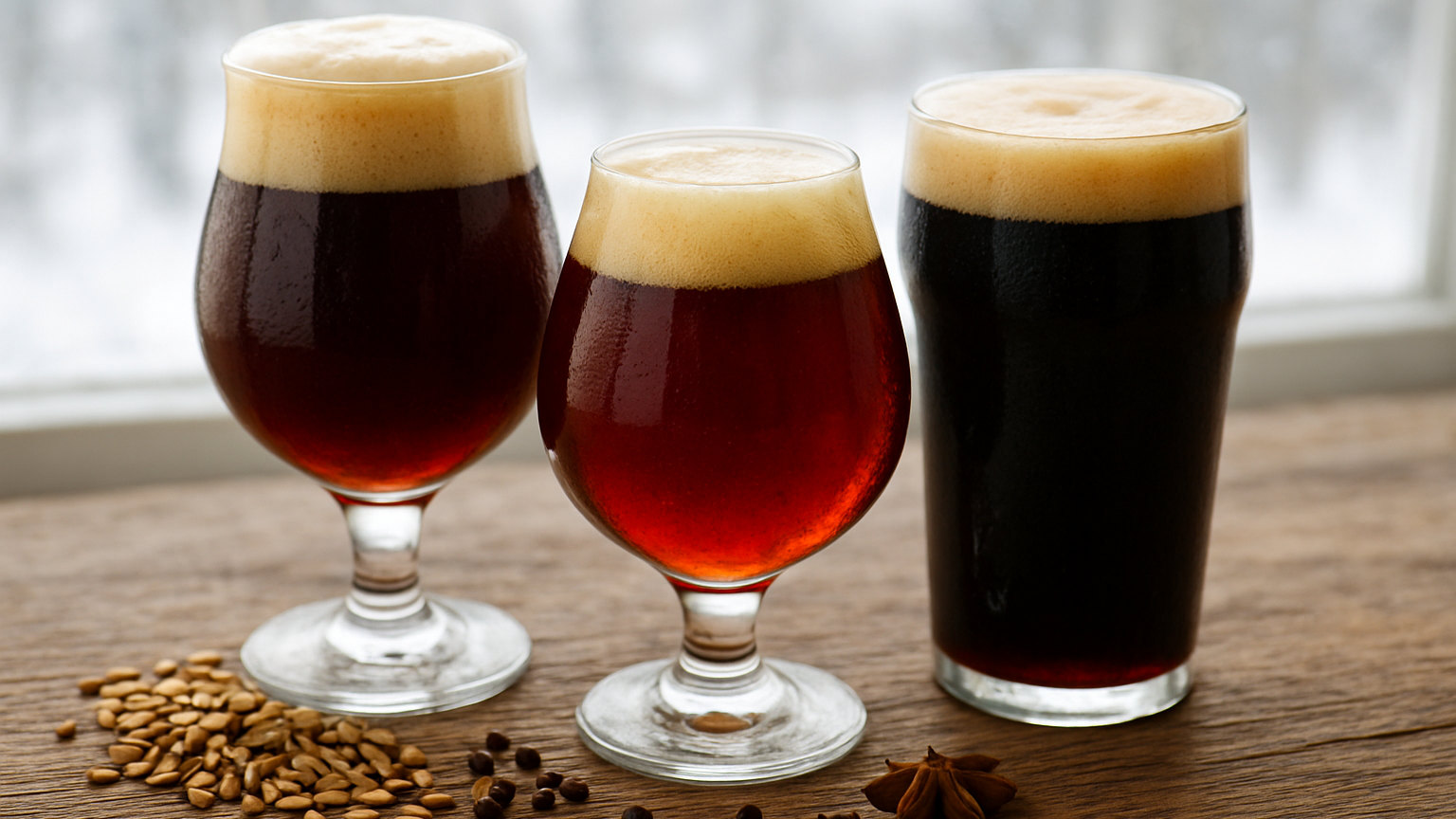
Beer is more seasonal than most people treat it, and the reasons are practical as well as traditional. Warmth suits refreshment and dry bitterness; cold suits malt depth and alcohol. Several styles exist purely for winter and are worth catching while they are around.
What makes a beer suit cold weather?
- Malt-forward rather than hop-forward. Caramel, toffee, roast and dried fruit.
- Higher strength. 6 per cent and above gives a warming quality.
- Fuller body. Less attenuated, more residual sweetness.
- Lower carbonation. Softer and less sharp.
- Served warmer. 10 to 13 degrees rather than 4 to 7.
The through line is that winter beers reward slow drinking, where summer beers reward quick refreshment.
Which styles work best?
- Stout and porter. Roast and chocolate, and best at cellar temperature.
- Old ale. Malty, vinous, often aged. A British winter classic.
- Barley wine. 8 to 12 per cent, rich and sweet, sipped rather than drunk.
- Doppelbock. Strong German lager, bready and deep.
- Belgian quadrupel. Raisin and fig at 10 per cent or more.
- Winter warmer. Spiced ales, often with cinnamon, ginger and orange peel.
- Scotch ale or wee heavy. Malt-heavy, faintly smoky, very rich.
What is an old ale?
A British style, malty and moderately strong at 6 to 9 per cent, traditionally aged so it develops a vinous, slightly sherried depth. Some were historically blended with fresh beer, which is where the milder styles got some of their character.
It is one of the more neglected British styles and one of the most rewarding in January.
Why does serving temperature matter more in winter?
Because the flavours these styles are built on are suppressed by cold. Roast, chocolate, caramel and dried fruit all open up as a beer warms, and a stout from a cold fridge tastes thin and one-dimensionally bitter.
Twenty minutes out of the fridge, or storage in an unheated room rather than a fridge at all, makes a substantial difference. This is the single change most likely to convert someone to dark beer.
What about mulled or heated beer?
A genuine tradition, though it does not suit every beer. Warming drives off carbonation and volatile hop aroma, so a hoppy beer becomes flat and harsh.
A malty dark ale warmed gently with a cinnamon stick, a strip of orange peel and a spoonful of demerara works well. Heat it to steaming rather than boiling, since boiling drives off the alcohol and gives a cooked flavour.
How strong is too strong?
Worth thinking about with these styles. A 330ml bottle of 10 per cent barley wine is 3.3 units, which is more than a large glass of wine and considerably more than a pint of bitter.
They are designed to be shared or drunk slowly in small measures, and a third-pint or a 150ml pour is a perfectly normal serving for anything above about 9 per cent.
Do any keep well?
Strong dark ales are the one beer family that genuinely improves with age. A barley wine, imperial stout or quadrupel stored cool and dark will develop for one to three years, gaining sherry and dried fruit notes.
Buy two and open one a year apart. It is one of the few experiments in beer that costs nothing but patience.
Are winter beers seasonal for a reason?
Historically yes. Brewing was difficult in warm weather before refrigeration, so strong beers were brewed in autumn to last, and the styles that survived are the ones built to age. The seasonality is a practical inheritance rather than a marketing invention.
What should you avoid in winter?
Nothing categorically, though very hoppy pale beers show worst. Their appeal is aromatic brightness, which needs cold serving, and a cold drink in a cold room is less inviting than a warmer one. The beer is fine; the pairing with the weather is not.
The same logic works in reverse in summer, which is why crisp pale styles dominate warm weather drinking almost everywhere.


