
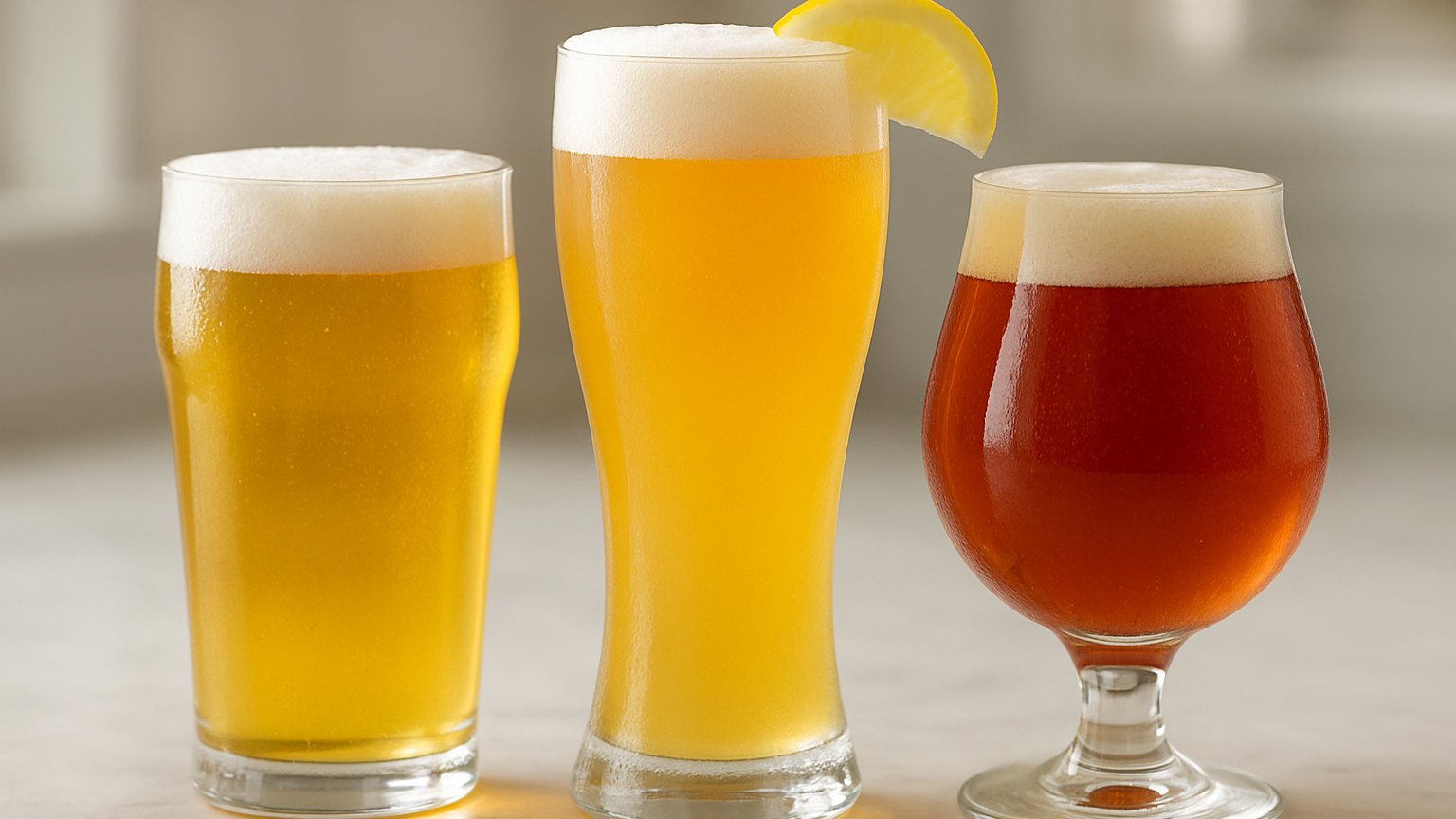
People who say they do not like beer have usually tried two: a mass-market lager and, at some point, an IPA. Those are respectively the blandest and the most aggressive things the category offers, and neither is a fair test of a drink with several hundred styles in it.
What is the actual barrier?
Bitterness, almost always. It is a genuinely acquired taste, and tolerance for it builds with exposure rather than arriving fully formed.
The useful approach is to start with styles where bitterness sits low and other flavours carry the beer, then work upwards as it becomes comfortable.
Which styles should you start with?
- Wheat beer. Soft, low bitterness, banana and clove from the yeast. Genuinely unlike anything else.
- Helles or Munich lager. Clean, bready, gently sweet, almost no bitterness.
- Milk stout. Sweet, low bitterness, chocolate and coffee. Dark without being harsh.
- Fruit beer or sour. Tart rather than bitter, and closer to cider or wine.
- Belgian blonde. Fruity, spicy, easy despite its strength.
Notice that only one of these is pale and none is an IPA. Wheat beer is the single most useful starting point, since it tastes so unlike expectations that it resets the question.
What about dark beers?
Counterintuitively, dark is often easier than pale. Colour comes from roasted grain, not bitterness, and a milk stout is far gentler than a pale ale. Many people who assume dark beer will be heavy find the opposite.
What should you avoid at first?
- West Coast IPA. Deliberately bracing and very bitter.
- Imperial stout. Intense and strong.
- Barley wine. Sweet, strong and demanding.
- Heavily sour or funky beers. Rewarding and an odd first encounter.
None of these is a bad beer. They are all beers that assume a developed palate, and encountering one first is how people decide the whole category is not for them.
What is the natural progression?
Roughly: wheat beer or helles, then pale ale, then bitter or brown ale, then hazy IPA, then dry stout, then West Coast IPA. Each step adds a little more bitterness or intensity than the last.
There is no obligation to complete it. Plenty of people settle happily at pale ale and never develop a taste for aggressive bitterness, which is a perfectly reasonable place to stop.
Does serving temperature matter?
More than almost anything else, and it is the most common mistake. Very cold beer tastes of less, which flattens the styles built on flavour and leaves only the bitterness.
- Lager and wheat beer: 4 to 7 degrees.
- Pale ale and IPA: 7 to 9 degrees.
- Bitter, brown ale, stout: 10 to 13 degrees.
Someone who dislikes bitter should try one at cellar temperature before concluding anything.
What about strength?
Lower strength styles are generally easier as well as more sessionable. A 3.8 per cent bitter or a 4.5 per cent helles gives time to get used to a flavour without the alcohol becoming the dominant impression.
It also means a second one is a smaller commitment, and a category this varied genuinely does take a few attempts.
Does the glass matter?
More than most people expect, and for the same reason temperature does. A narrowing glass concentrates aroma, and aroma is most of flavour. Drinking straight from a can or bottle delivers very little of it, which flattens exactly the styles chosen for their flavour.
How long does it take to develop a taste?
Weeks rather than years, for most people. Bitterness tolerance builds with exposure, so trying something slightly more bitter every few weeks moves further than forcing an IPA and giving up.
What about trying a third of a pint?
The most useful thing a bar can offer someone exploring. Third-pint measures let you try three styles for the price of a pint and a half, and they remove the commitment that makes people order the same thing repeatedly.
Is there a wrong answer?
Only forcing it. Someone who tries a dozen styles and settles on lager has explored properly and reached a legitimate conclusion.


