
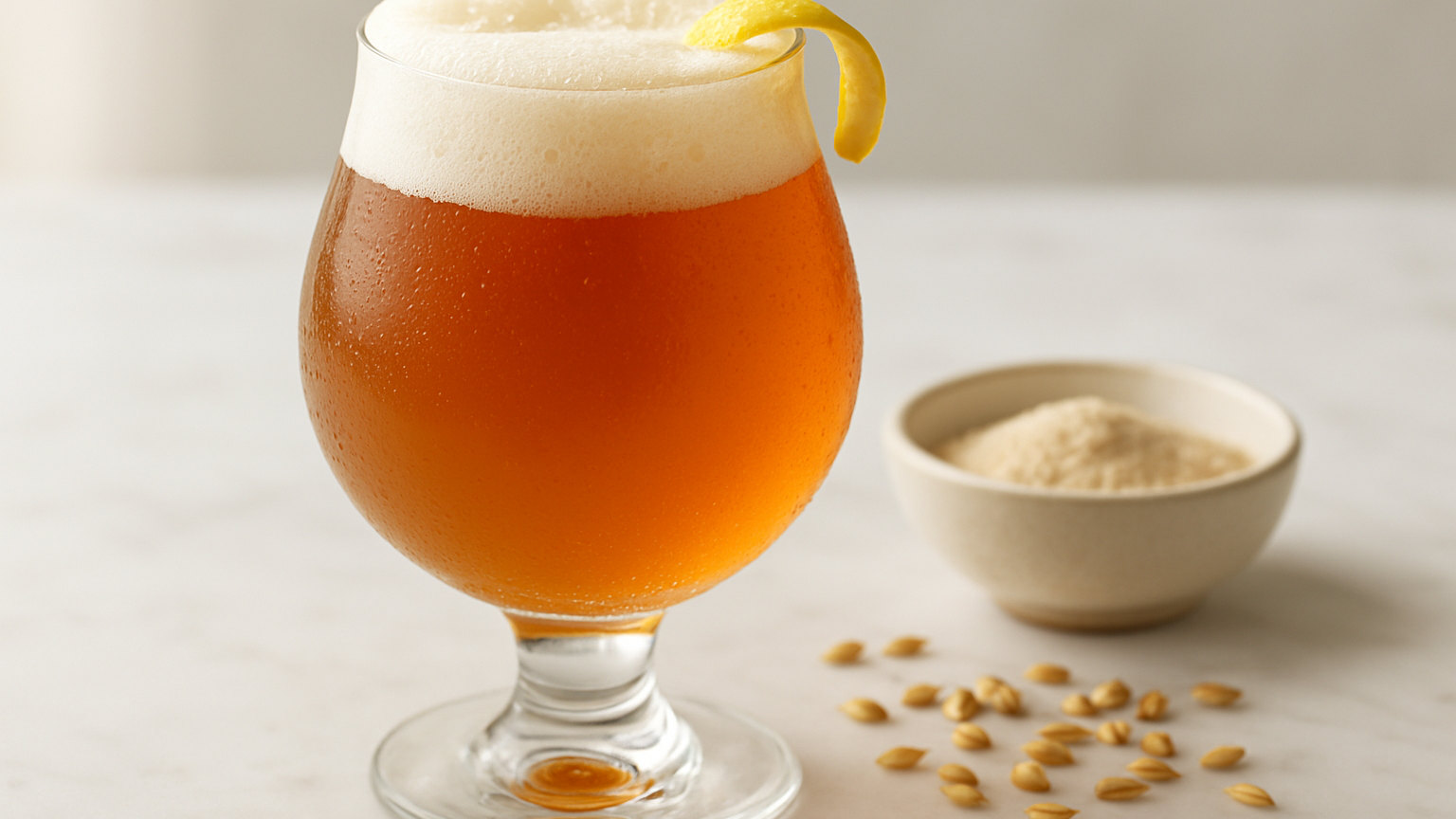
In most beer styles the yeast is meant to be invisible, converting sugar and staying out of the way. Belgian styles invert that completely. The strain and its fermentation temperature produce the pepper, clove, stone fruit and bubblegum notes that define the beer, and the grain bill is often close to plain.
What do Belgian strains actually produce?
Two families of compounds, and the balance between them is what distinguishes one style from another:
- Phenols. Clove, pepper and a faint medicinal note. Most brewing yeasts cannot produce these at all.
- Esters. Pear, banana, apple and bubblegum. Produced more heavily as temperature rises.
A saison strain leans phenolic and peppery. An abbey strain leans towards dark fruit and spice. A witbier strain sits between the two. Substituting one for another changes the beer far more than swapping a hop variety would.
What is a workable saison recipe?
For 23 litres at around 6 per cent:
- 4.2kg pilsner malt
- 500g wheat malt
- 400g Munich malt
- 400g table sugar, added at the end of the boil
The sugar is important and not a cost-saving measure. It is fully fermentable, so it raises the alcohol while thinning the body, which gives the dry, crisp finish the style depends on. Add it once the boil is off the heat and stir until dissolved.
Mash at 64 degrees, deliberately low, to push the finish drier still.
How warm should you ferment?
Warmer than almost any other beer. Saison strains in particular are famous for wanting heat:
- Pitch at 20 degrees.
- Let it free-rise to 26 over the first two days.
- Hold at 28 to 30 for the remainder.
That would ruin a pale ale. Here it produces the pepper and citrus character the style is built on, and a saison fermented cool at 19 degrees comes out bland and slightly sulphurous.
Is there an upper limit?
Some saison strains tolerate 32 degrees and above. Abbey strains are less heat-tolerant and generally sit best between 22 and 26, above which they produce harsh fusel alcohols. Check what the specific strain is rated for rather than assuming all Belgian yeasts want the same treatment.
Why do saison ferments stall?
The classic saison strain is notorious for slowing dramatically around three-quarters of the way through, often sitting at 1.020 for a week and appearing finished when it is not. Bottling at that point is genuinely dangerous, because the yeast frequently restarts in the bottle.
It is usually not a true stall. The strain simply ferments the last portion slowly and needs warmth and time. Raise the temperature, rouse the yeast gently by swirling the fermenter, and wait. Three to four weeks is normal for a saison rather than the ten days a pale ale takes.
How do you confirm it is actually finished?
Gravity readings across three consecutive days with no movement at all. Not two days, and not a guess based on the airlock going quiet, which means nothing.
A saison should finish very low, often at 1.004 or below. If yours is sitting at 1.015 and stable, it is more likely underattenuated than genuinely done, and it is worth pitching a small amount of a robust neutral yeast to finish the job before you bottle.
What about carbonation?
Belgian styles are traditionally highly carbonated, around 150 to 170g of sugar for the batch. This is at the upper end of what standard bottles handle safely.
Use bottles rated for pressure, ideally thick Belgian-style bottles or swing tops in good condition. Given the strain is known for restarting, the combination of high priming sugar and an uncertain final gravity is the one situation where home brewing bottles genuinely do burst. Confirm the gravity is stable and store the bottles in a crate somewhere a failure would be contained.
Which hops belong in it?
Very few, and understated. Thirty grams of a noble or English hop at 60 minutes, aiming for around 28 IBU, and nothing later. The yeast character is the point, and a citrus-forward late addition simply muddles it.


