
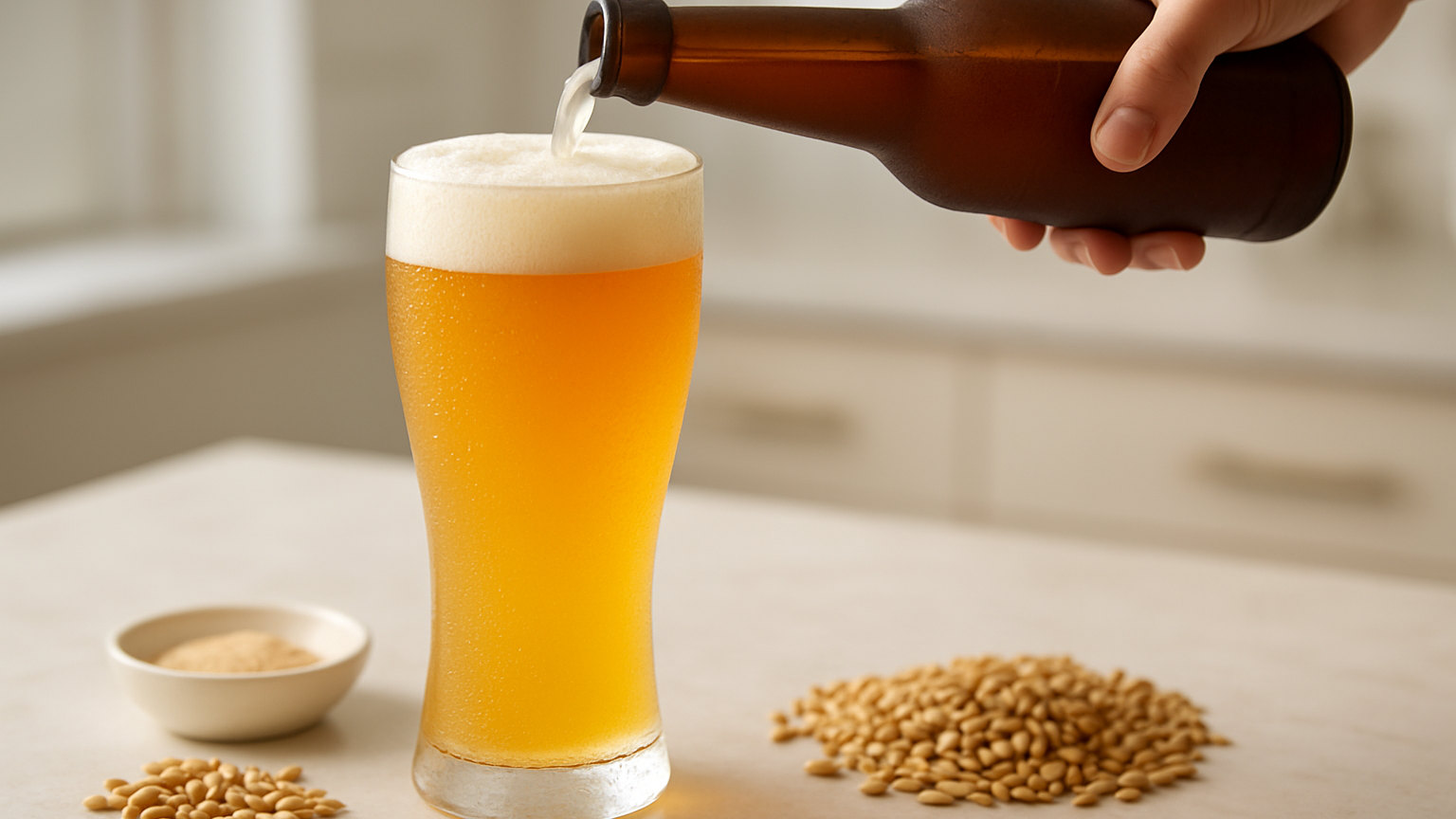
A German-style wheat beer tastes of banana and clove, and neither of those comes from wheat. They come from the yeast, and specifically from how warm you let it ferment. The grain bill provides body, haze and head retention. Understanding that division makes the style far easier to brew well.
What is the grain bill?
For 23 litres at around 5.2 per cent:
- 2.5kg wheat malt
- 2.5kg pilsner malt
Fifty-fifty is traditional and works. Push the wheat higher, to 60 or 70 per cent, and you get more body and a thicker head, but the mash becomes considerably harder to work with.
No crystal malt, no roasted grain, no adjuncts. The style is pale and delicate, and anything added tends to sit awkwardly against the yeast character.
Why does wheat cause a stuck mash?
Wheat has no husk. Barley husks form a natural filter bed that the liquid drains through, and a mash that is half wheat has half the filtration material it needs. The result is a slow, gluey run-off that eventually stops entirely.
Two fixes work. Add 250g of rice hulls to the mash, which are flavourless and provide the physical structure the husks would have. Or run off far more slowly than usual and stir the grain bed as little as possible once it has settled.
How should you mash it?
At 66 degrees for sixty minutes. Some brewers add a rest at 44 degrees for twenty minutes first, which encourages the production of ferulic acid, the precursor the yeast converts into the clove flavour. It is worth trying if you want the clove note to dominate, and unnecessary otherwise.
Which yeast and at what temperature?
A German wheat beer yeast, and this is not a strain that can be substituted. No other yeast produces the same compounds, and using a clean ale yeast gives you a pale, cloudy beer with no wheat beer character at all.
Temperature controls the balance:
- 17 to 18 degrees: clove dominant, spicy and restrained.
- 20 to 21 degrees: balanced between banana and clove.
- 23 to 24 degrees: banana dominant, sweet and fruity.
This is one of the few styles where fermenting warm is a deliberate choice rather than a mistake. Decide which end you want before you pitch, and hold the temperature steady, since a fermentation that drifts gives a muddled result.
How many hops does it need?
Very few. Twenty grams of a low-alpha German hop at 60 minutes is enough, aiming for around 12 IBU. The point is a faint bitterness to keep the beer from tasting flabby, not any hop flavour of its own.
Late hops and dry hopping are actively unhelpful here. Citrus and pine notes fight the banana and clove rather than complementing them.
Should it be cloudy?
Yes, and deliberately so. The haze comes from wheat proteins and suspended yeast, and it contributes to the soft, full mouthfeel that defines the style. Do not use finings and do not cold crash it clear.
When serving from a bottle, pour most of it gently, then swirl the last inch to rouse the settled yeast and add it in. That yeast carries a good part of the flavour, and a wheat beer poured perfectly clear tastes noticeably thinner.
How long before it is ready?
This is one of the fastest styles to turn around. Fermentation is usually complete in five to seven days, and two weeks in the bottle is enough to carbonate.
Carbonate higher than usual, at around 150g of sugar for the batch. Wheat beers are traditionally lively, and the carbonation contributes to the perception of lightness. Use bottles rated for pressure and check them, since the combination of high carbonation and a fast-finishing yeast leaves little margin if fermentation was not fully complete when you bottled.
Confirm the gravity has been stable across three consecutive days before you prime. A wheat beer that goes into the bottle a few points high is the classic recipe for a shelf of over-carbonated bottles that foam out the moment they are opened.


