
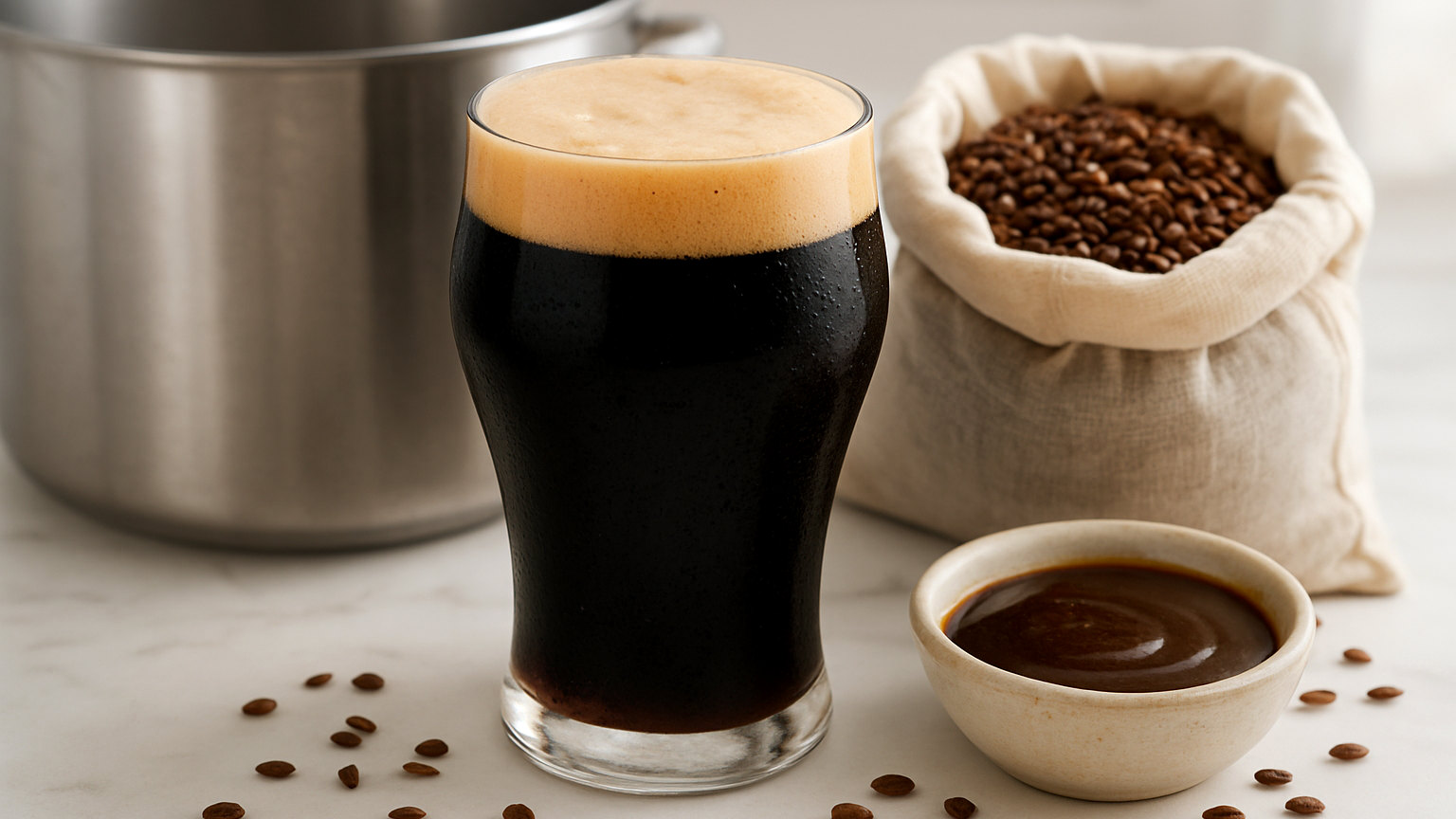
Stout is the style that suffers least from being brewed with extract, and understanding why makes it the obvious first dark beer. The character comes overwhelmingly from roasted grains, and roasted grains do not need mashing at all. They give up their colour and flavour to hot water by simple steeping, which any stockpot can manage.
Why does steeping work for dark grains?
Mashing exists to convert starch into fermentable sugar using enzymes in the malt. Heavily roasted grains contain almost no starch and no working enzymes, because roasting destroyed both. What they contain is colour, flavour compounds and tannins, all of which dissolve readily in hot water.
So the roasted barley, chocolate malt and black malt in a stout recipe do not need a mash. Only the base malt does, and extract has already had that done for you.
What equipment do you need?
- A stockpot of at least 15 litres.
- A fermenting bucket with an airlock.
- A hydrometer and trial jar.
- A grain steeping bag, or a large muslin square.
- A thermometer.
- Sanitiser.
No mash tun, no sparge arm, no second vessel. A partial boil in a 15 litre pot topped up in the fermenter is a perfectly legitimate method and produces good beer.
What is the recipe?
For 23 litres at around 4.8 per cent:
- 2.7kg light dry malt extract
- 400g roasted barley
- 300g chocolate malt
- 300g flaked barley
- 35g English hops at 60 minutes
- English ale yeast
One caveat on the flaked barley: unlike the roasted grains it does contain starch, and steeping alone will not convert it. Either accept the modest haze and body it gives unconverted, or substitute 200g of carapils, which contributes similar body and needs no conversion.
What is the steeping method?
Put the grains in the bag and steep in 6 litres of water held at 68 degrees for thirty minutes. Lift the bag out and let it drain without squeezing. Squeezing forces out tannins and is the main cause of astringency in extract brewing.
When does the extract go in?
After steeping, and this is the step where extract brews most often go wrong. Take the pot off the heat before stirring in the extract, and stir until it is fully dissolved before returning it to the burner.
Extract that sinks to the bottom of a hot pot scorches, and scorched extract gives a burnt, caramel-toffee flavour that will not fade. Off the heat, stir thoroughly, then back on and bring to the boil slowly.
How do you handle a partial boil?
Boil around 12 litres for sixty minutes with the hop addition at the start, then top up to 23 litres in the fermenter with cold pre-boiled water. The cold top-up cools the wort at the same time, which removes the need for a wort chiller.
Because the boil is concentrated, hop utilisation is lower. If you are following a recipe written for a full boil, increase the bittering hops by around 20 per cent to hit the same bitterness. In a stout this matters less than in a pale beer, since the roasted grain supplies plenty of perceived bitterness anyway.
What should you expect from the result?
A good stout, genuinely. The gap between extract and all grain is narrowest in dark styles, and blind tastings routinely fail to separate them.
Ferment at 19 to 20 degrees for ten to fourteen days, confirm the gravity is stable across three days, then bottle with 90g of sugar for the batch. Give it two weeks to carbonate and another two to settle, and serve at cellar temperature rather than fridge cold.
Which faults are specific to extract brewing?
- Burnt or toffee-like: extract scorched on the bottom of the pot. Always dissolve off the heat.
- Astringent: the grain bag was squeezed, or steeped above 70 degrees.
- Overly sweet: older liquid extract, which ferments less readily. Dry extract is more reliable.
- Darker than expected: a long boil with the full extract in from the start. Add half at flameout instead.


