
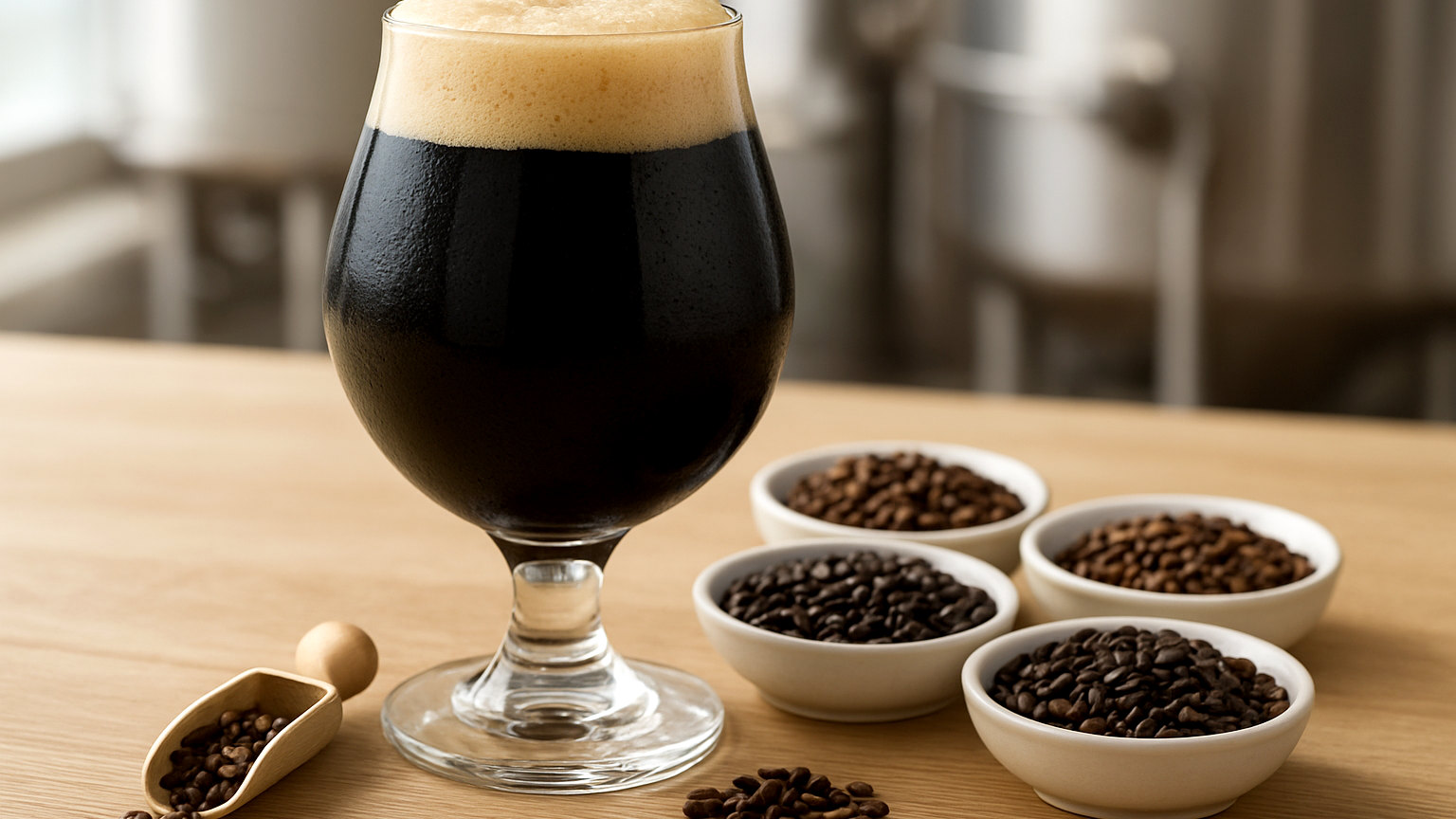
Stout is defined by its dark grains, and those grains are far less interchangeable than recipes suggest. Roasted barley, chocolate malt and black malt all look similar in the bag and produce quite different beers. Choosing the wrong one is the usual reason a home stout comes out either acrid or oddly weak.
What does each dark grain contribute?
- Roasted barley. Unmalted and heavily roasted. Sharp coffee bitterness and a dry finish. This is what makes an Irish dry stout taste the way it does.
- Chocolate malt. Smoother and sweeter, with cocoa rather than coffee. Less astringent.
- Black malt. Mostly colour with a hard, slightly ashy edge. Use sparingly.
- Flaked barley. Not roasted at all. Adds body and a thick, creamy head.
Substituting roasted barley for chocolate malt in equal weight will produce a noticeably harsher beer. They are not equivalents.
What is the grain bill for a dry stout?
For 23 litres at around 4.5 per cent:
- 4kg pale ale malt
- 500g flaked barley
- 400g roasted barley
That is the classic three-part structure and it is deliberately spare. The flaked barley gives the body and head that people associate with stout, and the roasted barley gives colour, aroma and a large part of the perceived bitterness.
How do you make a sweeter stout instead?
Reduce the roasted barley to 250g, add 300g of chocolate malt, and add 400g of lactose to the last ten minutes of the boil. Lactose is not fermentable by brewing yeast, so it remains in the finished beer as sweetness and body. That gives a milk stout.
How should you mash it?
At 68 degrees for sixty minutes, warmer than a pale ale. Stout wants body, and a warmer mash leaves more unfermentable sugar behind to provide it.
Add the dark grains at the end of the mash rather than the start if you want to reduce harshness. Steeping them for the final fifteen minutes extracts colour and flavour with less of the tannin and acidity that a full sixty minutes pulls out. Many brewers find this single change makes their stout noticeably smoother.
Why does stout need so few hops?
Because the roasted grain is already supplying a great deal of perceived bitterness. Adding a heavy hop bitterness on top of that produces a beer that is aggressive from front to back with nothing to relieve it.
A single addition of 35g of a traditional English hop at 60 minutes is enough. Late hops and dry hopping are generally wasted, since the roast character will bury any delicate aroma you paid for.
What yeast and fermentation temperature?
An English or Irish ale yeast at 19 to 20 degrees. These strains leave a little residual sweetness and a subtle fruitiness that suits the style, where a very clean American yeast can leave a dry stout tasting stark.
Ferment for ten to fourteen days and confirm with gravity readings rather than the calendar. Stout hides many faults but not underattenuation, which leaves the beer cloyingly sweet and flat-tasting.
How should you carbonate it?
Lower than most beers. Use 90g of sugar for the batch rather than the 120g you would use for a pale ale. Stout served at high carbonation feels sharp and prickly, and the softer mouthfeel that suits the style comes partly from having less gas in it.
Serve at cellar temperature, around 12 degrees, rather than fridge cold. Roast and chocolate flavours are largely suppressed below about 8 degrees, and a stout straight from a cold fridge tastes thin and bitter compared with the same beer twenty minutes later.
When is it ready to drink?
Two weeks in the bottle to carbonate and ideally another two to settle. Stout benefits from conditioning more than a pale ale does, and the harsh edges from the roasted grain soften considerably over the first month. It also keeps far longer than a hoppy beer, staying good for six months or more if stored cool and dark.


