
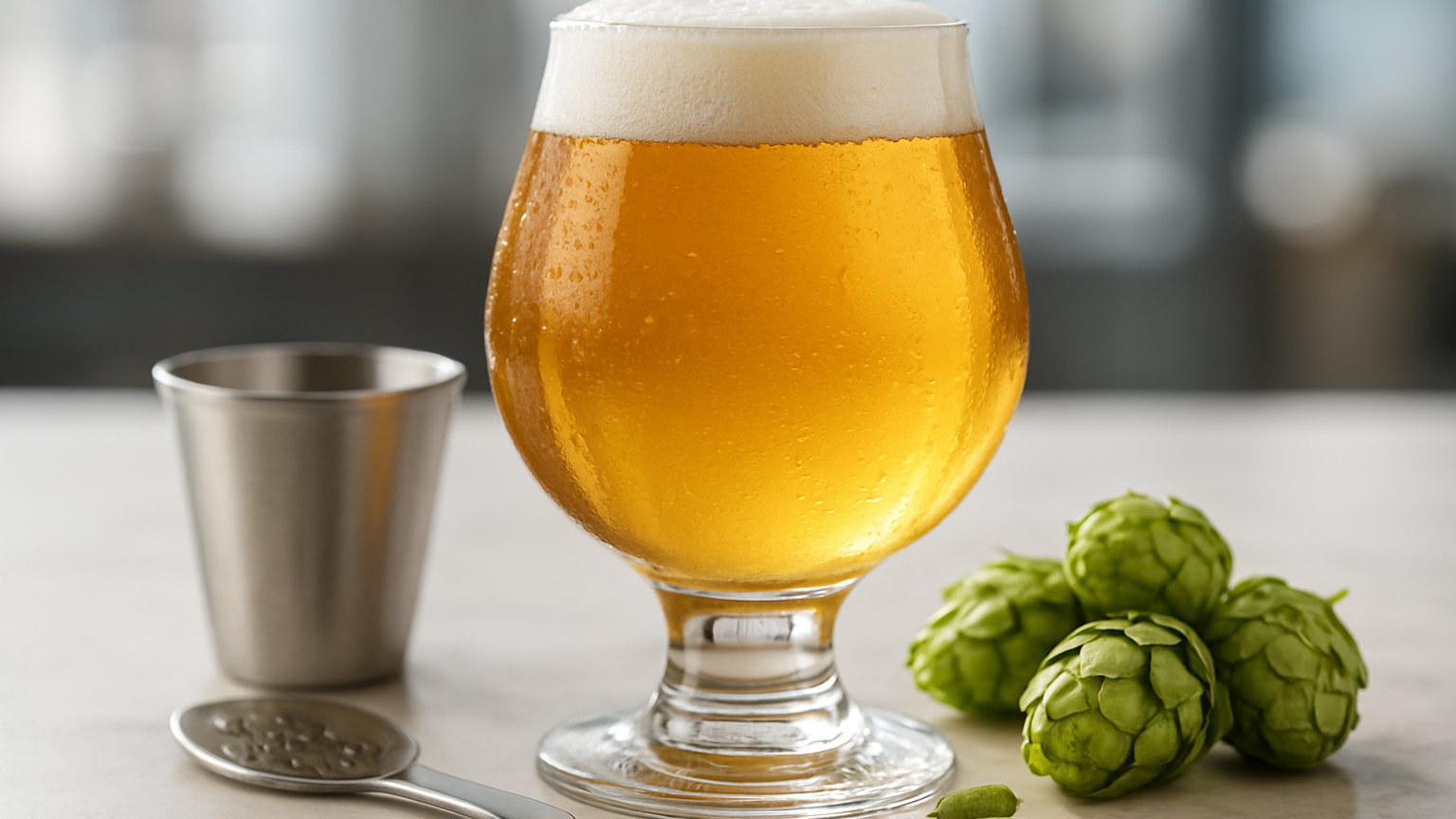
Alcohol carries aroma. Drop a beer from 6 per cent to 3.8 and the same hop schedule produces noticeably less impact, because there is less solvent holding the volatile compounds and releasing them as you drink. Brewing a good session ale is not a matter of diluting a stronger recipe, and the hop decisions in particular have to change.
What is the grain bill?
For 23 litres at around 3.8 per cent:
- 3.2kg pale ale malt
- 300g Vienna malt
- 200g light crystal malt
- 150g wheat malt
Note how much specialty grain there is relative to the base, proportionally more than in a stronger beer. Session beers taste thin unless you deliberately build body back in, and Vienna and crystal are doing that job.
Mash at 68 degrees, warmer than you would for a pale ale. The extra unfermentable sugar gives mouthfeel that the missing alcohol would otherwise have provided.
Which hop varieties suit low alcohol beers?
Hops with bright, high-impact aroma rather than subtle complexity, because subtlety disappears entirely at this strength:
- Citra, Mosaic, Galaxy. Intense tropical and citrus character that carries even in a light beer.
- Cascade, Centennial. Grapefruit and pine, reliable and widely available.
- Nelson Sauvin. Distinctive white wine note, effective in small quantities.
Earthy English hops such as Fuggles are excellent in a traditional bitter but tend to vanish in a modern session ale where you are looking for a loud aroma from a small beer.
How should the timing change?
Push almost everything late. A session beer needs relatively little bittering, because there is not much malt sweetness to balance and an over-bittered light beer is harsh and hollow.
- 60 minutes: 15g only, aiming for around 25 IBU.
- Whirlpool at 80 degrees: 70g, steeped for twenty minutes.
- Dry hop: 60g for three days.
That is a large quantity of late hops for a small beer, and it is deliberate. Aroma and flavour without bitterness is exactly what you want here.
Does dry hopping cause problems in a light beer?
It can. Hops absorb liquid, and in a low-gravity beer the proportional loss to hop material is more noticeable. Grassy flavours also show more readily because there is less else going on, so keep the dry hop to three days rather than a week.
Which yeast keeps it from tasting thin?
A strain with moderate rather than high attenuation. Very attenuative yeasts will ferment a session beer almost completely dry, leaving it watery. An English ale strain or a moderately attenuating American one will finish around 1.010 and leave some body behind.
Ferment at 19 degrees. Fermenting warm produces esters that in a strong beer add complexity but in a light beer simply read as a fault.
Why does water treatment matter more here?
Because with so little malt and alcohol, the mineral content of the water becomes a larger proportion of what you taste. A chloride-forward profile, achieved with a small addition of calcium chloride, makes the beer feel fuller and rounder.
This is the opposite of what you would do for a strong IPA, where sulphate sharpens the bitterness. In a session beer, softness is what you are trying to protect.
When should you drink it?
Quickly. Session ales are the least age-worthy beers there are, since the hop aroma that defines them fades and there is no malt depth or alcohol underneath to fall back on. Two weeks to carbonate and then drink within six weeks.
That is not a problem so much as the point. A 3.8 per cent beer is one you can have two of on a weeknight, which is precisely why the style exists, and 23 litres disappears faster than you expect.
What goes wrong most often?
- Watery: mash temperature too low, or too little specialty grain in the bill.
- Harsh and hollow: over-bittered for the gravity. Drop the 60 minute addition.
- No aroma: the late hops went in too hot, or the beer has been stored warm.
- Cidery: fermentation ran too warm for a beer with nothing to hide behind.


