
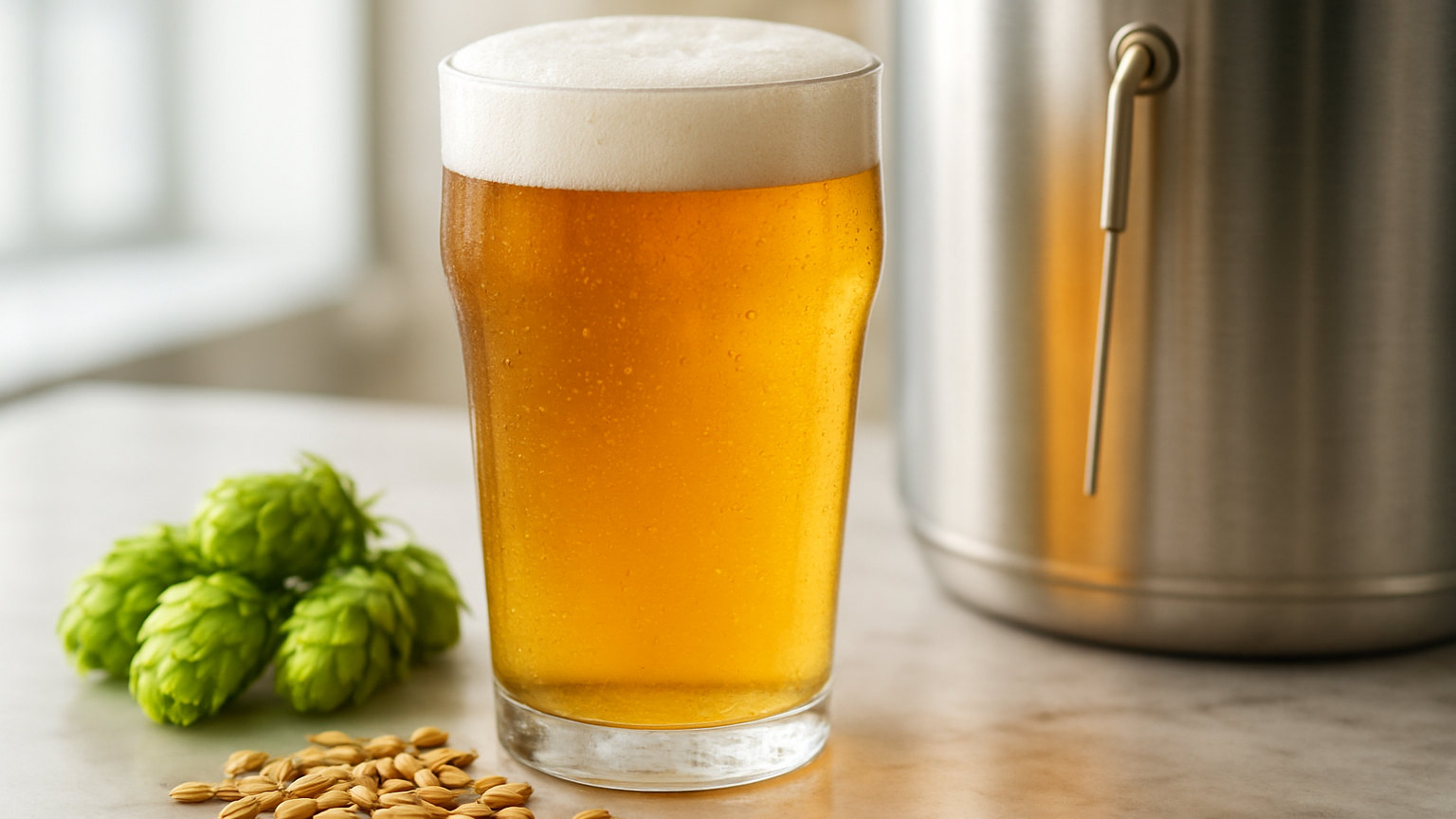
Golden ale is the beer people ask for when the weather turns, and it is considerably harder to brew than it looks. There is no dark malt to hide behind, no strong hop character to distract, and no alcohol warmth to mask a rough fermentation. Every fault is visible, and warm weather makes those faults more likely.
What is the grain bill?
For 23 litres at around 4.5 per cent:
- 4.2kg pale ale malt or lager malt
- 250g wheat malt
- 150g light crystal malt
That is deliberately spare. The wheat is for head retention and a little body, the light crystal for a faint sweetness and colour. Any more crystal and the beer stops being golden and starts being an amber ale.
Mash at 65 degrees. A drier finish suits the style and makes it more refreshing, which is the entire point.
Why is fermentation temperature the deciding factor?
Because a pale, light beer shows every ester and fusel alcohol the yeast produces. A fermentation running at 25 degrees produces solvent-like and banana notes that a stout would absorb without complaint and a golden ale cannot.
Hold it between 18 and 20. In a UK summer a room can easily sit at 24 or higher, and the fermenting beer itself runs two to three degrees warmer than the surrounding air because fermentation generates heat. A room at 22 means a beer at 25.
How do you control temperature without a fridge?
The wet t-shirt method works better than it sounds. Stand the fermenter in a shallow tray of water, drape a wet towel over it with the ends in the water, and point a fan at it. Evaporation will hold the beer several degrees below ambient, often five or six.
Frozen water bottles swapped twice daily also work, though they cause temperature swings rather than a steady hold, which is less ideal. A cellar, garage or north-facing room is better still if one is available.
What hop schedule suits it?
Restrained, with a clean bitterness and a moderate aroma:
- 60 minutes: 25g of a clean bittering hop, aiming for around 28 IBU.
- 10 minutes: 25g of an aroma hop.
- Flameout: 30g, steeped for fifteen minutes.
Either English or American hops work and they give quite different beers. Goldings gives something floral and traditional. Cascade or Citra gives a brighter, more citrus-forward beer that sits closer to a light pale ale.
Which yeast should you use?
A clean ale strain with good attenuation and low ester production. Some brewers use a lager yeast fermented warm, at around 16 degrees, which gives an exceptionally clean result if you can hold that temperature.
Whatever you choose, pitch a healthy quantity. Underpitching stresses the yeast, and stressed yeast produces exactly the off-flavours this style cannot hide. A fresh packet within date, or a starter if the packet is older, makes a visible difference.
How do you get it clear?
A golden ale is judged partly on appearance and haze is not part of the style. Three steps do most of the work:
- Add a protein fining such as Irish moss for the last fifteen minutes of the boil.
- Chill the wort quickly after the boil to encourage a good cold break.
- Cold crash the finished beer at close to zero for two days before bottling.
When is it ready to drink?
Around four weeks total. Ferment for eight to ten days, cold crash, then two weeks in the bottle. Carbonate at around 130g of sugar for the batch, since a slightly livelier carbonation suits a summer beer.
Serve cooler than a bitter, around 6 to 8 degrees. It is one of the few styles genuinely improved by being properly cold, and it does not keep especially well, so brew it to drink within about two months.
That short window makes it worth timing the brew day rather than brewing whenever suits. Counting back four weeks from when you actually want to be drinking it is the difference between a summer beer and a beer you finish in October.


