
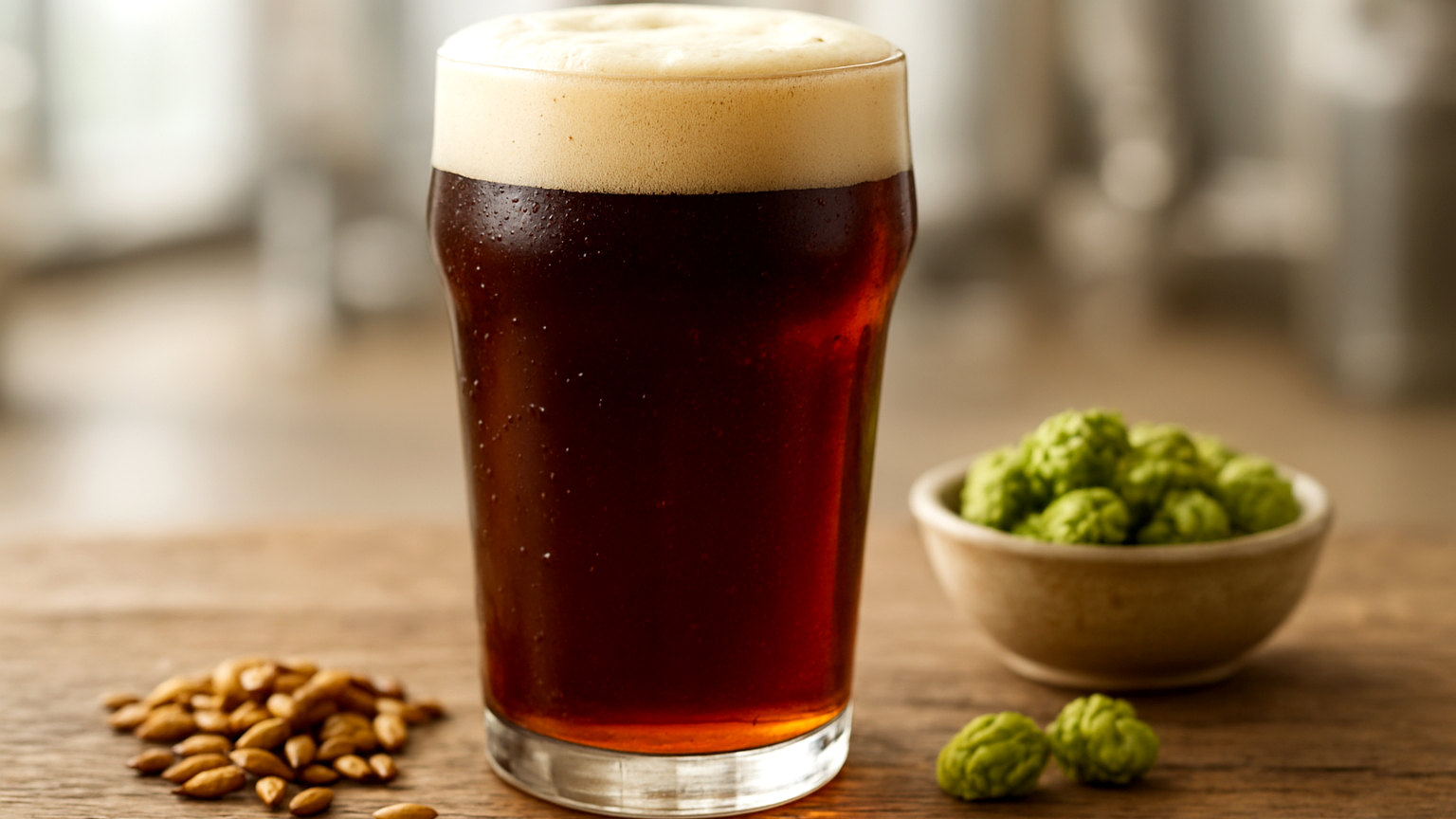
Brown ale is the least fashionable British style and one of the most rewarding to brew. It has no hop aroma to sell it and no roast bitterness to give it edge, so everything rests on getting a nutty, biscuity malt character that stays interesting without tipping into sweetness.
What is the difference between northern and southern brown?
They are genuinely different beers sharing a name. Northern brown ale, associated with the north east of England, is drier, stronger at around 4.7 per cent, and reddish rather than truly brown. Southern brown ale is sweeter, darker and weaker, often around 3.5 per cent.
Most modern recipes, including the one below, follow the northern style. If you find brown ale cloying, that is usually a southern-style recipe or one with too much crystal malt.
What is the grain bill?
For 23 litres at around 4.7 per cent:
- 4.2kg Maris Otter pale malt
- 400g crystal malt, medium
- 250g brown malt
- 150g chocolate malt
The brown malt is doing the defining work here, giving the dry biscuit and light toast character. Chocolate malt is present in small quantity for colour and a hint of cocoa, not for roast bitterness. Push it above about 200g and the beer starts drifting towards porter.
How much crystal malt is too much?
This is where most brown ales go wrong. Crystal malt gives caramel sweetness and it is tempting to use a lot, since it seems to be what the style is about. Above about 500g in a 23 litre batch it becomes cloying and slightly sticky, and the beer is hard to drink more than one of.
Four hundred grams is a sensible ceiling. If you want more depth without more sweetness, add Munich malt instead, which gives maltiness without the residual sugar.
What mash temperature suits it?
Sixty-six degrees. A brown ale needs some body but should still finish reasonably dry, around 1.012. Mashing at 68 or above combined with a generous crystal addition is the fast route to a beer that tastes like liquid toffee.
Which hops belong in it?
English, restrained, and almost entirely for bitterness:
- 60 minutes: 30g Fuggles or Northern Brewer, aiming for around 28 IBU.
- 15 minutes: 15g Fuggles.
Nothing at flameout and no dry hop. The malt character is delicate enough that a strong hop aroma sits on top of it rather than blending in. This is a style where restraint genuinely produces a better beer.
Which yeast should you use?
An English ale strain at 19 to 20 degrees. The mild fruity esters these produce complement the nutty malt particularly well, and their moderate attenuation leaves the beer with enough body.
Avoid highly attenuative American strains, which will strip the beer dry and leave the crystal malt tasting thin and slightly artificial rather than rounded.
How should you carbonate and serve it?
Around 100g of sugar for the batch, giving moderate to low carbonation. Brown ale is traditionally a cask style and heavy carbonation makes the malt character harder to pick out.
Serve at cellar temperature, 11 to 13 degrees. This matters as much as it does for a bitter. Cold suppresses malt aroma, and a brown ale from a cold fridge tastes flat and vaguely sweet, where the same beer twenty minutes later tastes of nuts, toast and dried fruit.
When is it at its best?
Two weeks to carbonate and another two to condition, so roughly six weeks from brew day. It holds well for three or four months stored cool and dark, and the brown malt smooths noticeably over the first month.
It is also one of the best styles for autumn and winter brewing, since it needs no fermentation cooling and suits the weather it is made in.
What goes wrong most often?
- Cloying: too much crystal malt, or a mash run too warm.
- Thin: an over-attenuative yeast stripping out the body.
- Acrid: too much chocolate malt, or sparge water above 76 degrees.
- Flat tasting: served too cold rather than at cellar temperature.


