
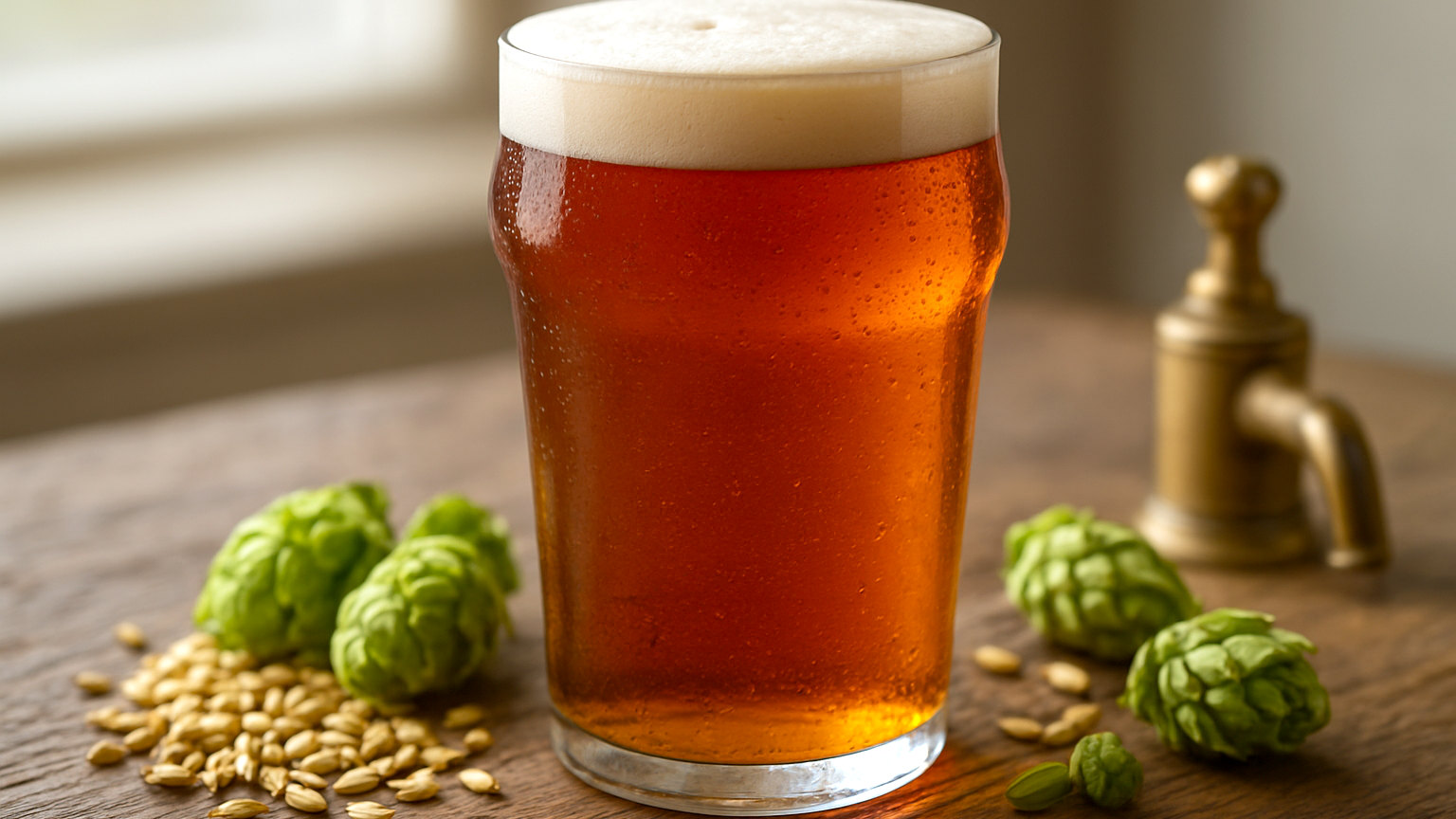
Best bitter sits at around 4.2 per cent, which means there is very little alcohol to carry flavour and no strong hop or roast character to distract from a fault. It is a harder brew than an IPA for exactly that reason, and getting one right is a better measure of technique than any big beer.
What is the grain bill?
For 23 litres at around 4.2 per cent:
- 3.8kg Maris Otter pale malt
- 300g crystal malt, medium
- 100g torrefied wheat
Maris Otter is worth specifying rather than using generic pale malt. It has a biscuity, nutty depth that generic malt does not, and in a beer this simple it is the dominant flavour. The crystal supplies caramel sweetness and colour, and the torrefied wheat supplies head retention.
How should you mash it?
At 67 degrees for sixty minutes. Slightly warm, because a bitter needs body to compensate for its low alcohol. A bitter mashed at 64 comes out thin and watery in a way that a stronger beer would survive.
Aim to finish around 1.010 rather than fully dry. That residual sweetness is what makes the style drinkable over several pints rather than merely light.
Which hops belong in it?
English varieties, and the classics are classics for a reason. East Kent Goldings gives a floral, honeyed character. Fuggles gives something earthier and more herbal. Challenger works well for bittering.
- 60 minutes: 30g Challenger.
- 15 minutes: 20g East Kent Goldings.
- Flameout: 20g East Kent Goldings.
American citrus hops make a perfectly good beer with this grain bill, but it will not be a bitter. The whole balance of the style rests on a gentle, earthy hop character sitting behind the malt rather than in front of it.
How bitter should a bitter actually be?
Less than the name suggests. Around 30 IBU is typical, which is lower than most pale ales. The name distinguishes it from the sweeter mild ales it was originally sold alongside, not from modern hoppy beers.
Which yeast should you use?
An English ale strain, ideally one that flocculates heavily and leaves some residual sweetness. These strains produce mild stone fruit esters that are part of the style rather than a fault.
Ferment at 19 degrees. English yeasts often benefit from a slight rise towards the end, to 21 or 22, which helps them finish cleanly and reabsorb any diacetyl. Diacetyl tastes of butter or butterscotch and is much more noticeable in a delicate beer like this than in a stout.
Why does carbonation matter so much here?
Because bitter is traditionally a cask beer served with very little gas in it, and the soft mouthfeel is central to how it tastes. Bottle at around 80g of sugar for the batch, which is noticeably lower than a pale ale.
Serve at cellar temperature, between 11 and 13 degrees. Fridge cold suppresses the malt character almost entirely, and a bitter served at 4 degrees tastes like faintly bitter water. Twenty minutes out of the fridge transforms it.
What goes wrong most often?
- Thin and watery: mash temperature too low, or not enough crystal malt.
- Buttery: diacetyl, from cutting fermentation short or chilling too early.
- Harsh: over-bittered, or the water is high in sulphate and needs balancing with chloride.
- Bland: generic pale malt rather than Maris Otter, or hops that are past their best.
When is it ready?
Faster than most. Ferment for around eight days, then two weeks in the bottle. Unlike a stout, a bitter does not improve much with age and is at its best within two months. Brew it when you intend to drink it rather than as something to lay down.
Which variations are worth trying?
Dropping the gravity to around 3.6 per cent gives an ordinary bitter, which is the same beer built lighter and is genuinely harder to get right. Raising it to 5.2 and increasing the crystal slightly gives an extra special bitter, with more caramel depth and a longer finish. Both use the same grains in different proportions, so brewing all three across a few months teaches you a great deal about how strength alone changes a beer.


