
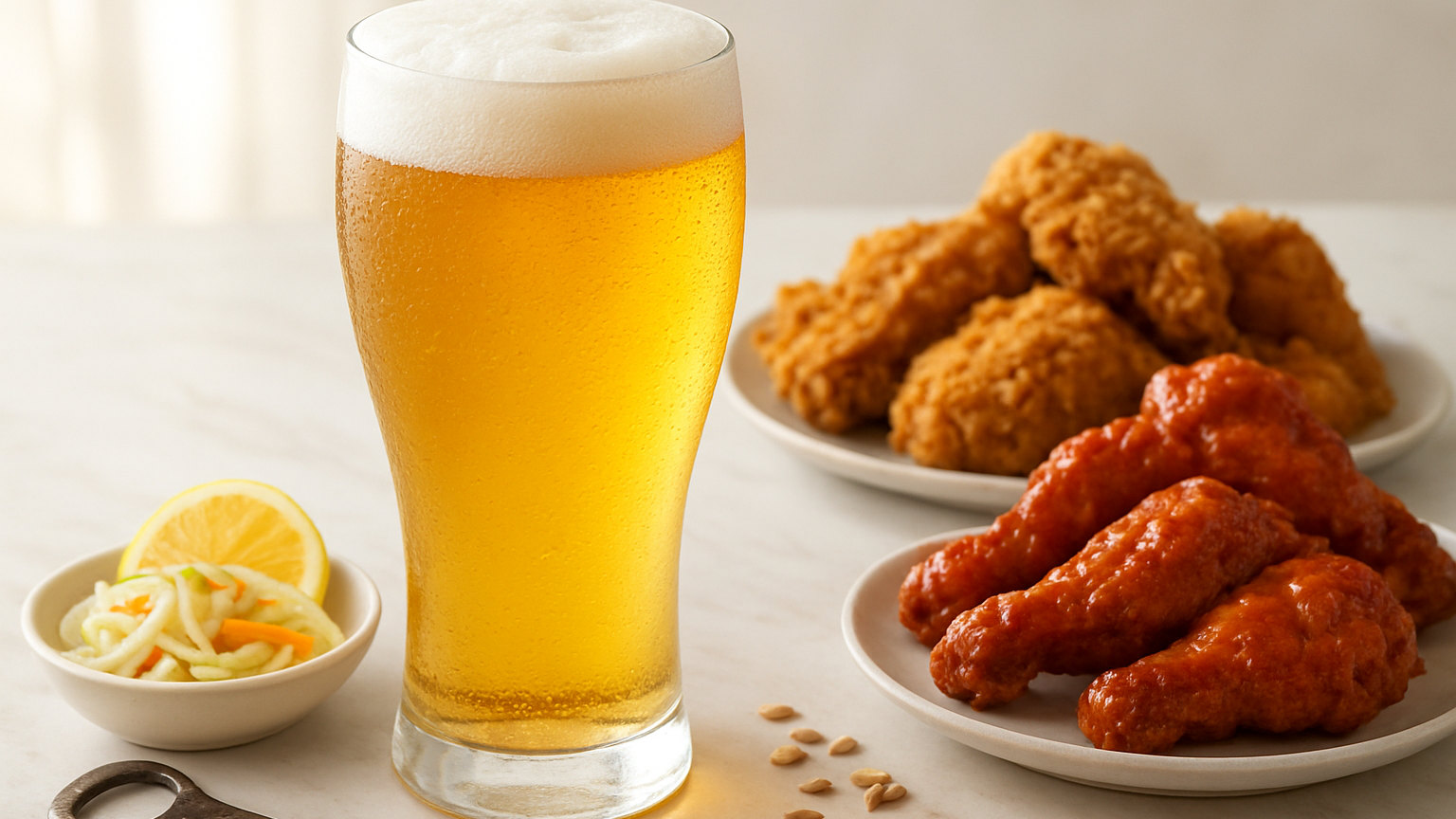
Wine has a longer tradition of formal food pairing, which has left the impression that it is generally the better partner. On several classes of food it is not, and the reasons are structural rather than a matter of taste.
What tools does beer have?
- Carbonation. Physically scrubs fat and oil from the palate.
- Bitterness from hops. Cuts richness, and is adjustable across a huge range.
- Roast character. Nothing in wine matches a stout against grilled meat.
- Sweetness without stickiness. Residual malt sugar, useful against heat and salt.
- Low strength options. A 4 per cent beer suits a long meal in a way a 13 per cent wine does not.
Wine answers with acidity, tannin and a different aromatic range, which are genuine tools. Beer simply has more routes to the same outcome.
Where does wine reliably fail?
- Chilli heat. Alcohol amplifies capsaicin burn, and most wine is stronger than most beer.
- Eggs. Coat the palate and flatten wine. Beer carbonation cuts through.
- Artichoke and asparagus. Contain compounds that make wine taste metallic or oddly sweet.
- Vinegar-dressed salad. Acidity in the dish clashes with acidity in the wine.
- Very salty food. Red wine tannin turns harsh against salt.
- Blue cheese. Tannin and blue mould produce a metallic finish.
The artichoke problem is a genuine chemical effect rather than folklore, caused by cynarin altering how sweetness is perceived.
Why does beer suit spicy food better?
Two reasons. Lower alcohol means less amplification of the burn, and residual sweetness dampens the perception of heat.
Choose a low-bitterness beer, though, since hop bitterness works the other way and intensifies chilli. A lager rather than an IPA.
Where does wine still win?
It would be dishonest to pretend otherwise. Wine generally does better with:
- Delicate raw fish and sushi. Where beer carbonation can be intrusive.
- Classic French sauce cookery. Where the acidity is built into the dish.
- Very tannic red meat dishes. Where tannin against protein is the point.
- Formal multi-course meals. Where the range of aromatic subtlety is broader.
Which has more range?
Beer, by most measures. It spans 3 to 12 per cent, sweet to bone dry, no bitterness to extreme bitterness, and clean to intensely funky, all within a category people think of as narrow.
The perception that wine offers more variety is largely a matter of how each has been marketed rather than what is in the glass.
What is the practical takeaway?
Reach for beer with anything fried, spicy, salty, smoked or egg-based, and with cheese more often than convention suggests. Those are the situations where it is not merely acceptable but genuinely the better choice.
Is the comparison worth making at all?
Only as far as it is useful. The point is not that one wins, it is that each has situations where it clearly works better, and knowing them means reaching for the right bottle rather than the habitual one.
A table drinking both is generally better served than a table committed to either.
Where does cider fit?
Between the two, usefully. It has acidity like wine and lower strength like beer, and it excels with pork, cheese and anything with apple in it.
A dry still cider is one of the most underrated things to serve with food, particularly a roast, and it fills a gap that neither beer nor wine covers as well.
What about serving both?
Entirely reasonable and often the best answer. Beer with the starter and the cheese, wine with the main, or whichever way round the food suggests. Nothing requires a single choice for a whole meal.
Is beer harder to serve properly?
In one respect. Beer wants a much wider range of serving temperatures than wine does, from 4 degrees for a pilsner to 13 for a bitter, and getting it wrong flattens the pairing entirely.
Most homes serve all beer at fridge temperature, which suits perhaps a third of it.


