
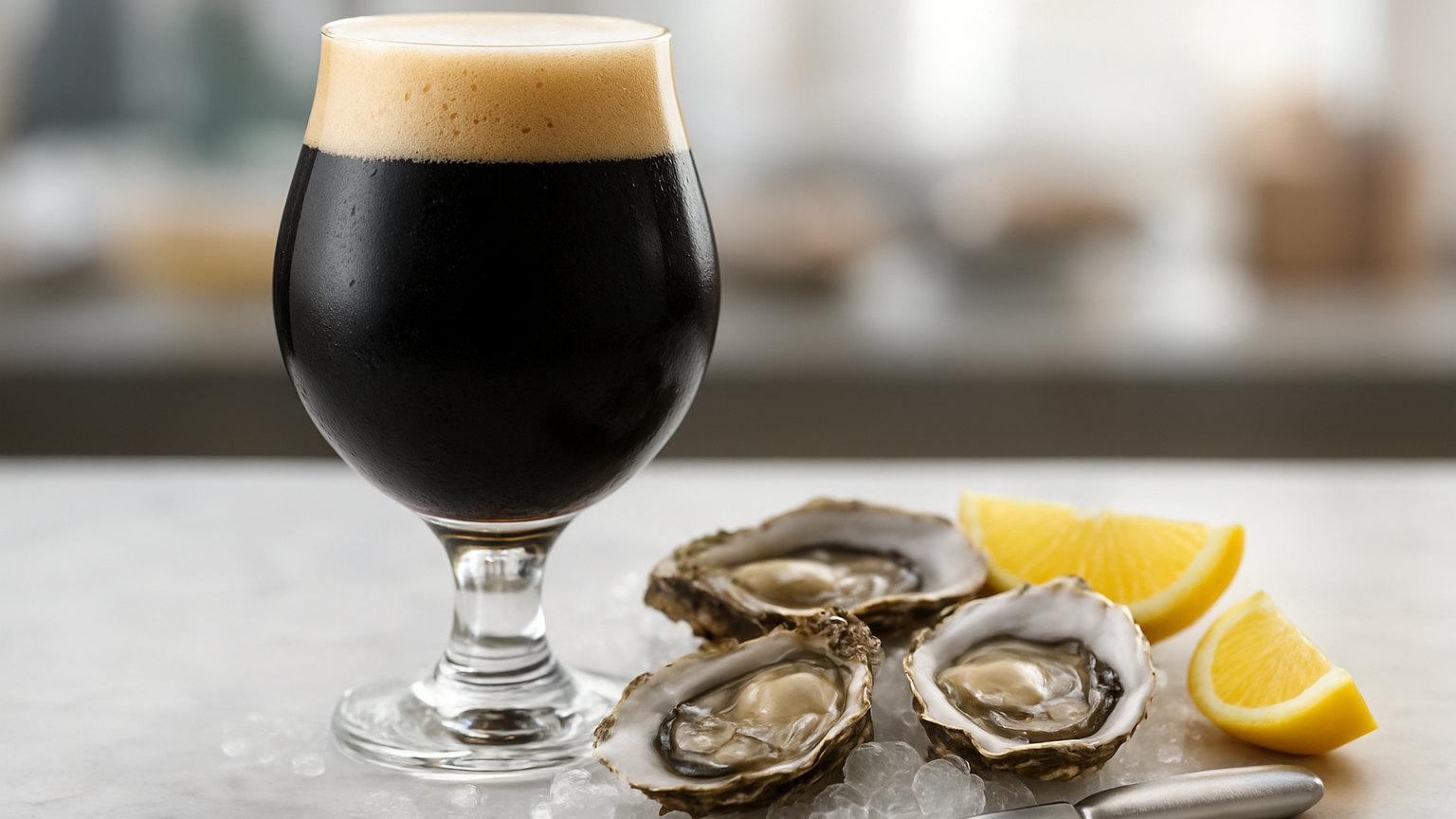
Fish is the category where beer pairing most often goes wrong, and almost always in the same direction. The dish is delicate, the beer is not, and the fish disappears entirely. Restraint is the whole skill here.
What goes with white fish?
Cod, haddock, sole and plaice are subtle and easily overwhelmed. Anything assertive will bury them.
- Pilsner or helles. Clean, crisp, low in flavour of its own.
- Wheat beer. Soft, gently citrus, particularly good with lemon.
- Saison. Dry and peppery, works with herbs and with butter sauces.
- Kölsch. Almost designed for this. Light and clean.
What goes with oily fish?
Salmon, mackerel, sardines and herring have more fat and more flavour, so they need something with more presence and enough bitterness to cut through.
- Pale ale. Handles salmon and smoked fish well.
- Amber lager or märzen. Malt against the oiliness.
- Gose. Salt and acidity, excellent with mackerel and pickled fish.
Smoked fish is a special case. Smoked salmon or kippers pair strongly with a rauchbier, where the smoke in each meets the other, and that is one of the more striking pairings available.
What about fish and chips?
Fried batter, salt, vinegar and fat, which is a completely different problem from a fillet of poached cod. It wants carbonation and bitterness to cut through.
A pale ale or a crisp lager is the obvious answer and a bitter works well too. This is one of the most reliable pairings in British food, and the reason is mechanical rather than aromatic.
What goes with shellfish?
- Prawns and crab: wheat beer, pilsner, saison.
- Mussels: Belgian witbier, traditionally and correctly, since the beer is often in the pot too.
- Scallops: saison or a light Belgian blonde.
- Lobster: tripel or a rich wheat beer, given the sweetness of the meat.
What about oysters and stout?
The famous pairing, and it genuinely works. Oysters are briny, mineral and metallic; dry stout is roasted, faintly bitter and carries a similar minerality. Together they meet somewhere neither reaches alone.
Use a dry Irish stout rather than a sweet or imperial one, since the sweetness fights the salt. Historically both were cheap food and drink in the same ports, which is how the pairing arose.
What should you avoid?
Heavily hopped IPA with delicate fish. The bitterness overwhelms it and, with oily fish in particular, the combination can produce a distinctly metallic taste.
Also avoid anything heavily roasted with white fish. A porter will simply erase a fillet of sole.
What is the general rule?
Match the intensity first and worry about flavour second. If the dish is delicate, choose the lightest beer you have and you will rarely go wrong.
Does the cooking method matter more than the fish?
Frequently, yes. Poached cod and battered cod are the same fish and completely different pairing problems, because the batter brings fat, salt and crunch that the poached version does not.
Match what is on the plate rather than what came out of the sea. Grilled, smoked and fried all move the pairing towards something with more presence.
What about sushi and raw fish?
The most delicate case of all, and the one where beer is at its weakest. A very light lager or a kölsch works; anything more will overwhelm it.
Carbonation can also be intrusive with raw fish, which is one of the few situations where wine or sake has a genuine advantage.
What about the sauce?
Often the deciding factor. A butter sauce pushes towards something with bitterness to cut it; a tomato-based sauce towards something with malt to meet the acidity; a cream sauce towards carbonation above all.
Pair the sauce and the fish together rather than the fish alone, since the sauce usually carries more of the flavour.
Does regional tradition help?
Often. Belgian mussels with witbier, Irish oysters with dry stout and British fish and chips with bitter all developed together because the local drink was the local drink, and they hold up when tested.
It is a reasonable default when you have no other information: whatever is drunk where the dish comes from will usually work.


