
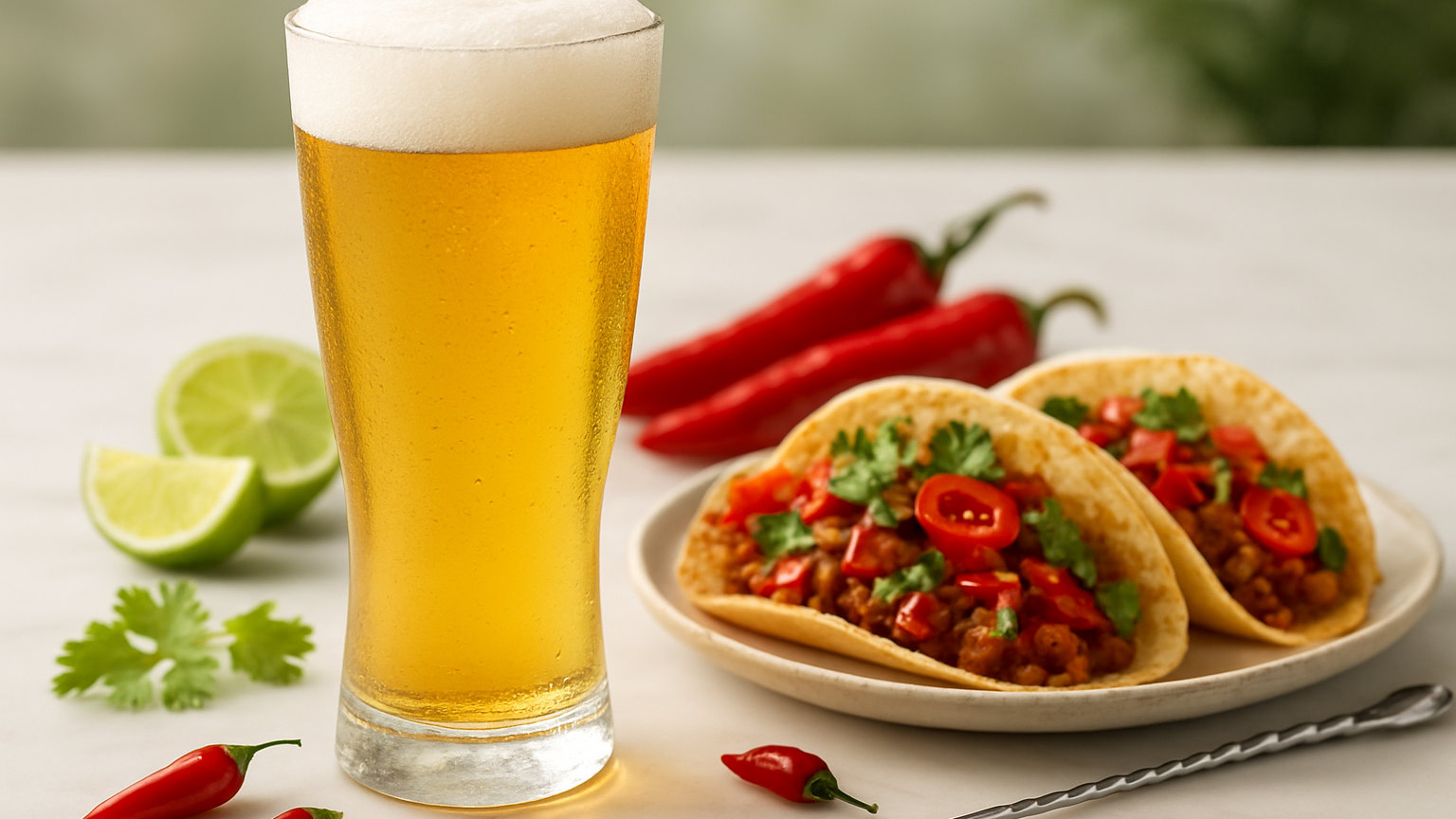
Spicy food is the clearest case in beer pairing where the intuitive answer is wrong. Something bold and hoppy feels like the match for a bold, hot dish, and it makes the heat noticeably worse.
What is actually happening?
Capsaicin, the compound in chilli, binds to heat receptors in the mouth and produces a burning sensation. It is fat soluble and not water soluble, which is why water does not help.
Bitterness stimulates overlapping sensory pathways, so a bitter drink alongside capsaicin intensifies the perceived burn rather than relieving it. Alcohol does something similar at higher strengths.
What relieves it?
- Fat and dairy. Capsaicin dissolves in fat, which is why yoghurt and lassi work.
- Sugar. Residual sweetness dampens the perception of heat.
- Cold. Real but temporary.
- Carbonation. Clears the palate between mouthfuls.
A beer that is cold, carbonated, low in bitterness and slightly sweet hits three of those four. That is a lager, which is why the unfashionable choice on the menu has always been correct.
How should you pair by heat level?
- Very hot. Pale lager, helles, milk stout. Bitterness under 20 IBU.
- Medium. Wheat beer, Belgian blonde, amber lager.
- Mild but spice-forward. Pale ale and saison become viable.
- Aromatic rather than hot. Almost anything, since the constraint disappears.
The rule is that as heat rises, bitterness must fall. Colour and style matter far less than the IBU figure.
Why does milk stout work?
Because lactose is not fermentable, so it remains as sweetness, and dry stout bitterness comes largely from roasted grain rather than hops. It is dark, sweet and low in hop bitterness, which is an unusual and effective combination with heat.
Does alcohol strength matter?
Yes, in two ways. Higher alcohol amplifies the burn directly, and spicy meals tend to be long, so a strong beer accumulates.
A pint of 4 per cent lager is 2.3 units against 3.7 for a 6.5 per cent IPA. Over a curry with three pints, that is the difference between roughly 7 and 11 units.
What about alcohol free options?
They work particularly well here, since removing the alcohol removes one of the amplifiers. A cold alcohol-free lager with a hot curry is a genuinely good pairing rather than a compromise.
A salted yoghurt drink such as a savoury lassi does the job better than anything alcoholic, for the reasons above.
Is there a case for hoppy beer with spice?
With aromatic spice rather than chilli heat, yes. A dish built on cumin, coriander, cardamom and ginger with little chilli pairs well with a pale ale or a saison, since the hop aromatics meet the spice aromatics.
The moment genuine heat enters, that stops working. It is heat rather than spice that causes the problem, and the two words are used interchangeably in a way that confuses the question.
What should you do if the heat becomes too much?
Something with fat or dairy, and something starchy. Yoghurt, rice, bread or a lassi all help. Cold water gives brief relief and then makes it worse by spreading the capsaicin.
Sipping a sweet drink also helps, which is why a sweet lager or a milk stout is genuinely useful rather than merely tolerable.
Does it vary between people?
Considerably. Tolerance for capsaicin varies genetically and builds with exposure, so the same dish is a different pairing problem for different people at the same table.
Serving a low-bitterness lager alongside whatever else is on offer covers the person finding it hottest without imposing on anyone else.
What is the shortest version of the advice?
The hotter the dish, the lower the IBU. Everything else, including colour, style and strength, matters considerably less than that single number.
Does this apply to other cuisines?
Anywhere chilli heat is present, including Thai, Sichuan, Mexican and Korean food. It is a property of capsaicin rather than of any particular cuisine.


