
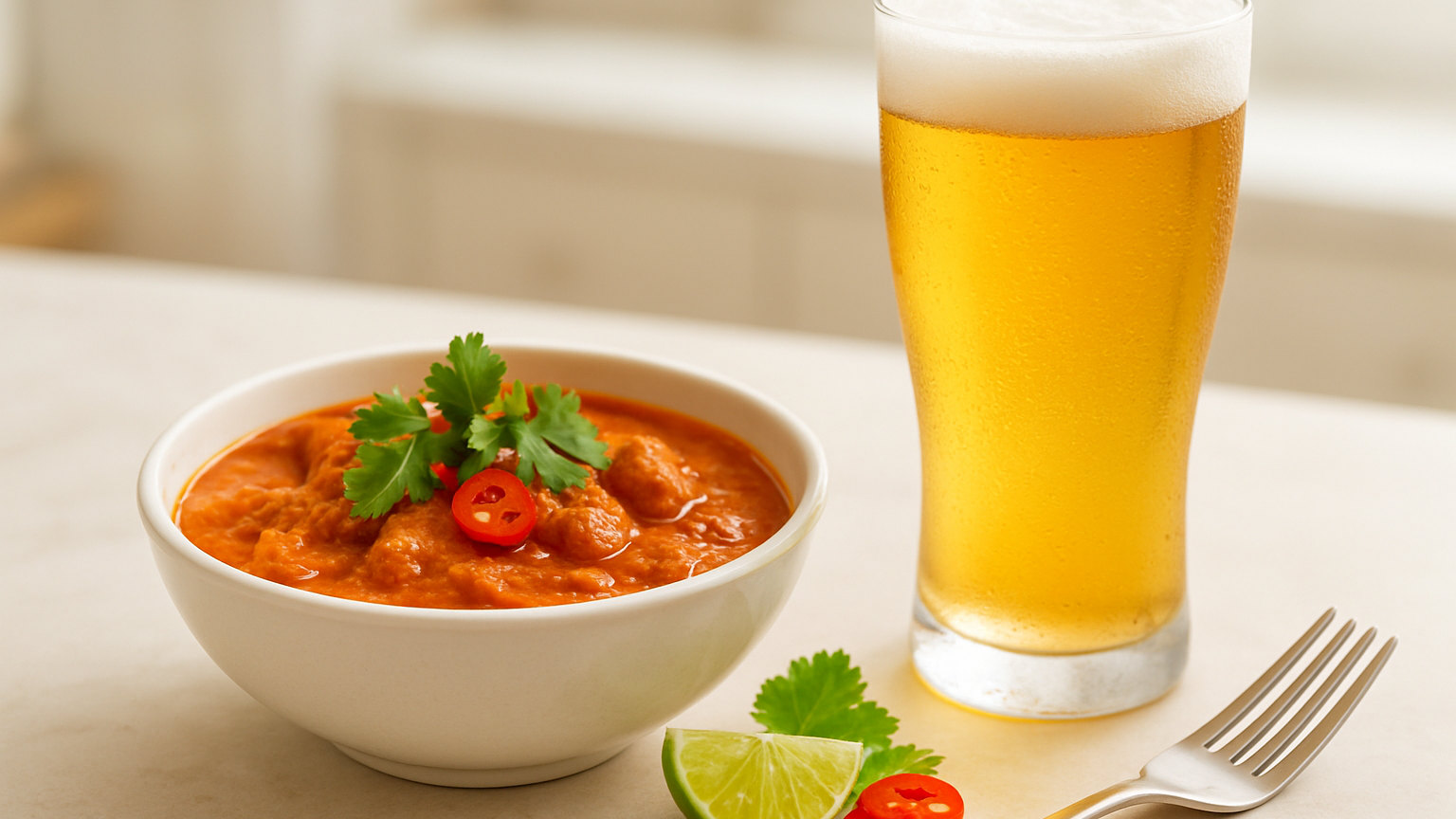
The standard advice is to drink lager with curry, and it turns out to be correct for a reason most people never hear. Bitterness and chilli heat interact in a way that makes an IPA a genuinely poor choice with a hot dish.
Why does bitterness make heat worse?
Capsaicin, the compound responsible for chilli heat, binds to receptors in the mouth and produces a burning sensation. Bitterness stimulates overlapping pathways, and the two amplify each other.
In practice a heavily hopped IPA with a hot vindaloo intensifies the burn rather than relieving it. It is not imagination and it is one of the clearest examples of a pairing that actively fails.
What actually cools it?
- Fat. Capsaicin is fat soluble, which is why yoghurt, raita and lassi work so well.
- Sweetness. Residual sugar dampens the perception of heat.
- Cold. Temporary relief rather than a fix.
- Carbonation. Clears the palate between mouthfuls.
Water does very little, since capsaicin does not dissolve in it. It spreads it around instead, which is why drinking water after something hot often feels worse.
Which beers work?
- Pale lager or helles. Low bitterness, cold, carbonated, slightly sweet. The classic and correct answer.
- Wheat beer. Soft, low bitterness, gently fruity. Excellent with lighter curries.
- Milk stout. Lactose sweetness genuinely helps, and it suits richer dishes.
- Belgian blonde. Fruity and low in bitterness.
The common thread is low bitterness and some sweetness. Colour matters far less than IBU here.
What about milder curries?
Once the heat drops, the bitterness problem largely disappears and other pairings open up.
- Korma or passanda: wheat beer, saison, blonde.
- Bhuna or rogan josh: amber lager, bitter, brown ale.
- Dry, spice-forward dishes: pale ale works, provided the chilli level is moderate.
- Rich, dark curries: porter or mild stout suits the depth.
What about Thai and south east Asian food?
Similar logic with more citrus and herb character in the dish. Wheat beer, gose and lighter saisons all work well, since they echo the coriander and lime rather than fighting them.
Does the strength matter?
Yes, practically. Spicy food is usually eaten in quantity over an hour or more, so a session-strength beer suits it better than something at 7 per cent.
A pint of 4 per cent lager is 2.3 units against 3.7 for a strong IPA, and across an evening with a curry that difference is substantial.
What is the practical summary?
The hotter the dish, the lower the bitterness should be. That single rule handles almost every curry pairing, and it explains why the unfashionable choice on the menu has been the right one all along.
What about drinks other than beer?
A salted yoghurt lassi is genuinely the most effective thing for heat, since the fat dissolves capsaicin directly and the salt helps too. Nothing alcoholic matches it.
Water does very little, since capsaicin is not water soluble, and it can spread the burn around rather than relieving it.
Should you order by dish or by heat?
By heat, every time. A korma and a vindaloo are the same cuisine and completely different pairing problems, and the chilli level governs the choice far more than the spices do.
If you do not know how hot it will be, order the lager. It is never wrong and it is frequently the best answer available.
Does the rice or bread change anything?
Yes, usefully. Rice, naan and chapati all absorb capsaicin and dilute the heat, which widens the range of beers that will work with the meal as a whole.
A very hot dish eaten with plenty of rice is effectively a milder pairing problem than the same curry eaten alone, which is worth remembering before writing off a pale ale entirely.
What about the poppadoms?
Fried, salty and usually served with sharp chutneys, which is a different problem from the main course. Carbonation and a little bitterness handle them well, so this is the point in the meal where a pale ale genuinely works.


