
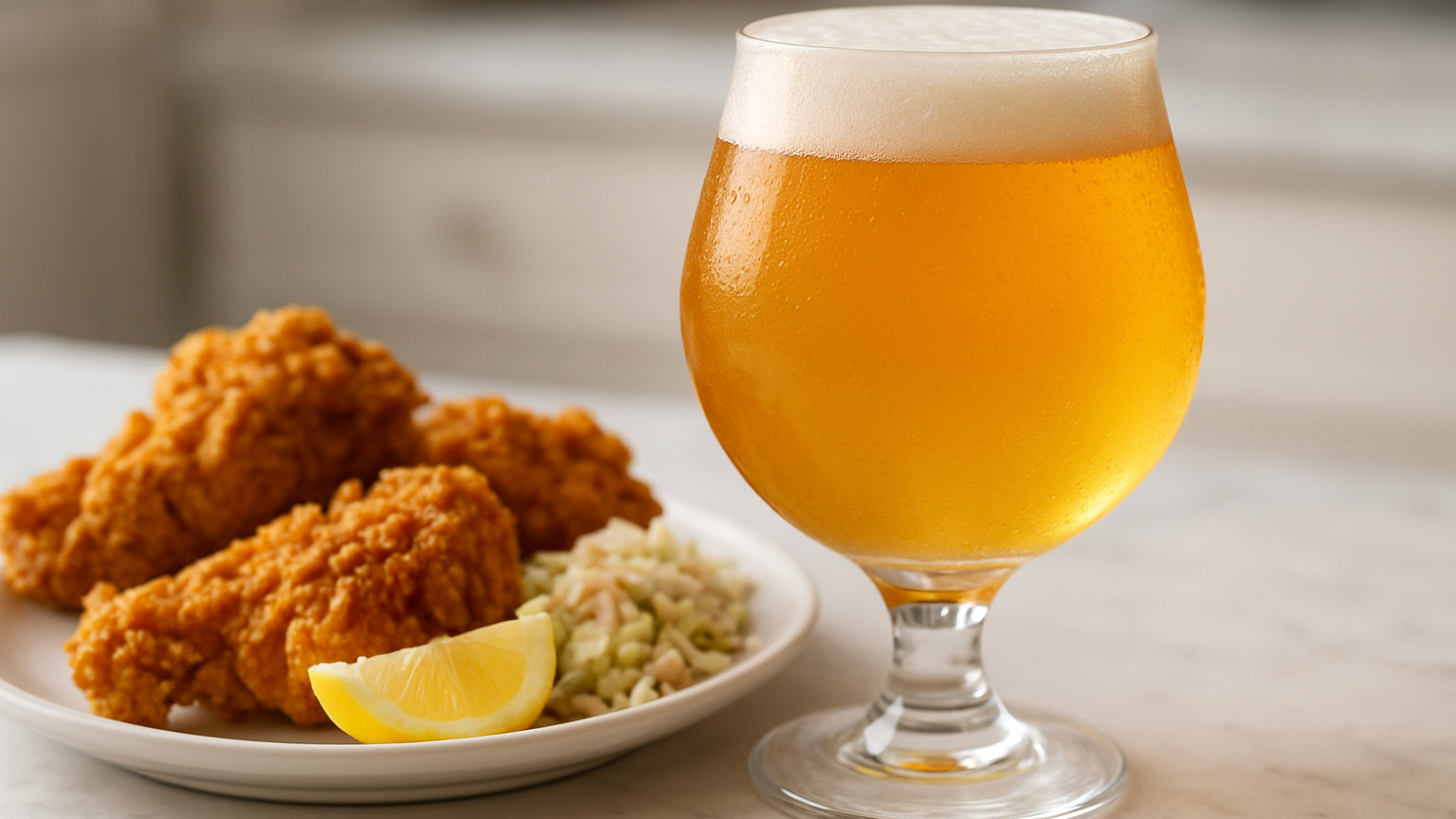
Beer and food pairing is usually presented as a list to memorise, which is both tedious and useless the moment you meet a dish that is not on it. Three principles cover nearly everything, and they work with any food and any beer.
What are the three principles?
- Complement. Match flavours that share something. Roasted stout with grilled meat, both carrying char.
- Contrast. Set opposites against each other. Sweet stout against salty cheese.
- Cut. Use the beer to clear the palate. Bitterness and carbonation against fat.
Most successful pairings do two of the three at once, which is why they feel obvious in hindsight.
Why does cutting work so well?
Because beer has two tools that wine mostly lacks. Carbonation physically scrubs fat from the palate, and bitterness from hops does something similar chemically.
That is why beer handles fried food, fatty meat and rich cheese so effectively. A pale ale with fish and chips works because each mouthful of beer resets the palate for the next mouthful of food.
What does wine do instead?
Acidity and tannin, which do a comparable job. Beer simply has more routes to the same outcome, which is why it is more forgiving across a varied table.
What matters more than style?
Intensity. A delicate beer with a powerful dish disappears entirely, and an aggressive beer with a delicate dish flattens it.
Before thinking about flavour at all, match the weight:
- Light food: salad, white fish, goat’s cheese. Pair with pilsner, wheat beer, saison.
- Medium: chicken, pork, hard cheese, pizza. Pair with pale ale, bitter, amber lager.
- Heavy: beef, game, stew, blue cheese. Pair with stout, porter, strong ale.
Get the intensity right and a mediocre flavour match still works. Get it wrong and a clever flavour match will not save it.
Which flavours bridge well?
Look for something the beer and the dish share:
- Roast and char. Stout, porter, grilled meat, charred vegetables.
- Caramel and sweetness. Bitter, brown ale, roasted root vegetables.
- Citrus. Pale ale, wheat beer, fish, coriander.
- Bread and biscuit. Helles, lager, pastry, fried food.
- Fruit. Belgian ales, pork, duck.
What is the single most useful pairing to know?
Pale ale with almost anything. The bitterness cuts fat, the malt handles roasted flavours, the carbonation clears the palate and the strength is low enough to drink across a meal.
It is the safe order when the table is eating five different things, which is the situation most people are actually in.
How do you test a pairing?
Taste the beer, then the food, then the beer again. What matters is whether the second sip is better or worse than the first.
A good pairing makes both taste better than they did alone. A bad one makes the beer taste thin, metallic or unpleasantly bitter, which is immediate and unmistakable.
What if the table is eating different things?
Choose one beer that sits in the middle rather than trying to match everything. A pale ale or a bitter at around 4.5 per cent will do a reasonable job with most of a mixed table and an outstanding job with none of it, which is the correct trade.
Alternatively serve two, one light and one malty, and let people choose. That covers almost any spread without any planning at all.
Does the order matter across a meal?
Yes. Work light to heavy, dry to sweet and low alcohol to high, the same way you would with wine. A strong or heavily hopped beer lingers and flattens whatever follows it.
That is why a delicate pilsner after an imperial stout tastes of nothing, and why the reverse works perfectly well.
How much does the glass matter?
More than people expect. Aroma is most of what you perceive as flavour, and a narrowing glass concentrates it where a straight tumbler disperses it. Drinking from the can removes almost all of it.
Any wine glass beats any pint glass for tasting purposes, which is worth knowing when the point of the evening is to notice things.


