
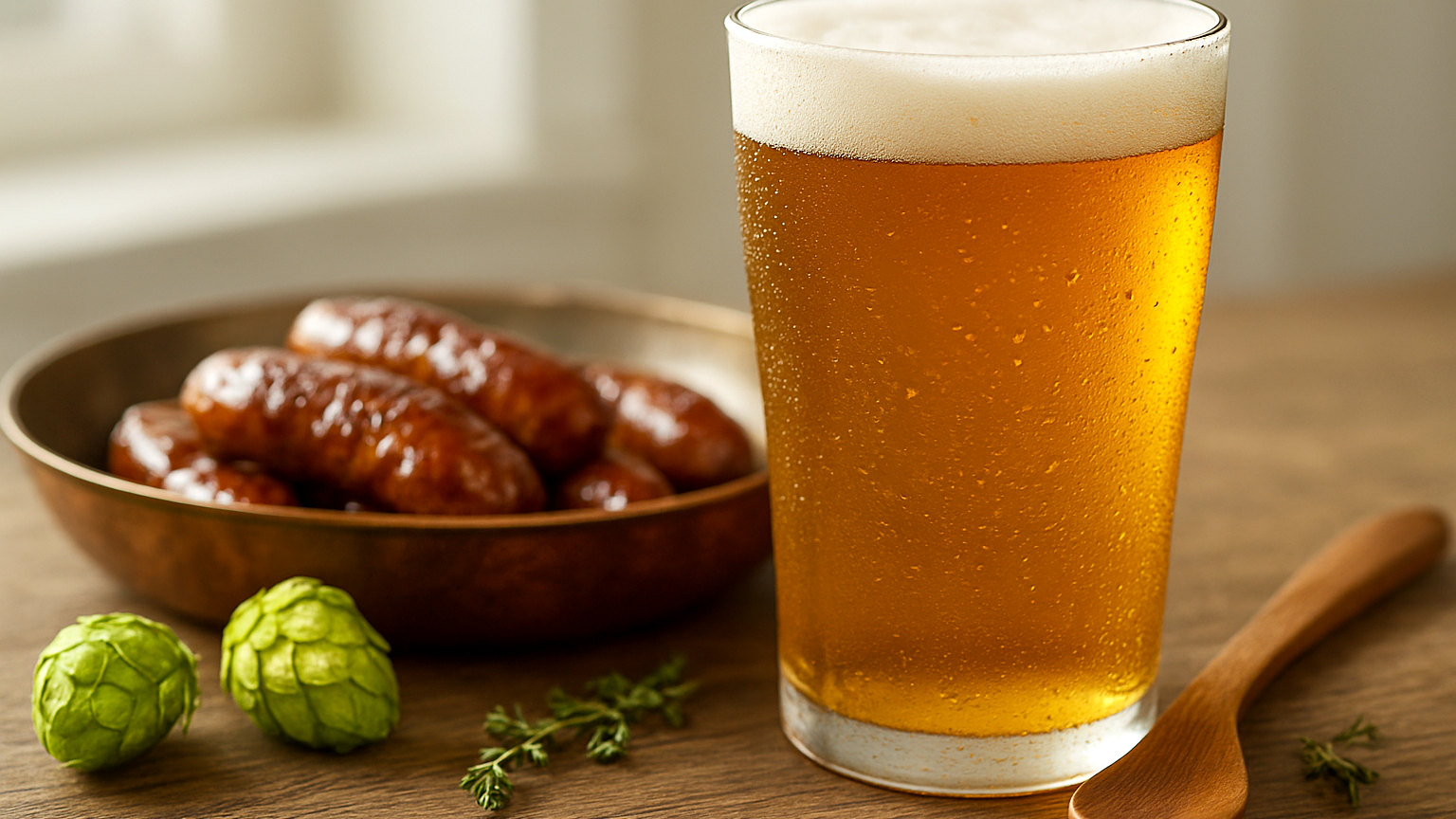
Beer is a useful cooking ingredient and it does not behave the way it does in a glass. One property in particular surprises people the first time a sauce is reduced, and understanding it prevents a dish that tastes aggressively bitter.
What happens when you reduce beer?
Bitterness concentrates and does not cook off. Alcohol evaporates, carbonation disappears and aromatic hop character is largely lost, but the iso-alpha acids responsible for bitterness are stable and simply become more concentrated as the liquid reduces.
That is why a heavily hopped IPA reduced into a sauce becomes harsh and inedible, while the same beer is perfectly pleasant to drink. Choose low-bitterness beer for anything that will be reduced substantially.
Which styles suit which dishes?
- Stout and porter. Beef stew, chilli, braises, chocolate cake. Roast character survives cooking well.
- Brown ale and bitter. Onion soup, gravy, sausage casserole, Welsh rarebit.
- Wheat beer and lager. Steamed mussels, batter, light sauces.
- Belgian dubbel. Carbonnade, pork, anything wanting dark fruit depth.
The general principle is to use a beer you would drink with the dish, avoiding anything very hoppy.
How do you make beer batter?
Beer batter works for two reasons. Carbonation introduces bubbles that expand in the hot oil, giving a lighter result. And the alcohol evaporates faster than water, which crisps the coating.
Use a cold, well-carbonated, low-bitterness beer such as a lager or a wheat beer. Mix it into the flour at the last moment and do not overwork it, since both lost carbonation and developed gluten make a heavier batter.
Does the beer flavour survive?
Barely, in batter. What you get is texture rather than taste, which is worth knowing before using something expensive.
What about braising?
This is where beer performs best. A stout or brown ale in a beef stew contributes malt sweetness, roast depth and a slight bitterness that balances the richness of the meat.
Use it as part of the liquid rather than all of it, typically a third to a half, with stock making up the rest. All beer produces a dish that tastes noticeably bitter after several hours of reduction.
Does beer tenderise meat?
Marginally, through acidity, and less than a marinade based on vinegar or citrus would. The main contribution of a beer marinade is flavour rather than texture.
Long marinating in a bitter beer can leave meat tasting harsh, so a few hours is usually better than overnight.
How much alcohol remains?
Less than people assume and more than zero. A dish simmered for two hours retains only a small fraction, and a quick deglaze retains considerably more.
It is rarely enough to matter for most people. Anyone avoiding alcohol entirely, for medical, religious or recovery reasons, should be told when a dish contains it rather than left to assume it has cooked away.
What should you avoid?
Heavily hopped IPA in anything reduced. Very sour beers in dairy-based dishes, where they can curdle. And expensive beer in batter, where the flavour is lost entirely.
How much should a recipe use?
Usually a third to a half of the total liquid, with stock or water making up the rest. All beer in a long braise gives a dish that tastes noticeably bitter after several hours of reduction.
For a quick deglaze the proportion matters less, since there is little time for concentration to occur.
Can you use an opened bottle?
Yes, and it is one of the better uses for a beer that has gone flat or that nobody finished. Carbonation only matters for batter, so a flat stout is perfectly good in a stew.
Do not use anything that has turned sour or developed an off smell, since those flavours concentrate rather than cooking away.
Which dishes are worth starting with?
Beef and stout stew, beer-battered fish and mussels steamed in wheat beer. All three are forgiving, all three show what the beer contributes, and none requires anything expensive.


