
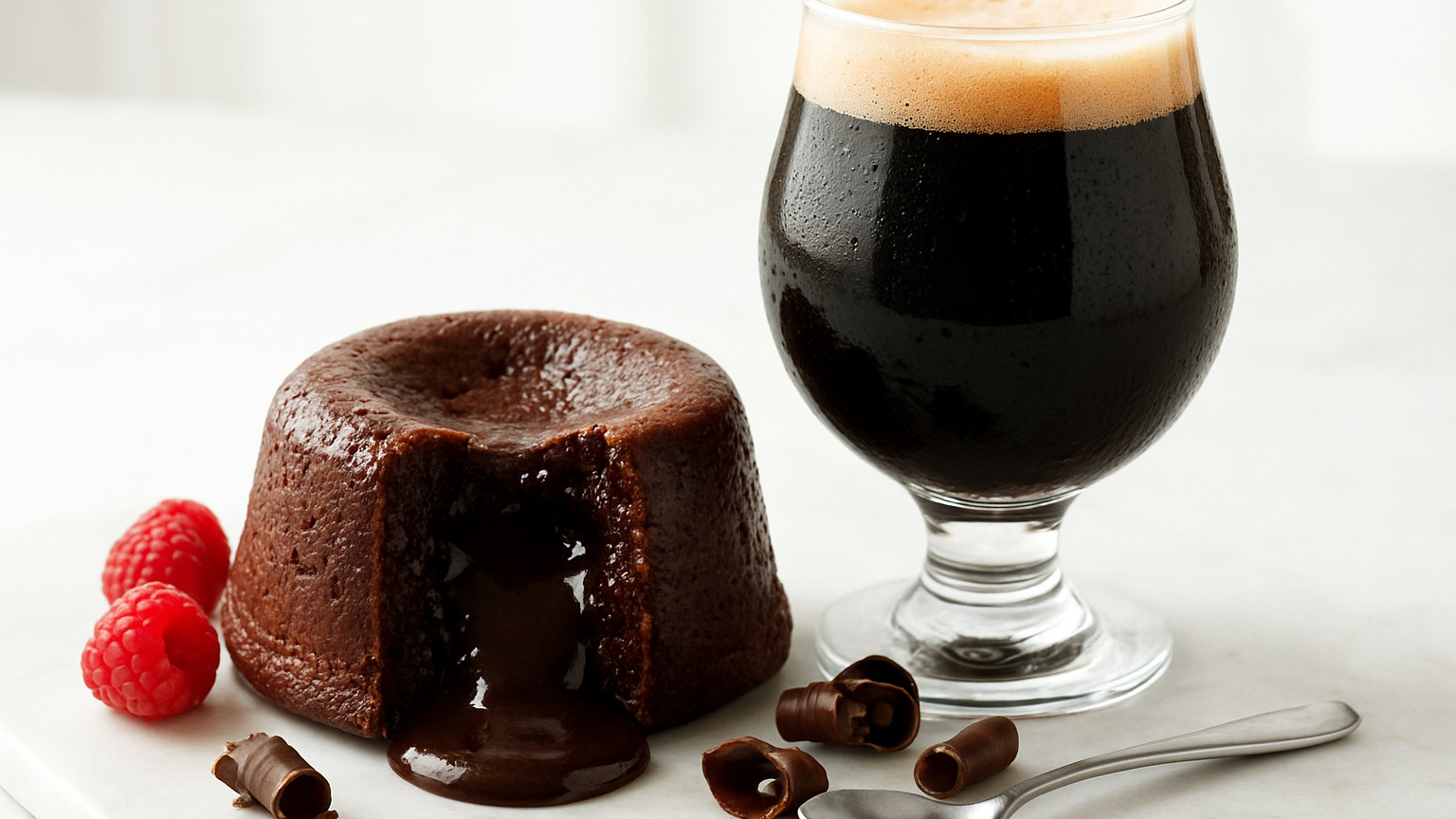
Dessert pairing is governed by a single rule that applies to any drink, not just beer. If the food is sweeter than what you are drinking, the drink will taste thin, sour and hollow by comparison. Everything else follows from getting that right.
Why does the sweetness rule matter so much?
Because sugar in the food suppresses your perception of sweetness in the drink while leaving the acidity and bitterness fully present. A moderately sweet beer tastes bitter and sharp after a mouthful of chocolate cake.
That is why a dry pale ale fails completely with dessert and why sweet stouts, barley wines and fruit beers work.
What goes with chocolate?
Dark chocolate shares roast character with dark beer, which makes it one of the most natural pairings there is.
- Imperial stout. The obvious and correct answer. Roast against roast, with enough residual sweetness.
- Milk stout. Lactose sweetness suits milk chocolate particularly.
- Porter. Lighter, and good with less intense chocolate desserts.
- Barley wine. Rich and sweet, excellent with chocolate and dried fruit.
White chocolate is different, being sweeter and without the roast. A fruit beer or a Belgian tripel handles it better than a stout does.
Does the cocoa percentage matter?
Yes. Very dark chocolate at 85 per cent is bitter rather than sweet, which relaxes the sweetness rule and lets a drier stout work. Milk chocolate needs the sweetest beer you have.
What goes with fruit puddings?
Fruit beers, sours and wheat beers, which echo the fruit rather than competing with it.
- Apple crumble: Belgian dubbel, or a good cider.
- Berry tart: framboise, kriek or a fruited sour.
- Lemon tart: wheat beer or a gose, where acidity meets acidity.
- Poached pears: tripel or a light golden Belgian ale.
What goes with caramel and toffee?
Anything with a strong caramel malt character, since the shared flavour does the work. Scotch ale, doppelbock, old ale and barley wine all pair well with sticky toffee pudding, treacle tart and salted caramel.
This is complement pairing at its most straightforward, and it rarely goes wrong.
What about cheese as dessert?
Covered by the same logic. A sweet strong beer against a salty blue is one of the best pairings in either direction, and it works at the end of a meal precisely because both are intense.
How much should you serve?
Small measures. Dessert beers run 8 to 12 per cent, so a 330ml bottle of a 10 per cent imperial stout is 3.3 units, more than a large glass of wine.
A 100 to 150ml pour is a perfectly normal serving for anything above about 9 per cent, and it is enough alongside a pudding. Sharing a bottle between two or three people is the usual approach.
What should you avoid?
Dry, hoppy beers of any kind. A pale ale or IPA after dessert tastes aggressively bitter and metallic, and neither the beer nor the pudding survives the encounter.
What temperature should dessert beers be?
Warmer than most people serve them, around 12 to 14 degrees. Strong dark beers are built on aromatics that cold suppresses entirely, and an imperial stout straight from a fridge tastes thin and one-dimensionally bitter.
Take the bottle out half an hour before serving, or store it out of the fridge altogether.
Can you use beer in the dessert as well?
Yes, and it works particularly well with chocolate. A stout in a chocolate cake deepens the cocoa without making the cake taste of beer, since the roast character in each reinforces the other.
Use a low-bitterness dark beer rather than anything hoppy, since bitterness concentrates during baking and does not cook off.
Which single beer covers most puddings?
A milk stout. It is sweet enough to satisfy the sweetness rule, roasted enough to meet chocolate and coffee, and low enough in bitterness not to clash with fruit.
It is also usually around 4.5 to 6 per cent rather than 10, which makes it easier to serve at the end of a meal where several drinks have already been had.


