
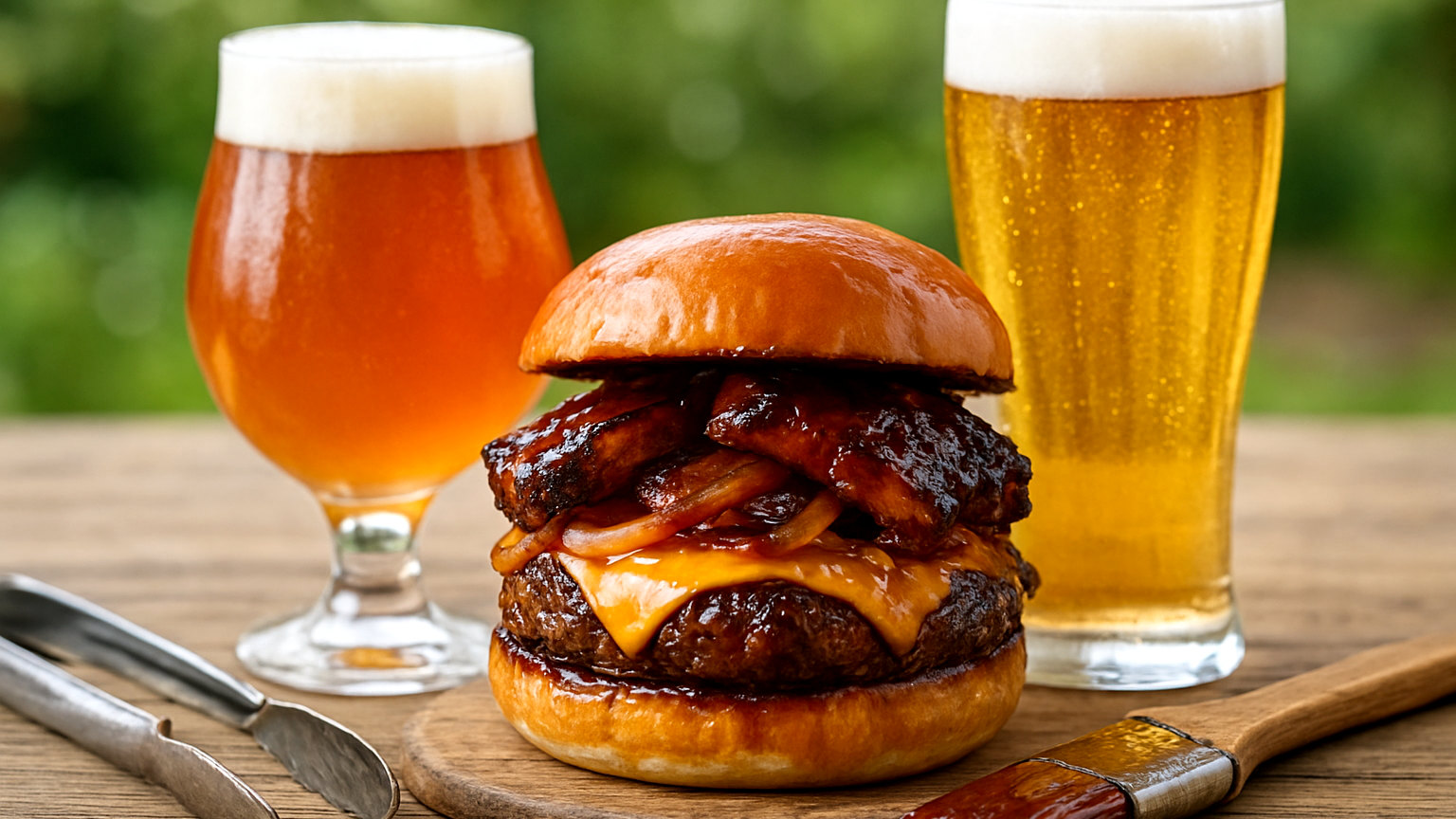
Barbecue is one of the easier things to pair, because everything about it points in the same direction. Char, fat, salt and smoke all want a beer with malt depth and enough bitterness to cut through, and there is rarely a delicate element to protect.
What goes with a burger?
Beef, char, fat, cheese and usually a sweet or tangy sauce.
- Amber ale or märzen. Caramel malt against the char. Probably the best all-round choice.
- Pale ale. Bitterness cuts the fat cleanly.
- Brown ale. Nutty and rich, good with a plain beef burger.
- Vienna lager. Crisp and malty, and easy to drink several of.
Avoid anything very light, which disappears entirely under the sauce, and anything very bitter, which fights the sweetness in most burger toppings.
What goes with barbecued meat?
Depends chiefly on the sauce, since the sauce usually dominates.
- Sweet sticky sauces. Amber ale, brown ale or a malty lager. Something to match the sugar.
- Vinegar-based sauces. Pale ale or a crisp lager, since the acidity is already there.
- Dry rubs and no sauce. Porter or a smoked beer, matching the char directly.
- Ribs and pulled pork. Brown ale, amber ale or a moderate stout.
What about smoked meat specifically?
Rauchbier, the German smoked lager, is the most direct match and it is a strong flavour that not everyone enjoys. A porter or a mild stout achieves much of the same effect with less commitment.
What goes with grilled vegetables?
Char and caramelisation again, so the same logic applies. Amber ale, märzen and saison all work, and saison in particular suits anything with herbs or garlic.
Halloumi and grilled cheese want something with bitterness to handle the fat, so a pale ale is the safer choice than a lager.
What should you serve a crowd outdoors?
Session strength, above all. Barbecues run for hours in the sun and people drink steadily, so a 6.5 per cent IPA is the wrong tool.
- A crisp lager or helles at 4 to 4.5 per cent for volume.
- A pale ale or amber at around 5 per cent for people who want more flavour.
- Something alcohol free, put out with everything else rather than kept back.
A pint of 4 per cent lager is 2.3 units against 3.7 for a strong IPA. Across a long afternoon in the heat that difference matters, and alternating with water matters more.
Does serving temperature change outdoors?
Serve everything colder than you would indoors, since it will warm quickly in the sun. A beer at 6 degrees leaving a cool box will be at 12 within twenty minutes on a warm day.
Keep the supply in a cool box rather than on a table, and take out a few at a time.
What is the safest single choice?
An amber lager or märzen. It handles char, fat, salt and sweetness together, it is not so bitter that it fights sauce, and it is easy to drink over an afternoon.
What about cooking with the beer as well?
A can in the tray under slow-cooked ribs or pulled pork adds moisture and a malt sweetness that reduces into the meat. Use a brown ale or an amber rather than anything hoppy, since bitterness concentrates as liquid reduces and does not cook off.
The same applies to a marinade. A few hours is better than overnight, since a long soak in a bitter beer leaves meat tasting harsh.
How much should you buy for a barbecue?
More mixers, soft drinks and ice than seems necessary, and less strong beer than instinct suggests. People drink steadily over hours in the heat, so volume of something sessionable matters more than variety.
Two beers done well beats six done sparsely, and a crate of a good 4 per cent lager will disappear faster than anything else on the table.
What about the sides?
Coleslaw, potato salad and corn all bring sweetness and fat, which push the pairing towards the same amber and pale ale territory the main event does. Nothing on a barbecue table pulls in a different direction, which is what makes it easy.


