
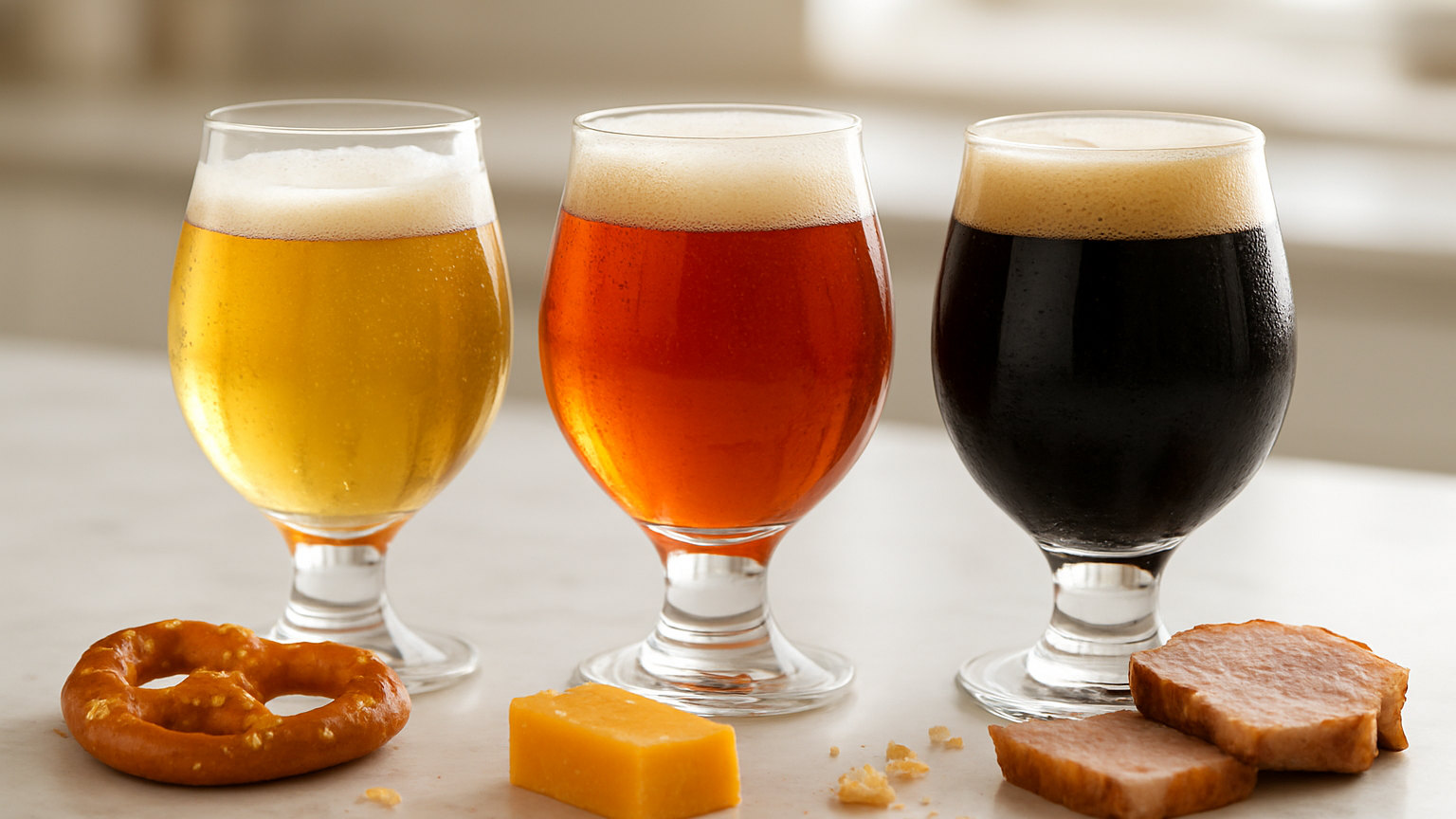
A beer and food evening is an easy thing to over-plan. The usual mistakes are too many beers, pours that are too large, and an order that leaves everyone unable to taste anything by the fourth course.
How many beers should you serve?
Four to six across an evening. Beyond that palate fatigue sets in and the later pairings are wasted on people who can no longer distinguish them.
Five is a comfortable number: something light, something hoppy, something malty, something dark and something strong to finish.
How large should the pours be?
Small. Between 100 and 150ml per beer, which is a third of a pint at most.
Five pours at 150ml comes to 750ml of beer, which at an average of 5.5 per cent is around four units. That is a reasonable evening. The same five beers at half a pint each would be nearer seven units and nobody would remember the last two.
Third-pint glasses are ideal if you have them, and a small wine glass works perfectly well.
What order should they go in?
Light to heavy, dry to sweet, low alcohol to high. The logic is that a strong or intensely flavoured beer flattens whatever follows it.
- Pilsner or wheat beer with something light.
- Pale ale or saison with a medium dish.
- Bitter or amber with something roasted.
- Porter or stout with a rich course.
- Imperial stout or barley wine with cheese or pudding.
The one exception is a heavily hopped beer, which lingers and is better placed before rather than after anything delicate.
How should you plan the food?
Smaller portions than a normal meal, since there are more courses. Five small plates is more manageable than five full ones and leaves people able to taste.
Cheese, charcuterie, bread and a couple of cooked dishes covers an evening without anyone spending the whole time in the kitchen.
What is the easiest format?
A cheeseboard with three or four beers. It requires no cooking, everything can be laid out in advance, and cheese is the food beer pairs with most reliably.
What temperature should things be?
Serve the beers cooler than their ideal, since they warm in the glass while people talk. Cheese and charcuterie should be at room temperature, which means taking them out an hour beforehand.
Keep the later, stronger beers out of the fridge entirely. A barley wine at 4 degrees tastes of almost nothing.
What else is worth having out?
Water and plain bread or crackers between courses, which reset the palate more effectively than anything else. Both make a genuine difference to how much people can taste by the end.
Something alcohol free, put out with everything else rather than kept back for anyone who asks. Somebody is usually driving.
How long should it take?
Two to three hours for five pairings. Rushing defeats the point, and stretching it much longer means the food is cold and the beers are warm.
What should you tell people?
What each beer is, its strength, and roughly what to expect. Strength in particular is worth mentioning, since a 10 per cent barley wine in a small glass does not look like what it is.
A written list on the table saves you repeating it and lets people pace themselves, which matters more across five pours than most hosts allow for.
How do you handle leftovers?
Buy bottles rather than large formats where you can, so nothing is opened that will not be finished. A 750ml bottle of something strong opened for five small pours leaves most of it to go flat.
Sharing large bottles between everyone is the neater answer, which also keeps the pours small without anyone having to be careful about it.
What if people do not know much about beer?
That is the better audience, not the harder one. Five clearly different beers with food alongside teaches more in an evening than any amount of reading, and nobody needs vocabulary to notice that a pairing works.


