
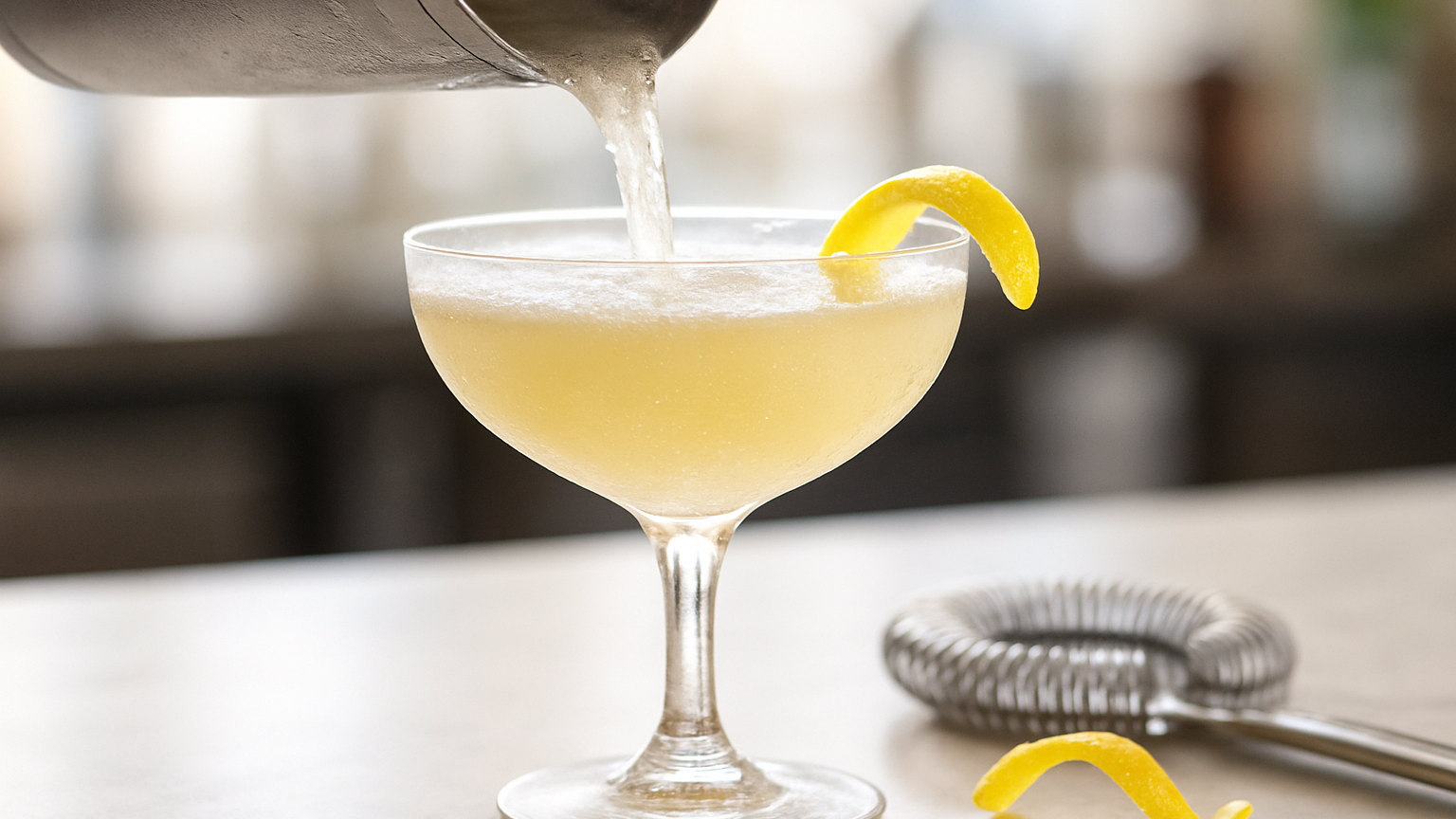
Pour a freshly shaken daiquiri and it is pale and opaque. Leave it two minutes and it clears noticeably. Nothing has gone wrong in either state, and understanding what causes the cloudiness explains why the same effect is desirable in one drink and a fault in another.
What causes it?
Two things, working together. Shaking forces thousands of microscopic air bubbles into the liquid, and those bubbles scatter light rather than letting it pass through.
The shake also fractures the ice, and the smallest fragments pass through a strainer and hang in suspension briefly. They scatter light in the same way.
Both are temporary. The bubbles rise and the fragments melt, which is why a shaken drink left standing becomes clearer within a few minutes.
Is it a fault?
Not in a shaken drink. A daiquiri, margarita or whiskey sour is expected to arrive slightly opaque, and the cloudiness is evidence that the shake did its job.
It becomes a fault only in a drink that was meant to be clear, which means a stirred drink that was shaken by mistake. A cloudy martini looks wrong because it is announcing that the wrong method was used.
Does citrus contribute?
Yes. Fresh citrus juice contains fine pulp and suspended solids that add their own haze, which is why a freshly squeezed drink looks cloudier than one made with filtered juice. That is a sign of freshness rather than a problem.
How do you get a clearer drink when you want one?
- Double strain. Through a fine sieve as well as a Hawthorne, which removes the ice shards.
- Let it settle. Sixty seconds in the glass allows most of the air to rise.
- Fine strain the citrus. Passing the juice through a sieve before use removes the pulp.
- Shake slightly less hard. Less aeration, and less texture as a consequence.
The first two are worth doing. The last is usually a poor trade, since the aeration is contributing texture you wanted.
Why does the foam layer form?
Anything with protein, oil or sugar in it will hold air at the surface. Citrus oils, coffee oils, egg white and aquafaba all stabilise bubbles into a distinct head rather than letting them disperse.
A thin pale layer on a shaken daiquiri is normal and expected. On an espresso martini it is the point of the drink.
Does cloudiness affect the taste?
Indirectly. The dissolved air changes the texture, making the drink feel lighter and slightly frothy, and it helps release aromatic compounds as you drink.
The ice shards affect it more directly, since they continue diluting the drink in the glass. That is fine in a casual drink over ice and unwanted in something served up, which is why double straining matters most for the latter.
Why do some bar cocktails look clearer?
Usually because they were double strained carefully, served in a chilled glass and made with juice that was strained beforehand. Occasionally because the juice was clarified, which is a deliberate technique using agar or milk to remove suspended solids entirely.
Clarified cocktails are a genuine style rather than a standard to aim for. A clarified daiquiri is a different drink, not a better-made one.
Should you worry about it at home?
Only if the drink was meant to be clear. Double strain anything served up, use a chilled glass, and serve immediately. Beyond that, cloudiness in a shaken cocktail is what a properly shaken cocktail looks like.
Why does the same drink look different in a bar?
Usually lighting and glassware rather than technique. A chilled coupe under warm light flatters a cloudy drink considerably, and a drink photographed after settling for a minute looks clearer than one photographed straight from the shaker.
Does the glass affect how it reads?
Noticeably. A wide shallow coupe shows haze across a large surface, while a narrow glass shows less of it. The same drink can look cloudy in one and fine in the other, which is worth remembering before adjusting a technique that was working.


