
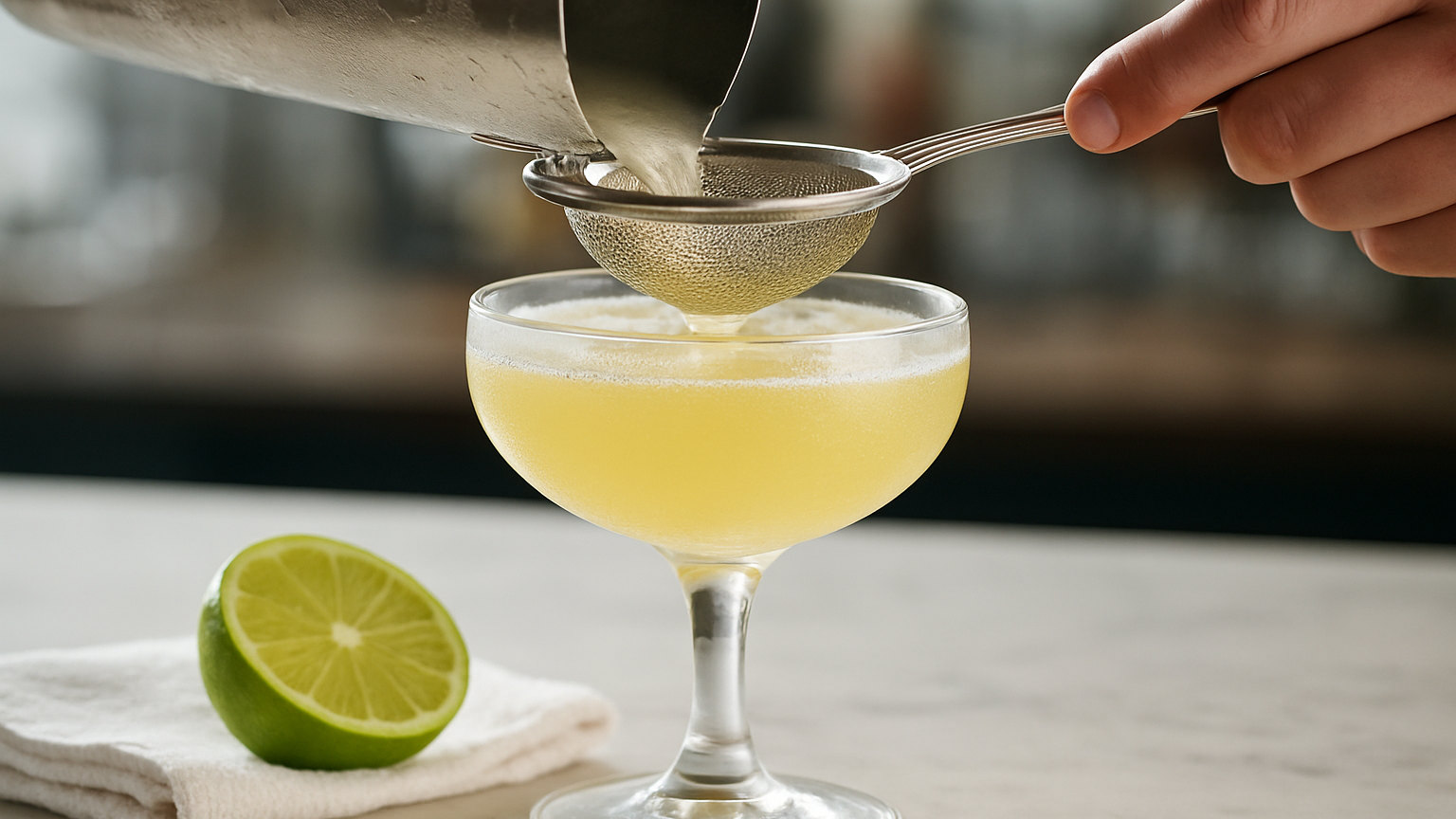
Shaking and stirring both chill and dilute, which makes them look like the same operation at different intensities. They are not. Shaking does three further things that a spoon cannot achieve at any speed, and those three are why some drinks demand it.
What does shaking do?
- Chills faster. More ice surface in contact with more liquid, more violently.
- Aerates. Introduces tiny air bubbles throughout the drink.
- Emulsifies. Forces ingredients of different densities together.
- Fragments the ice. Produces shards that change texture and continue chilling.
Stirring achieves the first and nothing else.
Why does aeration matter?
Because it changes the texture and the perceived flavour. A shaken drink carries thousands of microscopic bubbles, which make it feel lighter and slightly frothy on the tongue.
Those bubbles also carry aroma. Air trapped in the liquid releases volatile compounds as you drink, which is part of why a shaken sour smells brighter than a stirred one made identically.
It is also why aeration ruins a martini. A drink meant to feel heavy, cold and silky becomes lighter and slightly rough, which is the opposite of the intention.
How long do the bubbles last?
A few minutes. A shaken drink left standing loses its texture noticeably, which is why they are served immediately and why a shaken cocktail sitting on a table for ten minutes is a different drink from the one that was poured.
What does emulsification do?
Forces ingredients together that will not combine on their own. Citrus juice, syrup and spirit have different densities and viscosities, and stirring leaves them layered rather than integrated.
Shaking supplies enough energy to disperse one through the other, and the air bubbles help hold the mixture in suspension for the time it takes to drink it.
With egg white or cream, this is the entire point. No amount of stirring produces foam, because foam requires proteins to be violently agitated around air.
Why does ice fragmentation matter?
Shaking fractures the cubes, producing small shards with a large surface area. Those chill the drink rapidly and, if they get through the strainer, continue chilling it in the glass.
That is generally desirable in a long or casual drink and undesirable in one served up, where shards are visible, dilute further and puncture any foam from below. Hence double straining for anything served up.
Why does a shaken drink look cloudy?
Two causes. The air bubbles scatter light, and the tiny ice fragments do the same. Neither is a fault, and both fade as the drink settles.
In a daiquiri that cloudiness is expected and looks right. In a martini it looks like a mistake, which is a large part of why the shaken martini divides opinion.
Does shaking change the flavour or just the feel?
Mostly the feel, and the two are hard to separate. Texture, temperature and aroma delivery all influence what people describe as taste.
The measurable differences are dilution, temperature and dissolved air. A shaken drink typically ends up slightly more dilute and slightly colder than a stirred one, and the perceived difference in flavour follows from that.
Can stirring ever replace shaking?
For a drink with a small amount of citrus, stirring vigorously for a long time gets partway there. It will not aerate and it will not emulsify properly, so the result is thinner and sharper.
For anything with egg, cream or purée, no. Those drinks exist because of what shaking does.
Does this explain the martini argument?
Largely. Everything shaking adds — air, ice fragments, extra dilution and a lighter texture — is unwanted in a drink meant to be clear, heavy and silky. The disagreement is about whether those qualities matter, not about what shaking does.
Is one method harder than the other?
Stirring is harder to do well. Shaking is forgiving as long as you shake hard enough, while stirring depends on a technique that takes practice and on a duration most people badly underestimate.


