
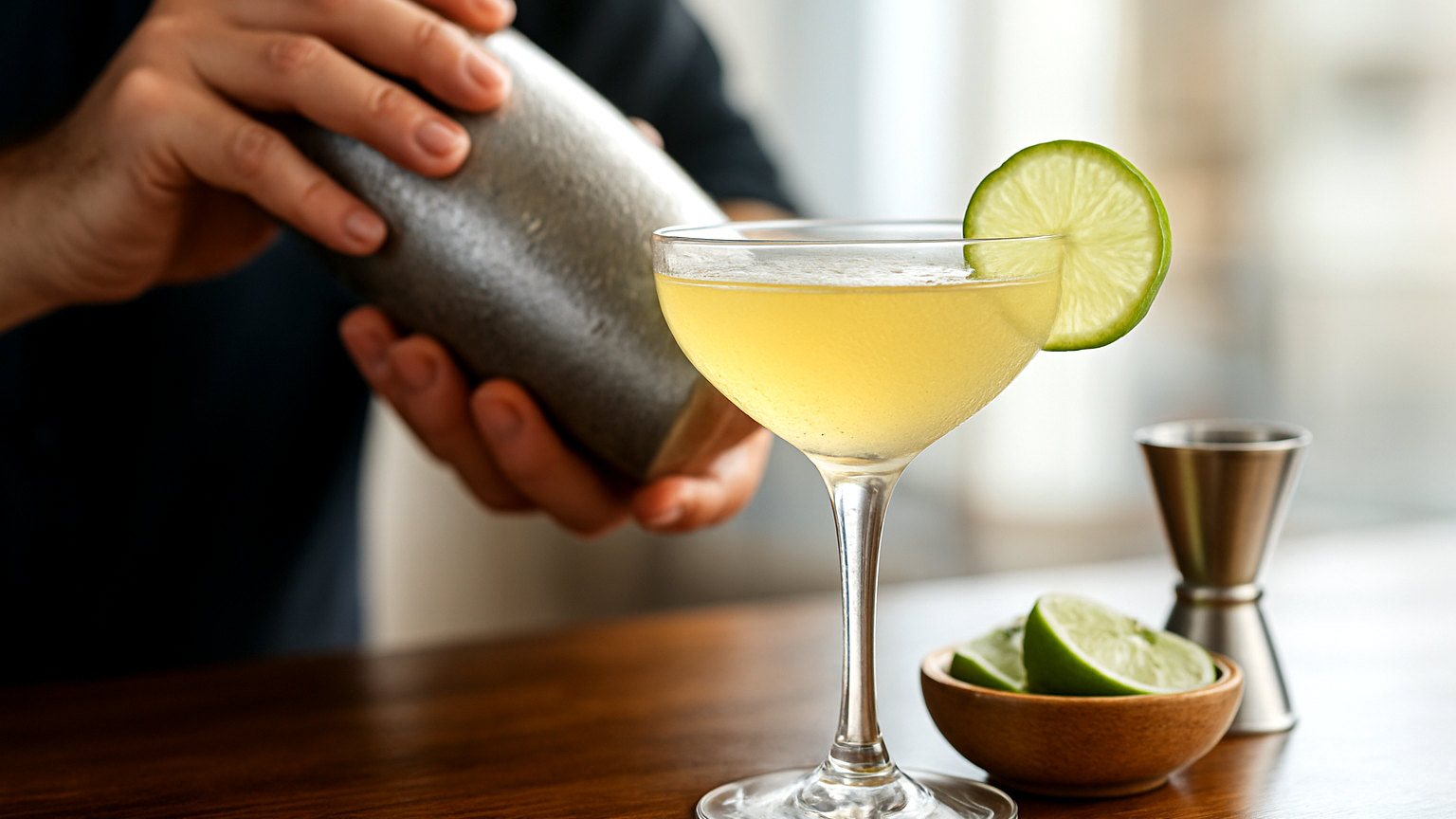
Shaking is the one bar technique that appears to need no explanation, which is why so many home drinks come out weak and under-chilled. The ice has to travel, and how you hold and move the shaker determines whether it does.
How should you hold it?
Both hands, one at each end. For a Boston shaker, one hand cupping the base of the large tin and the other over the top of the small tin, thumb pressed against the end.
Never hold it by the middle with one hand. The seal on a Boston relies on friction and pressure, and a one-handed grip risks it separating mid-shake. That is messy at best and, with a glass half, genuinely hazardous.
Which direction should you move it?
Along the long axis, so the ice travels from one end to the other and back. Over the shoulder or out in front, in a straight line rather than a circular motion.
Side to side or in small circles keeps the ice churning in the middle without ever hitting the ends, which is the difference between a shake and a rattle. The impacts at each end are what fracture the ice and produce the small fragments that chill quickly.
How hard is hard enough?
Your forearms should be doing work. A proper shake is loud, brief and slightly tiring, and fifteen seconds of it is enough to notice. If you could hold a conversation comfortably while shaking, it is too gentle.
How much ice should go in?
Roughly two thirds full with large, dry cubes. Too little and the ice has nothing to strike against and simply slides. Too much and it cannot move at all, so the drink chills slowly and dilutes unevenly.
Use ice straight from a cold freezer. Ice that has been sitting in a bucket is already at zero and melting, so it dilutes fast and gives a watery result regardless of technique.
What order should things go in?
Ingredients first, then ice, then seal. Adding ice first means the ingredients pour over it and start melting it before you begin.
Some bartenders add the cheapest ingredients first so a mistake can be poured away before the spirit goes in. That is a habit worth borrowing when working with anything expensive.
How do you seal and open a Boston?
Place the smaller tin at a slight angle, off-centre by about a centimetre, and strike the top firmly once with the heel of your hand. Two tins placed perfectly square rarely seal.
To open, find the widest point of the seam and tap there with the heel of your hand. Never prise the tins apart with a knife, which bends the rim permanently and turns a stuck shaker into a leaking one.
What are the common mistakes?
- Shaking too gently. The most common by far.
- Shaking too briefly. Six seconds feels like enough and is not.
- Circular motion. The ice never reaches the ends.
- Wet or small ice. Fast dilution, poor chilling.
- Over-filling the shaker. Nothing can move.
- Shaking anything carbonated. Pressure builds and the shaker can open unexpectedly.
Should you ever shake a fizzy ingredient?
No. Soda, tonic and sparkling wine all build pressure in a sealed shaker, and the seal can release without warning. Add carbonated ingredients directly to the glass at the end and lift once gently from the bottom.
What about shaking with a jam jar?
It works and needs the same technique. Glass conducts heat poorly, so the drink chills more slowly and you cannot feel the frost, which means counting rather than judging by touch. Shake for a few seconds longer than you would in metal.
Should you shake over your shoulder?
It is the traditional position and it is comfortable rather than necessary. What matters is a straight line along the long axis of the shaker so the ice reaches both ends. Shaking in front of you works identically.


