
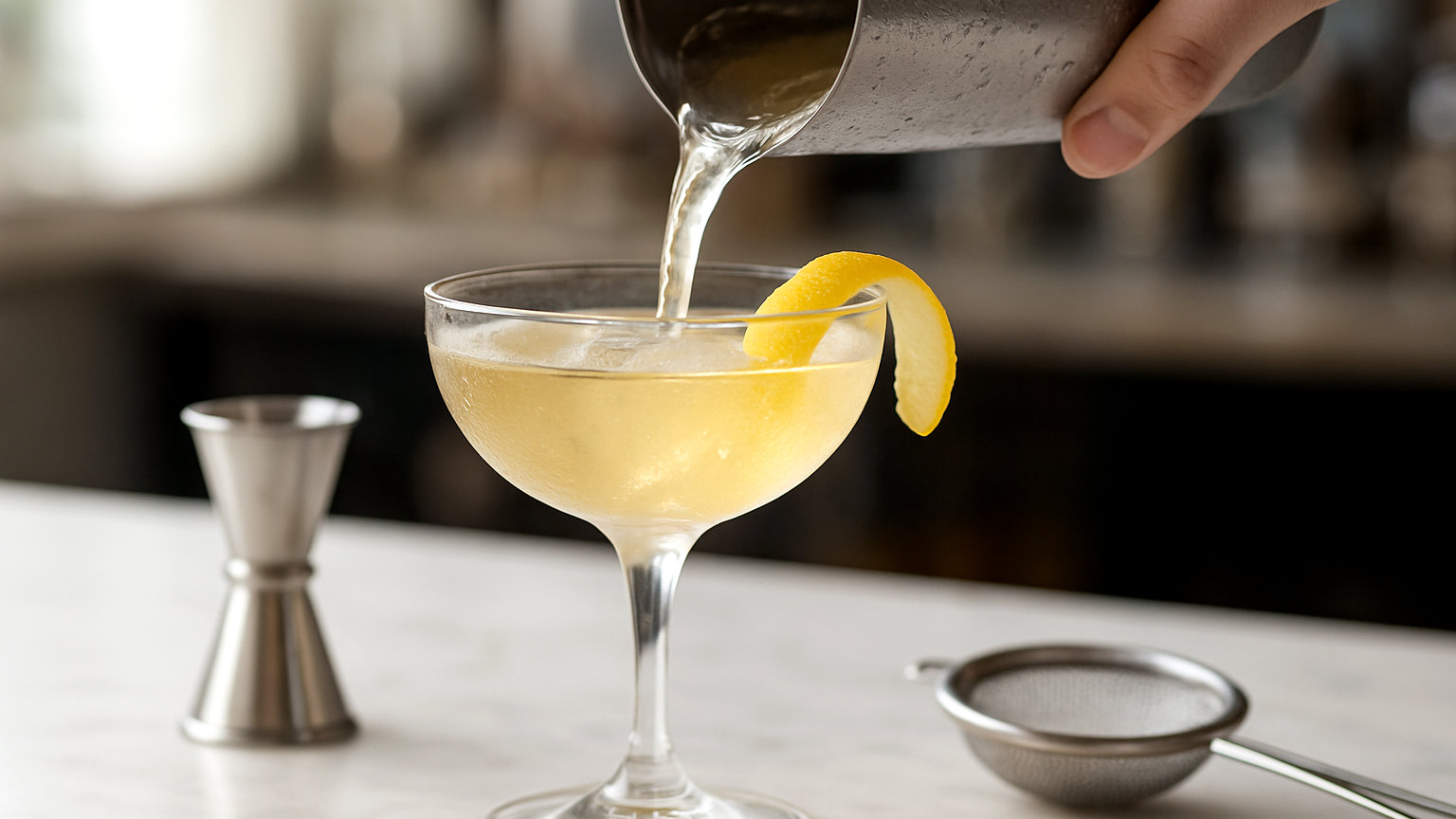
Counting seconds is a starting point rather than an answer, because how fast a drink chills depends on the ice, the vessel, the volume and how hard you are working. The vessel itself gives a far better signal, and it costs nothing to read.
What is the frost test?
Moisture in the air condenses and freezes on the outside of a metal shaker or a glass once the contents drop low enough. When frost has formed and the vessel is uncomfortable to hold, the drink has reached temperature.
It works because metal conducts heat efficiently, so the outside surface closely tracks the inside. It is the main practical reason bar staff prefer metal shakers to glass.
Does it work with a glass shaker or jam jar?
Poorly. Glass insulates, so the outside stays comparatively warm and the frost either does not form or forms late. If you are shaking in a jar, count instead and add a few seconds to compensate for the slower heat transfer.
What temperature should a drink reach?
- Shaken and served up: around minus 3 to minus 6 degrees.
- Stirred and served up: around minus 1 to minus 4 degrees.
- Served over ice: around zero, and holding.
Cocktails go below zero without freezing because alcohol lowers the freezing point of the mixture. That is why a martini straight from a properly chilled mixing glass feels colder than iced water.
Why does the glass matter as much as the drink?
Because a room temperature glass absorbs cold from the drink the moment it is poured. A cocktail served up has no ice keeping it cold, so whatever heat the glass contributes is permanent.
Five minutes in the freezer, or a minute filled with ice and water then poured off, is enough. It is the cheapest improvement in home bartending and almost nobody does it.
How much difference does it make?
A warm glass can raise a drink by two or three degrees immediately, which is a substantial share of the temperature you just spent thirty seconds achieving. Over the ten minutes it takes to drink, a chilled glass keeps the last mouthful noticeably better than a warm one.
Can a drink be too cold?
For anything aromatic, yes. Cold suppresses volatile compounds, so a heavily aged spirit or a botanical gin gives up less aroma at very low temperatures.
That is a real trade-off in a martini. Extremely cold gives a crisp, austere drink; slightly warmer gives more of the gin. Neither is wrong, and it explains why people disagree about freezer-cold martinis.
What about drinks served over ice?
They chill in the glass and keep chilling, so the initial temperature matters less. What matters is filling the glass with ice rather than using three cubes, since a larger mass warms more slowly and dilutes less.
This is counterintuitive and it is the most common serving mistake. Half a glass of ice produces a warmer and more watery drink than a full one.
Is a thermometer worth using?
Once, out of curiosity. An instant-read thermometer in a freshly stirred Manhattan is a useful calibration exercise, since it tells you what your usual thirty seconds actually achieves.
After that, the frost test is quicker and accurate enough. Nobody stands behind a bar with a probe.
What does an under-chilled drink taste like?
Hot with alcohol, sharp, and unbalanced in a way that is easy to mistake for a bad recipe. If a cocktail tastes harsh even though the measures were right, temperature and dilution are almost always the cause rather than the ingredients.
How quickly does a served drink warm up?
Faster than most people expect. A cocktail served up in a warm room rises several degrees within ten minutes, which is why smaller serves and chilled glasses both matter. A drink meant to be enjoyed over half an hour is better served over ice.
Does the room temperature matter?
For how long it stays cold rather than how cold it gets. A drink in a warm kitchen in August warms considerably faster than the same drink in a cool room, which is a practical argument for smaller serves in hot weather.


