
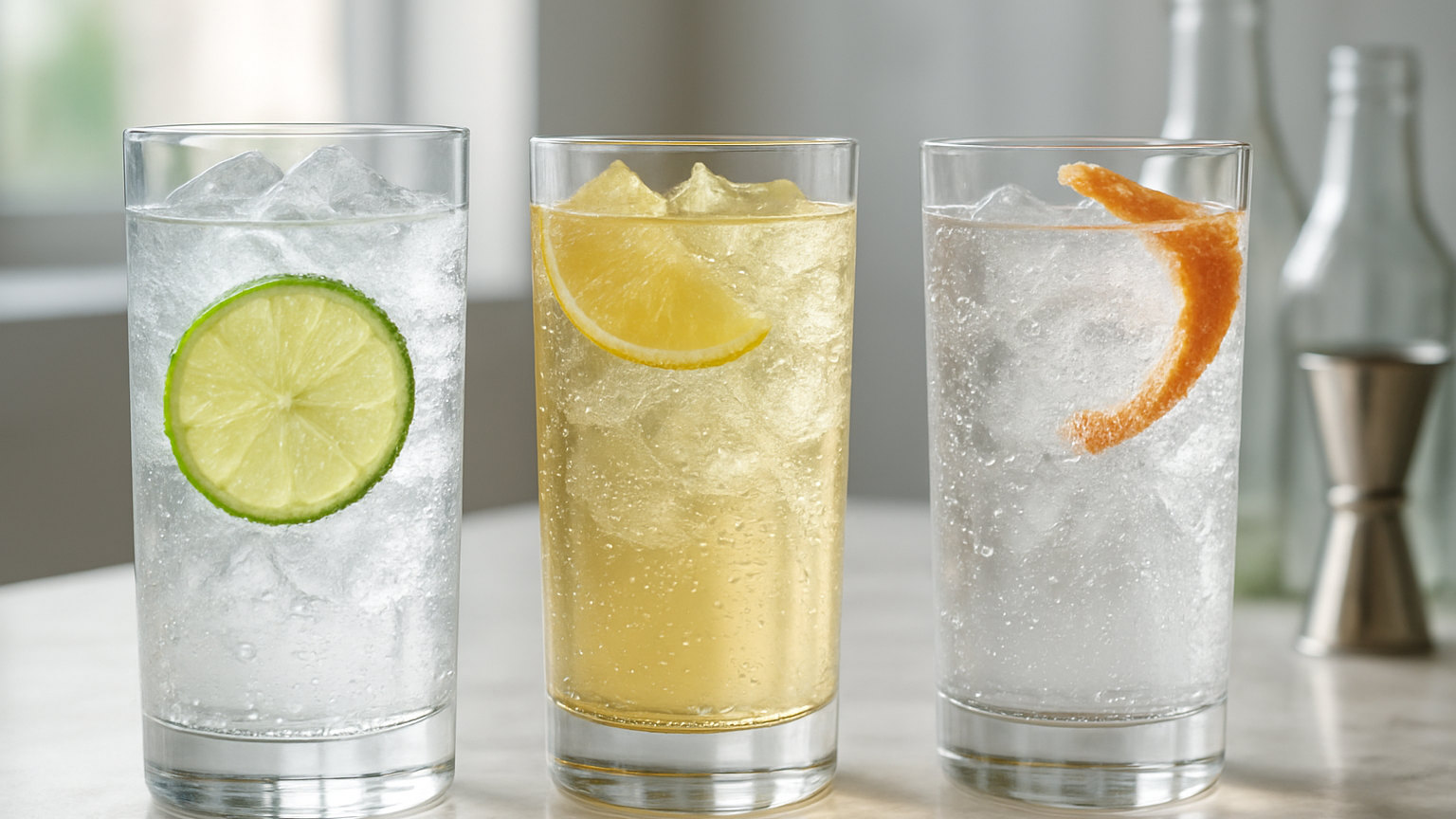
In a gin and tonic the gin is a quarter of the glass. The tonic is most of what you are drinking, and its sugar, bitterness and carbonation shape the result far more than the choice of gin does. Mixers deserve more attention than they get and they cost very little.
Which four cover almost everything?
- Tonic water. Bitterness from quinine and full carbonation. The most useful single mixer.
- Soda water. Neutral, so you build the flavour yourself with citrus and syrup.
- Ginger beer. Spicy and dry, and it cuts through sweetness in a way nothing else does.
- Cola. Divisive among cocktail people, and it makes several drinks people actually order.
Add grapefruit soda if you make palomas, and ginger ale if you find ginger beer too aggressive.
Why do small bottles matter so much?
Because a large bottle loses most of its carbonation within two days of opening. Carbon dioxide escapes every time the cap comes off, and there is no way to put it back.
In a drink that is three quarters mixer there is nowhere for that loss to hide. Cans or 200ml bottles cost slightly more per litre and fix the single most common fault in home long drinks. It is the best value change available in a home bar.
Does the fridge help?
Considerably. Carbon dioxide stays dissolved in cold liquid and escapes rapidly from warm liquid. Pouring room temperature tonic over ice releases most of the fizz immediately in a burst of foam, before you have drunk any of it.
Keep mixers in the fridge and pour down the side of a tilted glass rather than into the middle.
Which tonic should you buy?
The variation between brands is larger than people expect, in sugar, quinine level and carbonation. Some are noticeably sweeter, some much more bitter.
Pair a bold gin with a plain tonic, or a plain gin with a flavoured one. Two heavily flavoured products fight each other and you taste neither properly. Flavoured tonics are worth trying rather than defaulting to.
What pairs with what?
- Tonic: gin, vodka, blanco tequila, and sherry.
- Soda: whisky, aged rum, brandy, Campari, anything you want long and dry.
- Ginger beer: dark rum, vodka with lime, bourbon, mezcal.
- Cola: bourbon, aged rum, and little else.
Soda is the most versatile because it adds nothing. It lets you build acidity and sweetness yourself, which is why a highball with fresh citrus beats most pre-flavoured mixers.
What ratio should you use?
One part spirit to three parts mixer for carbonated drinks, so 50ml to 150ml. Stronger spirits at 47 per cent take one to four comfortably. Lower alcohol or heavily flavoured spirits are better at one to two.
Fill the glass completely with ice as well. A full glass of cold ice dilutes less than a half-filled one, because a larger mass warms more slowly.
How long does an opened bottle last?
Two days for anything carbonated, in the sense that it is still worth drinking. Longer than that and it is fine to consume and no longer doing its job in a drink.
Cola and ginger beer hold their fizz marginally better than tonic and soda because of the sugar content, but not by much. Buy small, use it, and do not keep a half bottle for a fortnight.
What about the non-alcoholic angle?
The same four mixers make genuinely good drinks on their own. Tonic with ice and a squeezed lime is bitter, cold and adult, and it is a much better thing to offer someone not drinking than a glass of orange juice.
What can you make instead of buying?
Ginger syrup, diluted with soda, gives something close to a ginger beer and costs almost nothing. Simmer grated ginger with sugar and water, strain, and keep it in the fridge for a month.
Tonic is the one worth buying, since quinine is not a kitchen ingredient and homemade versions rarely justify the effort.


