
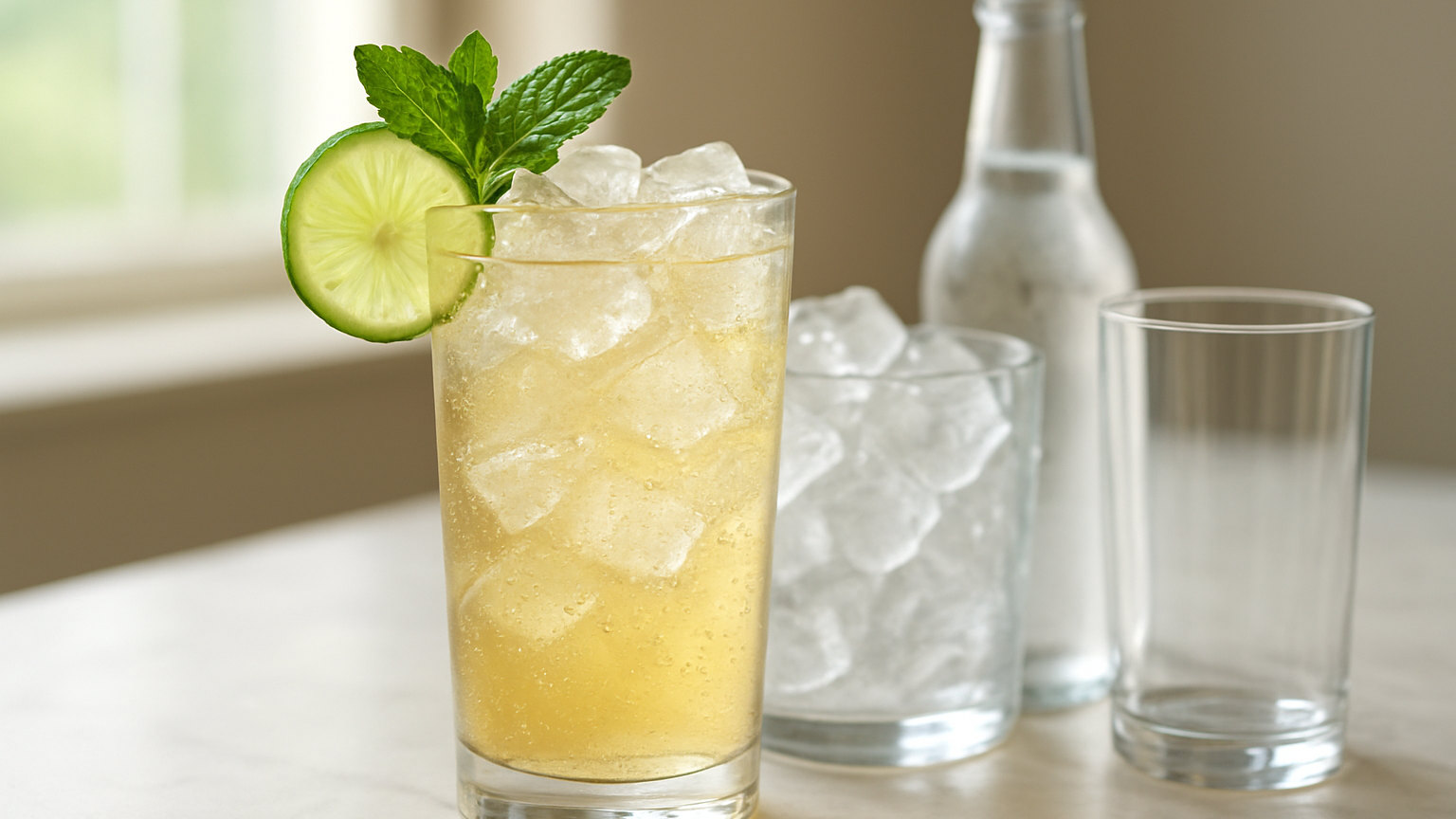
Stocking for a party is mostly a counting exercise, and two items are consistently underestimated. Running out of ice ends an evening faster than running out of gin, and having nothing decent for people who are not drinking is the other reliable failure.
How much should you plan per person?
Two drinks in the first hour and one an hour after that, for an event with food. For twelve people over four hours that is around sixty servings, allowing for people switching between drinks.
That is a planning figure rather than a prediction. Over-cater on mixers, ice and soft drinks rather than on spirits, since leftover spirit keeps indefinitely and leftover mixed cocktail does not.
How many drinks does a bottle make?
A 70cl bottle gives fourteen 50ml measures, or roughly eleven at 60ml. A litre bottle gives twenty at 50ml.
For a party of twelve where cocktails are the main offering, two or three spirit bottles plus a bitter aperitif is usually enough. People drink less spirit at a party than the host expects, because long drinks and conversation slow everything down.
How much ice?
Around 1kg per person for an afternoon or evening. That sounds absurd and it is roughly three times what most people buy.
Ice goes into every glass, melts in the bucket, and gets used to chill bottles. It is the cheapest item on the list and the one whose absence is most obvious.
What should you batch ahead?
Anything stirred and spirit-forward batches well and improves with a day or two of rest. Manhattans, negronis, old fashioneds and boulevardiers all work.
The essential adjustment is water. Shaking and stirring add dilution as well as chill, and a batch skips that entirely. Add water at around 22 per cent of the total volume for stirred drinks and 25 per cent for anything with citrus, then chill thoroughly.
Citrus drinks batch on the day only. Fresh lemon and lime begin to dull within about four hours.
What must be done at the glass?
- Anything carbonated. Soda, tonic and sparkling wine go flat in a jug within minutes.
- Anything with egg white or foam. The texture cannot be stored.
- Anything with cream or dairy.
The workable pattern is to batch the base, keep it cold, and top each glass individually. That takes ten seconds per drink and still saves most of the work.
What about people who are not drinking?
Plan for it properly rather than as an afterthought. Good tonic, a spicy ginger beer, plenty of citrus and ice covers most situations, and a batched alcohol-free option in the same jug format as everything else works even better.
Put it out on the same table in the same glassware, rather than in the fridge to be asked for. That way nobody has to announce anything, which matters more than the drink itself.
How should you serve a batch?
Bottles rather than a punch bowl for spirit-forward drinks. Sterilised swing-top bottles keep the batch cold in the fridge, pour cleanly and stop it warming up on a table.
For a punch, use one large block of ice rather than cubes. Freeze water in a plastic container the day before. A single block has far less surface area for its volume and melts many times more slowly, so the bowl stays cold without turning to water.
What is worth labelling?
Everything. Write what is in each jug and whether it contains alcohol, because a batched cocktail and its alcohol-free equivalent look identical. It also spares you from standing next to the drinks explaining them all evening.
What is worth having left over?
Spirits, bitters and unopened mixers, all of which keep. Batched cocktails, cut fruit and opened tonic do not, so err towards under-mixing and topping up rather than making a vat that ends up down the sink.
Buy the ice last and buy more than the arithmetic suggests. It is the cheapest item on the list and the only one whose absence stops the evening.


