
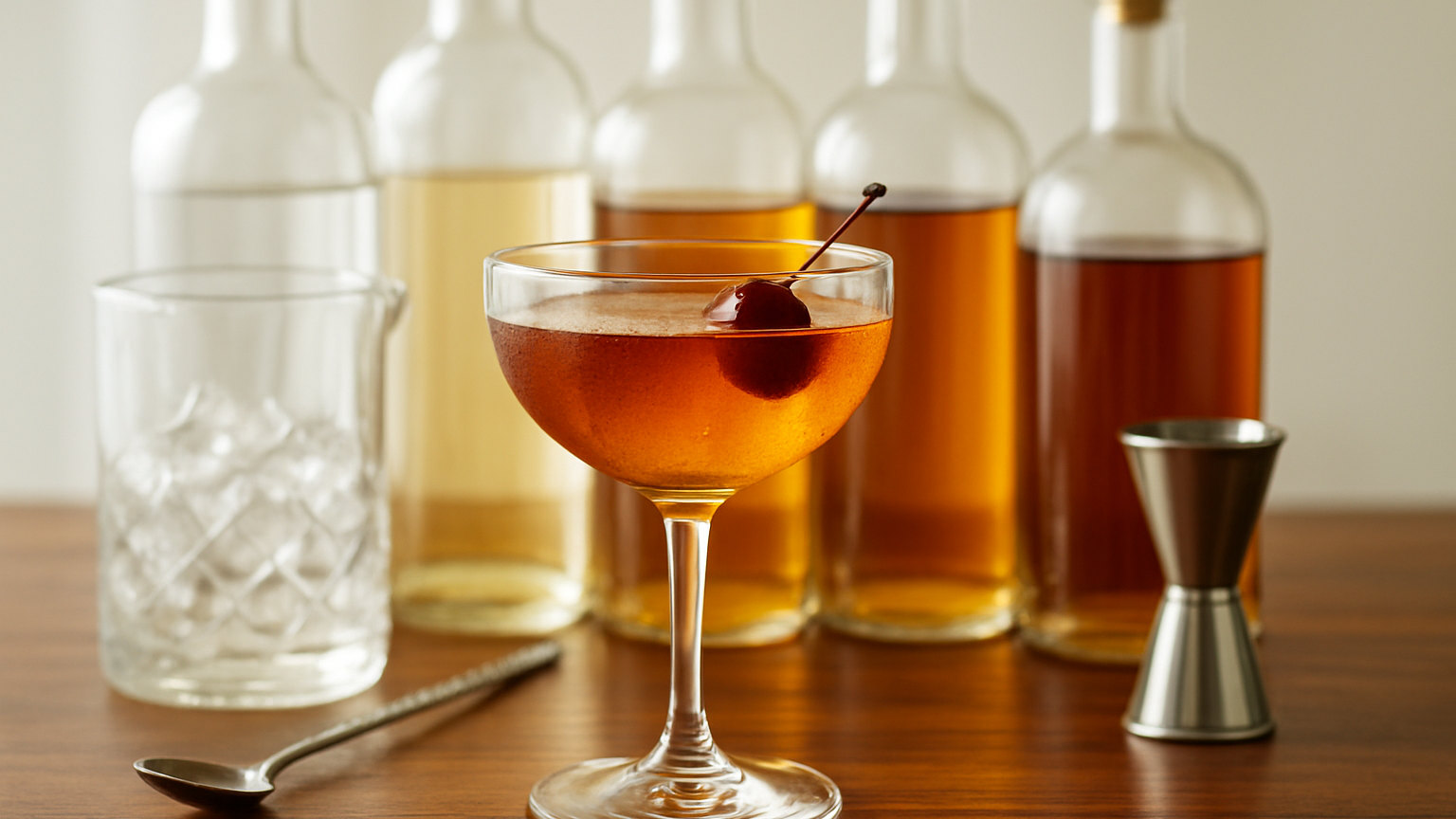
A shelf of fifteen half-empty bottles that between them make four drinks is the normal outcome of buying spirits one at a time, usually for a single recipe. Chosen deliberately, six bottles cover most of a standard cocktail list. The trick is picking spirits that sit at the centre of a family rather than at its edge.
What are the six?
- London dry gin. Juniper-forward, 40 to 43 per cent.
- Bourbon or rye whiskey. Rye if you want versatility, bourbon if anyone drinks it neat.
- Light white rum. Dry and clean rather than sweetened.
- Sweet vermouth. The smallest bottle you can find.
- Orange liqueur. A dry triple sec rather than a sweet curaçao.
- Angostura bitters. One small bottle lasts years.
Between them those six make an old fashioned, a Manhattan, a negroni if you add Campari, a daiquiri, a margarita if you add tequila, a gimlet, a whiskey sour, a Tom Collins, a sidecar and a dozen highballs.
Why is vodka not on the list?
Because it is designed to taste of as little as possible, which makes it a poor anchor for a family of drinks. It is enormously popular and it makes a small number of good cocktails, chiefly the espresso martini and the bloody mary, but it unlocks fewer drinks than any of the six above.
Buy it seventh if you want it. It is the one bottle where spending more buys almost nothing, since blind tastings routinely fail to separate premium vodka from ordinary vodka once it is mixed.
What else do you need beyond the spirits?
Five cheap items that matter more than a seventh bottle:
- Fresh lemons and limes
- Sugar, for making simple syrup
- Soda water and tonic in small bottles or cans
- Plenty of ice
- A jigger or measure
Together these cost less than one mid-range bottle. A cheap gin with fresh lime and cold tonic beats an expensive gin with old tonic every time, which is the single most useful thing to understand about stocking a bar.
Why does the measure matter?
Because pouring by eye is where most home drinks go wrong. In a three-ingredient cocktail a 10ml error is a large proportion of the whole, and it is the difference between a balanced daiquiri and a sharp one. A jigger costs very little and improves every drink you make from that point on.
Which gin and whiskey specifically?
For gin, a traditional juniper-forward London dry. Contemporary gins built around cucumber, rose or elderflower make an excellent gin and tonic and then vanish entirely in a martini or a negroni. Buy the interesting one second.
For whiskey, rye is drier and more versatile in cocktails, particularly the Manhattan. Bourbon is sweeter and more forgiving. Either covers the four whiskey drinks worth learning first.
Which of the six spoils?
Only the vermouth, and it spoils fast. It is fortified wine, so it oxidises once opened and will taste stewed and vinegary within a month at room temperature.
Keep it in the fridge from the moment it is opened and finish it within six to eight weeks. Buy the 375ml bottles rather than the large ones. An average whiskey with fresh vermouth makes a far better Manhattan than an excellent whiskey with a bottle that has been in a cupboard since spring.
How much do six bottles actually make?
A 70cl bottle at 40 per cent holds 28 units, which is fourteen 50ml measures. Six bottles is therefore a considerable quantity of alcohol sitting in a cupboard, and worth keeping in perspective against the UK guideline of no more than 14 units a week spread over three or more days.
Long drinks stretch the same bottle much further in terms of time spent drinking, which is a practical argument for the highball format beyond simply enjoying it.
What should you not buy yet?
Anything bought for a single cocktail you saw in a photograph. It will sit for years, and if it is wine based it will spoil long before you reach the bottom. Wait until you know which of the six empties fastest, because that is a far better guide than any list.


