
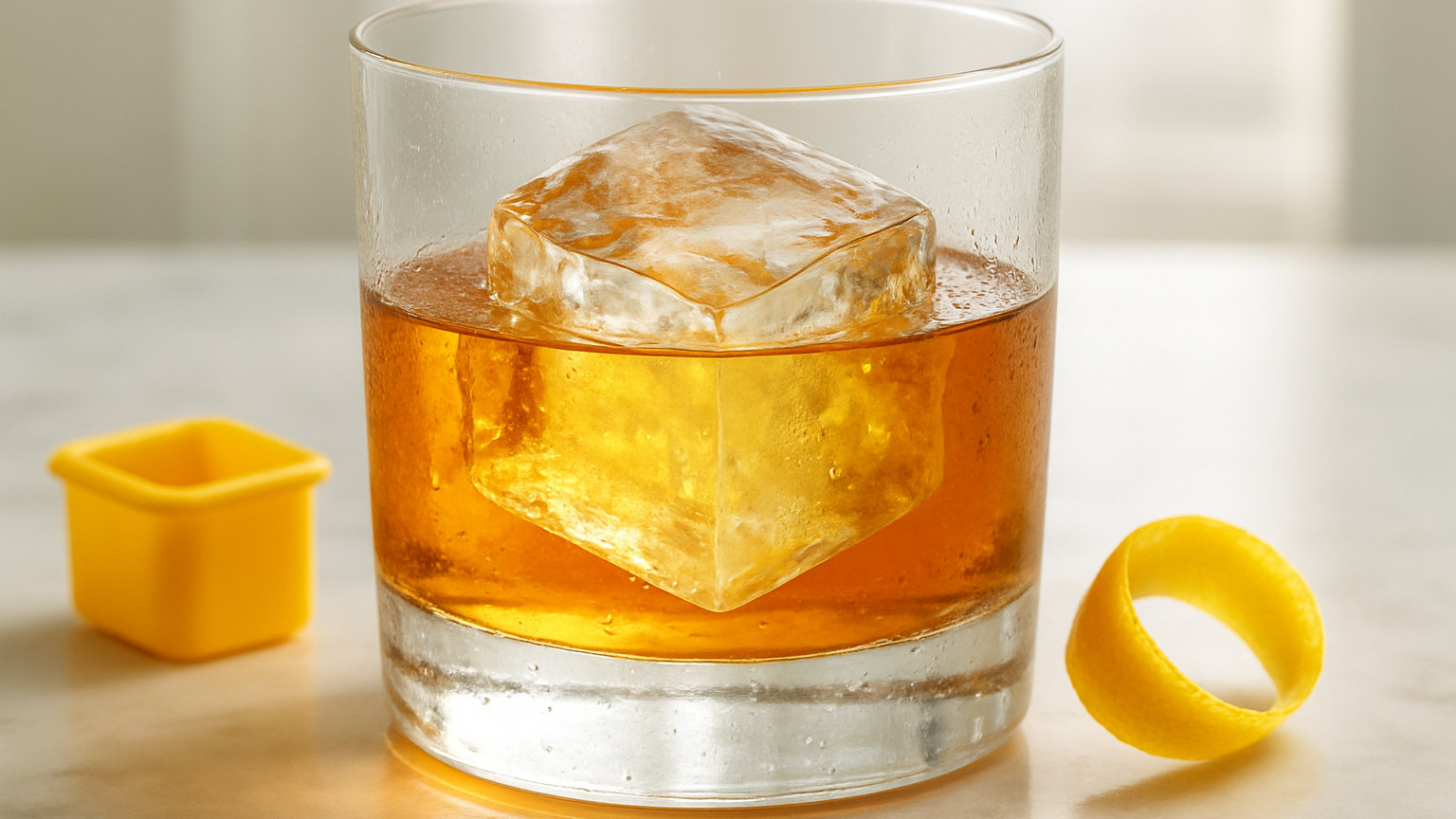
Ice is usually more than half the volume of a finished drink and almost nobody thinks about it. It controls dilution, temperature and how long a drink stays good. Two changes cost nothing at all, and the third is worth the effort only for drinks where the ice is on display.
What matters most about ice?
In order:
- Size. Larger cubes have less surface area relative to volume, so they melt more slowly.
- Dryness. Ice straight from a cold freezer is at minus 18. Ice that has been sitting out is already at zero and melting.
- Quantity. A full glass dilutes less than a half-full one.
- Clarity. Marginal effect on melting rate. Mostly appearance.
Clarity is what everyone focuses on and it matters least of the four.
Why does more ice dilute less?
This is the point that seems backwards. Melting requires energy, and a larger mass of ice absorbs that energy across more material, so each cube warms more slowly.
Three cubes in a tall glass will be water within ten minutes. A glass filled to the top will still have solid ice at the end of the drink. Most people underfill from a fear of watery drinks and produce exactly that.
How full is full?
To the top, so the ice is proud of the rim before the liquid goes in. It looks excessive and it is correct.
How do you make large cubes?
Silicone moulds for 5cm cubes are inexpensive and the single most useful ice purchase. One cube fills a rocks glass and lasts through an old fashioned without turning it to water.
Failing that, a small plastic container filled with water and frozen solid, then broken up with the back of a heavy spoon, gives irregular chunks that work perfectly well. Irregular is fine; large is what matters.
Why is home ice cloudy?
Because a domestic freezer cools a tray from all sides at once. Water freezes from the outside inward, pushing dissolved air and minerals towards the centre, where they end up trapped as a white core.
Commercial clear ice is frozen slowly from one direction only, so the impurities are pushed ahead of the freezing front and end up in a section that is cut away.
How does directional freezing work at home?
Put a small container of water inside a larger insulated cool box with the lid off, and place the whole thing in the freezer. The insulation stops the sides and bottom freezing, so it freezes from the top down.
After 18 to 24 hours, the top two thirds will be clear and the bottom third cloudy where the impurities collected. Take it out, let it temper for a few minutes, then cut the clear section into cubes with a serrated knife.
It is a genuine faff for a marginal gain in melting rate. Worth doing for a drink where one large cube is the centrepiece, and pointless for anything topped with soda.
How should you store it?
In a sealed bag or lidded container, not an open tray. Ice absorbs odours readily, and a tray left open next to last week’s fish will produce drinks that taste of it.
Ice also sublimates, shrinking and picking up a stale flavour over weeks. Make it fresh rather than keeping a bag from Christmas.
How do you crush it?
A clean tea towel and a rolling pin. Put cubes in, fold it over, and hit it. Uneven fragments are better than uniform ones, since the larger pieces keep the bottom of a tall drink from going watery. No machine required, and it takes about a minute.
Which ice suits which drink?
- One large cube: old fashioned, negroni, anything spirit-forward over ice.
- Standard cubes, glass filled: highballs, gin and tonic, anything long.
- Crushed: mojito, julep, anything meant to be drunk cold and fast.
- No ice: anything served up, which should be chilled by the shake or stir instead.


