
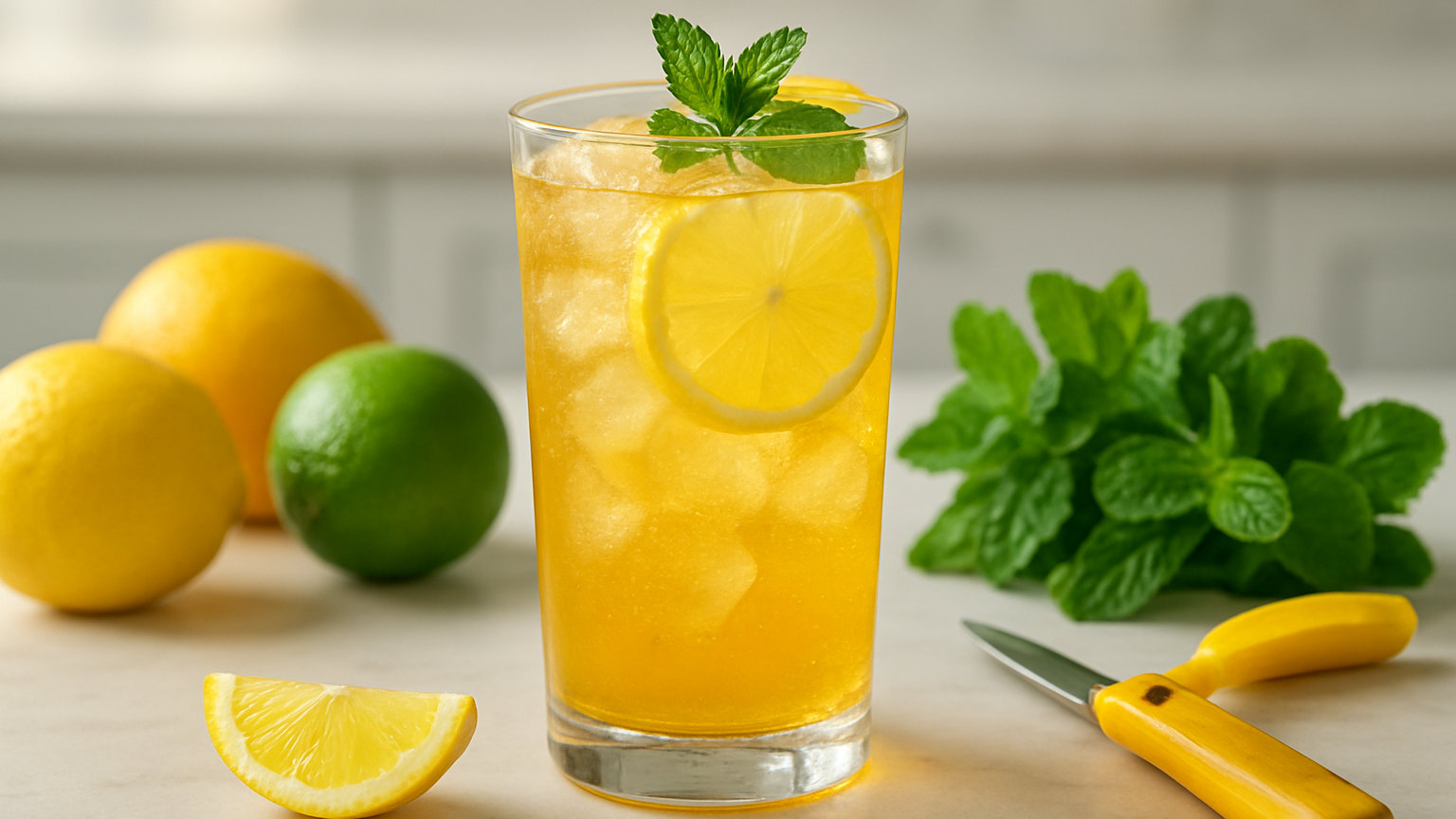
Ask why a home cocktail disappoints and the answer is far more often the citrus than the spirit. Bottled juice is pasteurised, which changes the aroma completely and leaves a flat, slightly metallic note. Fresh takes a minute and it is the highest-value minute in the whole process.
What should you always have?
- Lemons. For whiskey, brandy and gin drinks, and for peel.
- Limes. For rum, tequila and gin drinks.
- Oranges. Mostly for peel rather than juice.
- Mint. For mojitos, juleps and as a garnish that carries aroma.
Four items, all cheap. Between them they cover the garnish and acid requirements of almost every classic worth making.
Why does fresh citrus matter so much?
Because the aromatic compounds in citrus are volatile and heat-sensitive, and pasteurisation destroys most of them. What survives is the acidity, which is why bottled juice tastes sour without tasting of fruit.
The difference is most obvious in a drink with three ingredients, where there is nothing to hide behind. A daiquiri made with bottled lime is recognisably a different drink from one made with fresh.
How much juice does a lime give?
Around 25 to 30ml, so one lime per drink is a reasonable planning figure. A lemon gives 40 to 50ml. Both yield more at room temperature and more still if rolled firmly on a worktop first, which breaks the internal membranes.
How should you store citrus?
Whole fruit in the fridge, which extends it to around three weeks against one at room temperature. Take it out twenty minutes before using, or roll it, since cold fruit yields noticeably less.
Cut citrus dries at the surface within a couple of hours and loses aroma fast. Cut to order rather than preparing a bowl of wedges in advance, however convenient that seems for a party.
What about peel?
Orange and lemon peel do more work than most people credit. Squeezing a wide strip over the surface of a drink releases a fine spray of citrus oil that sits on top, and you smell it on every sip. It changes the perceived flavour considerably without adding any juice or acidity.
Use a vegetable peeler and take as little white pith as possible, since the pith is bitter. Hold the strip skin side down a few centimetres above the glass and squeeze until you see the oil catch the light.
How do you keep mint alive?
Upright in a glass of water with a plastic bag loosely over the top, in the fridge. Treated like a bouquet it lasts a week or more; left in its supermarket bag it turns black in three days.
Better still, grow it. Mint is aggressive and nearly impossible to kill, and a pot on a windowsill supplies a household indefinitely. It also means picking sprigs at the moment of use rather than from something already wilting.
What else is worth having when you can?
- Root ginger. Keeps for weeks and makes a syrup that suits rum and whiskey.
- Cucumber. For gin and tonic, though it does not keep once cut.
- Grapefruit. Bitter as well as acidic, which is rare and useful.
- Rosemary or thyme. Hardy, long-lasting and good with gin.
What can you do with what is left over?
Spent citrus shells make oleo saccharum: cover the peels with sugar, leave for a few hours, and the sugar draws out the oil into a syrup that is the base of a good punch. Nothing else uses the part of a lemon everyone throws away.
Juice that will not be used within a few hours freezes well in an ice cube tray. It loses some brightness but beats bottled comfortably.
How much should you buy at once?
Six lemons and six limes covers a normal fortnight for someone making a few drinks a week. Buying more than that means throwing some away, since fruit begins drying out well before it looks bad.


