
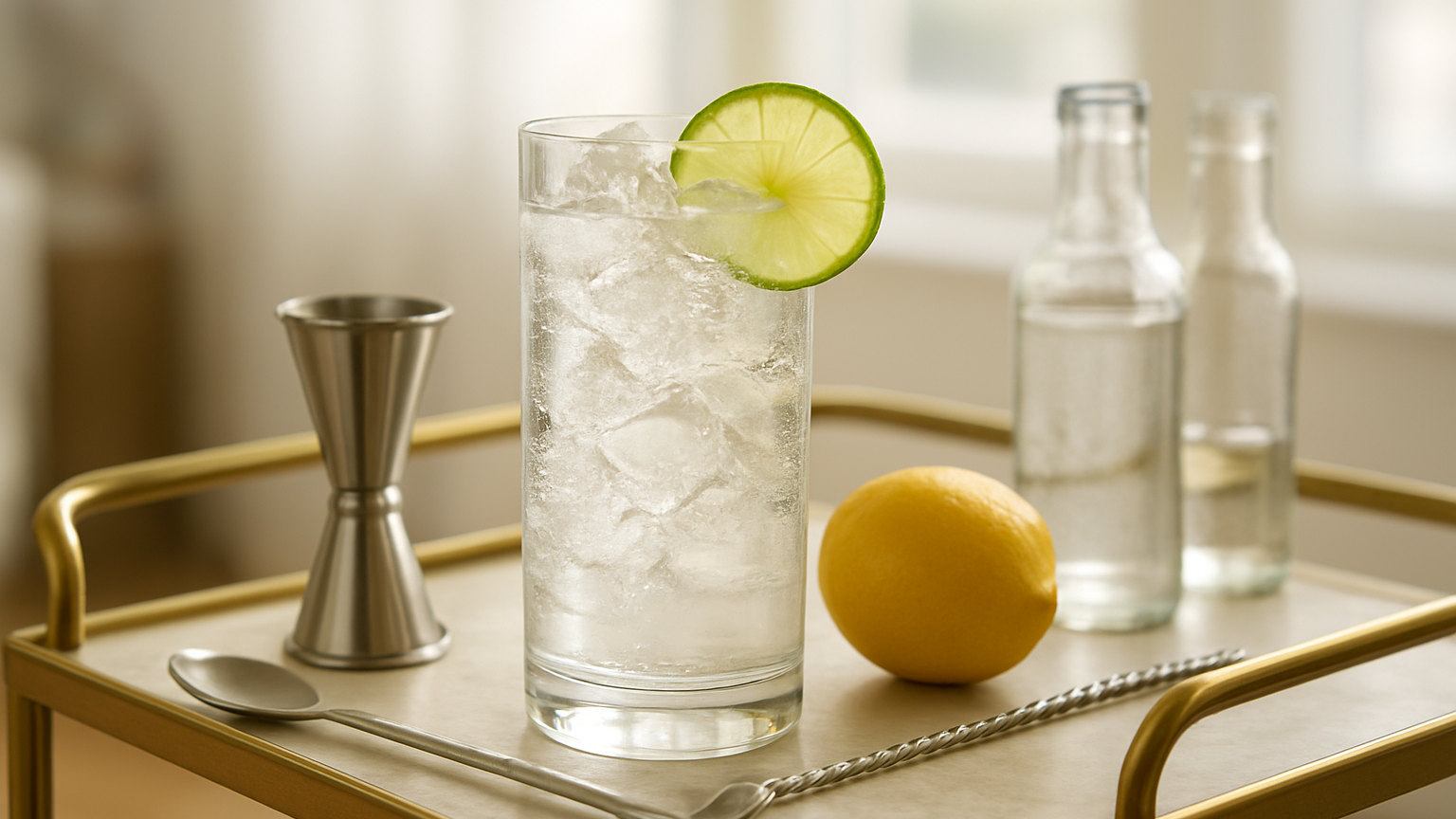
A bar cart is either a piece of furniture that displays bottles or a station where drinks get made. Most are the first while their owners intended the second. The difference is entirely in what goes where, and it takes ten minutes to change.
What actually belongs on it?
Only what is used in the process of making a drink:
- Four to six spirits, the ones you reach for
- Bitters
- Jigger, bar spoon, shaker and strainer
- Six to eight glasses of two or three shapes
- A small chopping board and a paring knife
- A cloth
That is a working station. Everything else can live in a cupboard and be fetched.
What should not be on it?
- Vermouth, sherry and anything wine based. These belong in the fridge and spoil within weeks at room temperature.
- Bottles you rarely use. They take the space and gather dust.
- Mixers. Warm tonic is a flat drink. Keep them cold.
- Fruit. Citrus dries out on display and looks tired within days.
- Anything in direct sunlight. Ultraviolet fades and dulls spirits.
The vermouth point is the one that matters most. A bar cart with a bottle of sweet vermouth on it, opened three months ago, is the most common reason a home Manhattan disappoints.
Where should the cart go?
Away from a window and away from a radiator. Light and heat both degrade spirits, and a cart in a sunny bay window is the worst place in the house for them, however good it looks.
How should you arrange it?
By the order you use things. Bottles at the back so labels are visible, tools in the middle within reach, glasses on the lower shelf where they are stable.
Leave a clear working surface at the front. If there is nowhere to set a shaker down, every drink involves rearranging things first, which is precisely the friction that stops people bothering.
What about the lower shelf?
Glasses, upright, and a small tray. Glasses stored upside down on a wooden shelf trap stale air and pick up the smell of the wood, and a stored glass that smells of cupboard will taint a drink.
The tray is more useful than it sounds. It contains drips, and it lets you carry a set of drinks to another room in one trip.
How do you handle ice and citrus?
Neither lives on the cart. Ice comes from the freezer at the moment of use, because ice sitting in a bucket is already melting and will dilute a drink far faster than fresh ice from a cold freezer.
Citrus comes from the fruit bowl and gets cut to order. A pre-cut lemon dries at the surface within a couple of hours and yields noticeably less juice.
An ice bucket is worth having for a party, filled fifteen minutes before people arrive rather than at the start of the day.
Does the cart need to be a cart?
Not at all. A tray on a sideboard, a shelf in a kitchen cupboard or a corner of a worktop all work, and the kitchen has advantages: a sink, a fridge, a chopping board and a bin are all where you need them.
The cart is furniture rather than equipment. It is a good way to keep a bar contained and visible, and it is not the reason anyone makes better drinks.
What is the test of whether it works?
Whether you can make an old fashioned without moving anything first. If the answer is no, the arrangement is decorative rather than functional, and shifting three items will fix it.
What about a bar in a shared space?
Keep it contained. A tray defines the footprint, stops bottles migrating across a sideboard and lets the whole thing be moved in one go when the room is needed for something else.
It also makes the bar look deliberate rather than accumulated, which matters more in a living room than in a kitchen.


