
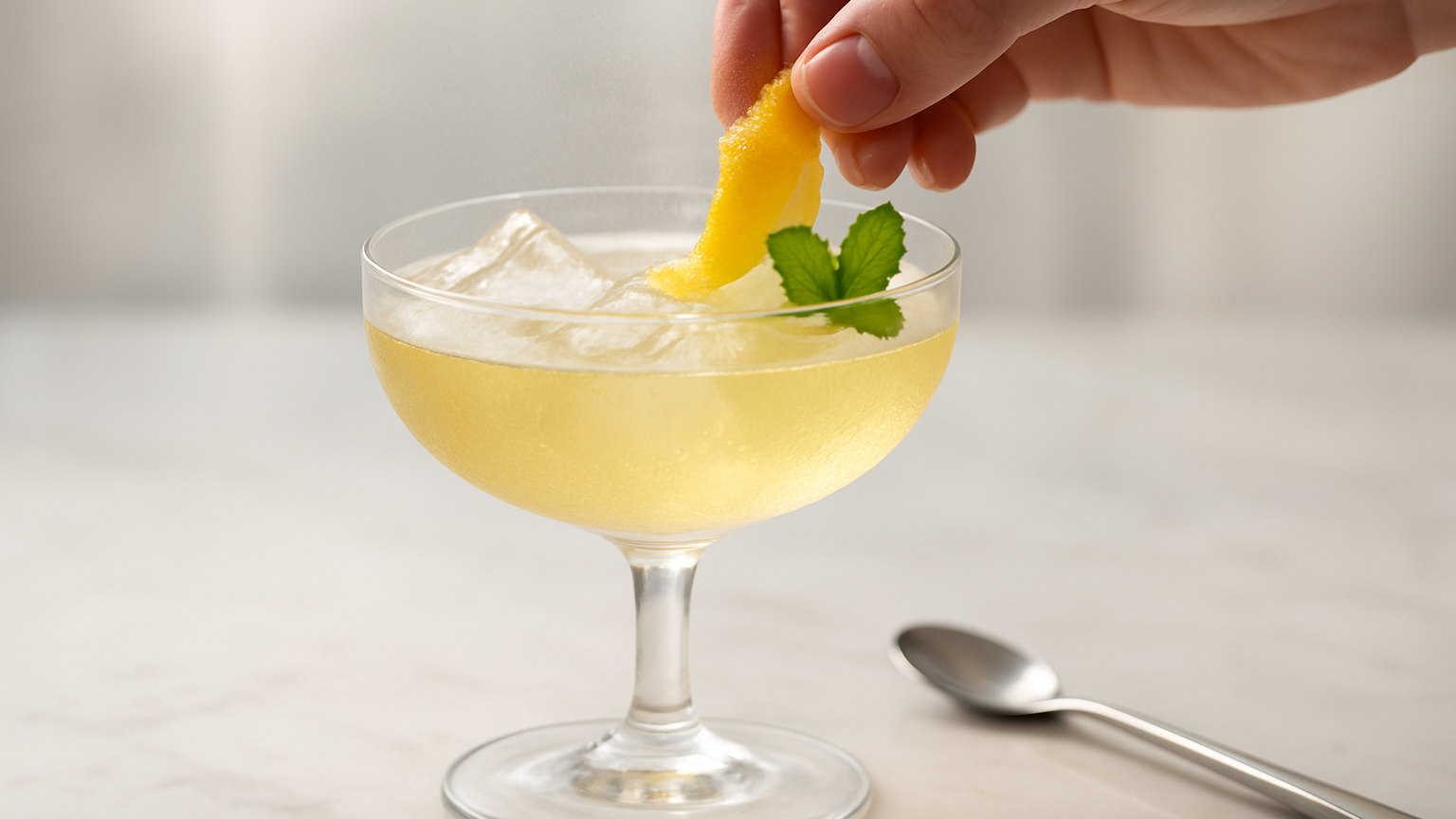
Garnishes divide cleanly into two groups: those that deliver aroma or flavour to the drink, and those that exist to be looked at. Both are legitimate, and it is worth knowing which you are doing, because the first group repays effort and the second does not.
Why does aroma matter so much?
Because most of what people call taste is smell. The tongue registers sweet, sour, salt, bitter and savoury; everything else arrives through the nose, both from the glass and retronasally as you swallow.
A garnish sitting at the rim is a few centimetres from your nose for the entire drink. That is why a clapped mint sprig or an expressed peel changes the experience more than the same ingredient stirred into the liquid would.
Which garnishes genuinely work?
- Expressed citrus peel. Sprays oil across the surface. The most effective garnish there is.
- Clapped herb sprig. Mint, rosemary or thyme, slapped once between the palms.
- Olives and brine. Add salinity, which suppresses bitterness and rounds a martini.
- Good cocktail cherries. Contribute stone fruit and almond as you reach the bottom.
- Grated nutmeg or cinnamon. Aromatic and volatile, and works on anything creamy or dark.
- A salted rim. Genuinely changes perception rather than decorating.
Why clap a herb rather than muddle it?
Because a single clap between the palms ruptures enough surface cells to release the aromatic oils without damaging the leaf. Muddling releases chlorophyll and tannin as well, which is bitter and grassy, and it looks bruised.
Which are essentially decoration?
- Fruit skewers and cocktail umbrellas. Look good, taste of nothing.
- Dehydrated citrus wheels. Attractive and aromatically spent.
- Edible flowers. Almost entirely visual.
- Glitter and coloured sugar. Purely visual.
- A wedge of orange in a drink that wanted peel. Adds juice you did not account for.
There is nothing wrong with any of these if the look is the point. The mistake is believing they are improving the flavour while a properly expressed peel would have.
What does a salted rim actually do?
Salt suppresses bitterness and heightens sweetness. On a margarita that means the drink tastes rounder without the recipe changing at all, which is a real chemical effect rather than tradition.
Salt only half the rim so the person drinking can choose, and keep the salt on the outside edge. Rub a lime wedge round the outside, then roll that edge in coarse salt on a plate. Salt falling into the drink makes it progressively saltier as you go.
When does a garnish get in the way?
When there is so much of it that drinking becomes awkward, or when it displaces ice. A tall glass packed with berries, herbs and dried fruit looks impressive and has lost the ice it needed to stay cold.
One or two elements is the practical limit for most drinks. A negroni takes an orange peel. Adding a cherry, a sprig and a dehydrated wheel makes it harder to drink and no better.
Which garnish suits which drink?
- Spirit-forward and stirred: citrus peel, or a cherry for a Manhattan.
- Long and carbonated: peel for aroma, wedge if you want extra acidity.
- Sours with foam: bitters dropped on the surface, which is aromatic and visual at once.
- Creamy or dark: grated nutmeg.
- Herbaceous: a clapped sprig of whatever herb is in the drink.
What is the cheapest improvement?
Learning to express a peel properly. It costs nothing, takes five seconds, and it changes a gin and tonic or an old fashioned more than upgrading the spirit would. Most home drinks are missing it entirely.
When should you skip the garnish entirely?
When you have not got the right one. A drink with no garnish is better than a drink with the wrong one, since a lemon wedge in something that wanted orange peel actively changes the balance rather than simply failing to improve it.
What about the glass itself?
It functions as part of the garnish. A narrowing shape concentrates whatever aroma the peel or herb has released, and a wide open glass disperses it. That is why a coupe outperforms a straight tumbler for anything served up.


