
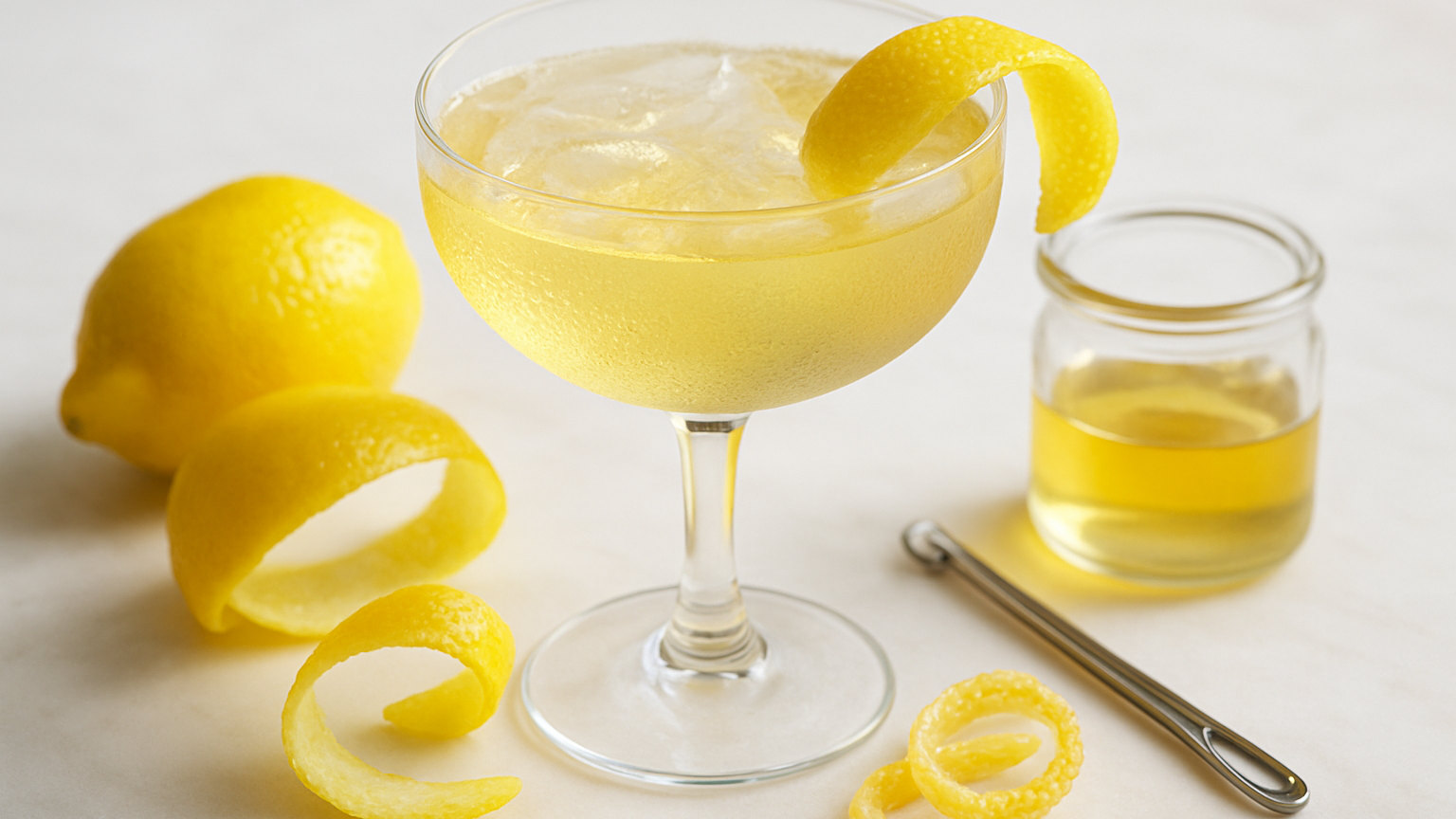
The aromatic compounds in citrus live in the coloured layer of the skin, not in the juice. Anyone making cocktails regularly gets through a lot of lemons and limes and throws away the more aromatic half of each one. There are four straightforward things to do instead.
What is the best use?
Oleo saccharum, comfortably. Cover the peels with an equal weight of caster sugar, leave for four to twelve hours, and the sugar draws the oil out osmotically to produce a thick, intensely citrus syrup.
Six lemon peels with 150g of sugar gives around 120ml. It is the base of a proper punch and it can replace the simple syrup in any citrus cocktail for a noticeable improvement.
The neat part is the sequence: peel first, then juice. One lemon gives you both the oleo and the acid for the same drink.
How do you make candied peel?
- Cut the peel into strips and remove most of the white pith.
- Boil in water for one minute, drain, and repeat twice. This removes bitterness.
- Simmer gently in equal parts sugar and water for around 45 minutes until translucent.
- Lift out, drain on a rack, and toss in caster sugar once tacky.
The triple blanching is what makes the difference between pleasant candied peel and something inedibly bitter. Do not skip it.
The leftover syrup from the simmering is itself a good citrus syrup for drinks, so nothing is wasted.
What is it good for?
Eating, mostly, and as a garnish on anything dark and spirit-forward. A strip of candied orange peel on an old fashioned works well, though it adds sweetness that an ordinary twist would not.
Can you infuse spirits with it?
Yes, and citrus is one of the fastest and most reliable infusions there is. Put the peels of four lemons in 350ml of vodka, seal, and leave two days at room temperature out of direct light.
Taste daily. Citrus infuses quickly and will turn bitter if left too long, particularly if any pith went in. Two days is usually right, three at most.
Strain and it is limoncello in its unsweetened form. Add an equal volume of simple syrup and it becomes the drink proper, though it wants a month to mellow.
How do you dry peel for later?
Lay strips on a rack in a warm dry place for two or three days, or in an oven at its lowest setting with the door ajar for two hours. They should be brittle rather than leathery.
Store in a sealed jar away from light. Dried citrus peel keeps for months and is genuinely useful in bitters, mulled drinks and spice infusions, where dried peel is often preferred to fresh for its more concentrated, slightly resinous character.
Does waxed fruit matter?
For anything where you eat or steep the peel, yes. Supermarket citrus is usually coated with a food-grade wax to extend shelf life, and it sits on the surface and ends up in whatever you make.
Buy unwaxed where you can. Failing that, scrub the fruit thoroughly in warm water with a brush before peeling, which removes most of it.
What about the juiced halves?
A squeezed lemon half still holds a surprising amount of oil in the skin. Rub one around the rim of a glass, or drop a couple into a jug of water. They also work as a mild kitchen cleaner, particularly on limescale and on wooden boards with coarse salt.
How much can you realistically use?
Be honest about it. Making oleo saccharum from six lemons is a specific project for a specific occasion rather than something to do every time you make a drink. Drying peel is the low-effort option that lets you accumulate it without committing to anything, and a jar of dried zest is far more likely to get used than a fridge full of good intentions.
Can you freeze it?
Yes, and it is the easiest option of all. Peels frozen flat in a bag keep for months and go straight into a syrup or an infusion without thawing. They are no use as a fresh twist afterwards, since freezing ruptures the oil glands, but for anything steeped they work perfectly well.


